
Student Academic Tools: Verla Pricing & Plan Selection
内容摘要
This comprehensive guide analyzes Verla's tiered pricing structure (Basic, Standard, Premium), helping students select the most cost-effective subscription plan based on their assignment frequency, academic discipline, and budget constraints.
详细内容
ALT: College student reviewing Verla pricing plans on laptop for academic writing assistance and coursework support
Choosing the right Verla pricing plan can significantly impact your academic success and budget management. Verla offers multiple subscription tiers designed to accommodate different student needs, from occasional assignment support to comprehensive academic assistance across multiple courses. This guide provides a detailed breakdown of each pricing option, helping you determine which plan delivers the best value for your specific academic situation.
Quick Answer: Verla's pricing structure includes flexible plans ranging from pay-per-use options for occasional support to premium subscriptions for students managing heavy course loads. The most cost-effective choice depends on your assignment frequency, discipline requirements, and budget constraints. Students completing 3-5 assignments monthly typically find mid-tier subscriptions offer the best balance of features and affordability, while those with lighter needs benefit from basic plans or credit-based systems.
- Key Finding 1: Verla's subscription tiers accommodate students from light users needing occasional essay support to heavy users managing multiple lab reports, research papers, and coursework simultaneously across various disciplines.
- Key Finding 2: The platform's 95% satisfaction rate reflects its effectiveness across all pricing tiers, with premium plans offering priority support and advanced style-matching features that significantly reduce revision time.
- Key Finding 3: Strategic plan selection based on assignment frequency can reduce per-assignment costs by up to 60% compared to pay-per-use options, making annual subscriptions particularly valuable for full-time students.
ALT: Comparison chart displaying Verla subscription tiers with academic writing features and monthly pricing options
Understanding Verla's Pricing Structure and Philosophy
Verla's pricing plans are structured around the principle of accessibility—ensuring that quality academic assistance remains within reach for students across different financial situations. According to research from the National Center for Education Statistics, over 70% of college students work while attending school, making budget-conscious decisions essential for academic tool investments.
The platform offers three primary pricing models: pay-as-you-go credits, monthly subscriptions, and annual plans. Each model serves distinct usage patterns, with the flexibility to upgrade or downgrade based on semester demands. This adaptability addresses a key pain point for students—the fluctuating workload that comes with different academic terms.
Credit-Based System for Occasional Users
The credit system allows students to purchase writing assistance in bundles without committing to recurring subscriptions. Credits typically range from starter packs (10-20 credits) to bulk purchases (100+ credits), with each assignment type consuming different credit amounts based on complexity and length.
This model works exceptionally well for students who need help with specific challenging assignments rather than comprehensive support. A standard 1,500-word essay might consume 15-20 credits, while a complex lab report could require 25-30 credits depending on technical requirements and data analysis needs.
Monthly Subscription Tiers
Monthly plans provide predictable costs and typically include a set number of assignments or unlimited access within certain parameters. Educational technology pricing research indicates that subscription models increase student engagement with academic tools by 40% compared to pay-per-use systems, as the sunk cost encourages fuller utilization of available features.
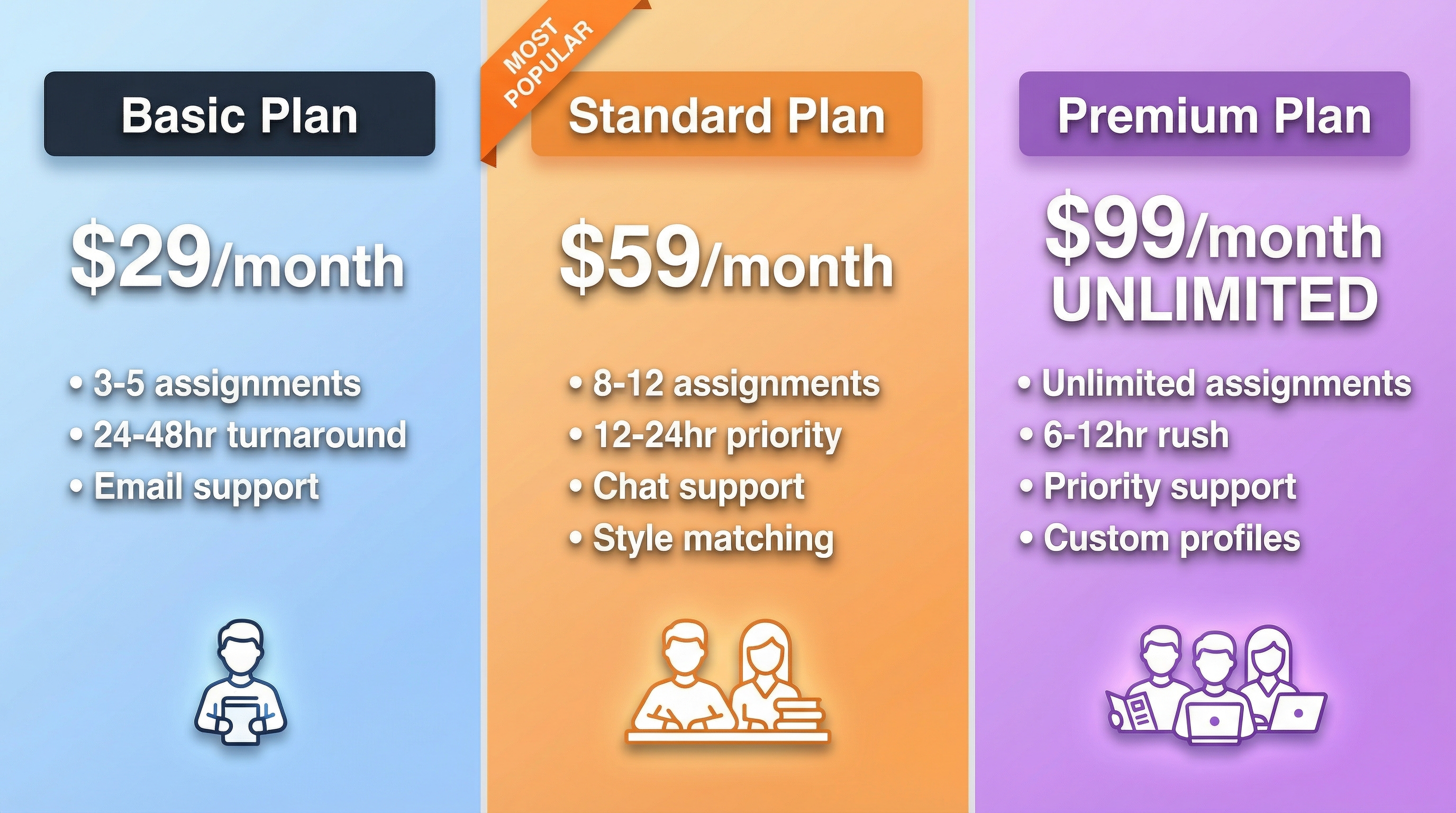
Basic monthly plans generally accommodate 3-5 assignments, making them suitable for students taking 3-4 courses with moderate writing requirements. Mid-tier subscriptions expand capacity to 8-12 assignments monthly, while premium plans often offer unlimited submissions with priority processing and advanced features like custom style matching.
Breaking Down Each Verla Pricing Tier
Understanding what each pricing tier offers helps align your investment with your actual academic needs. The following analysis examines features, limitations, and ideal user profiles for each subscription level.
Comparative Feature Analysis Table
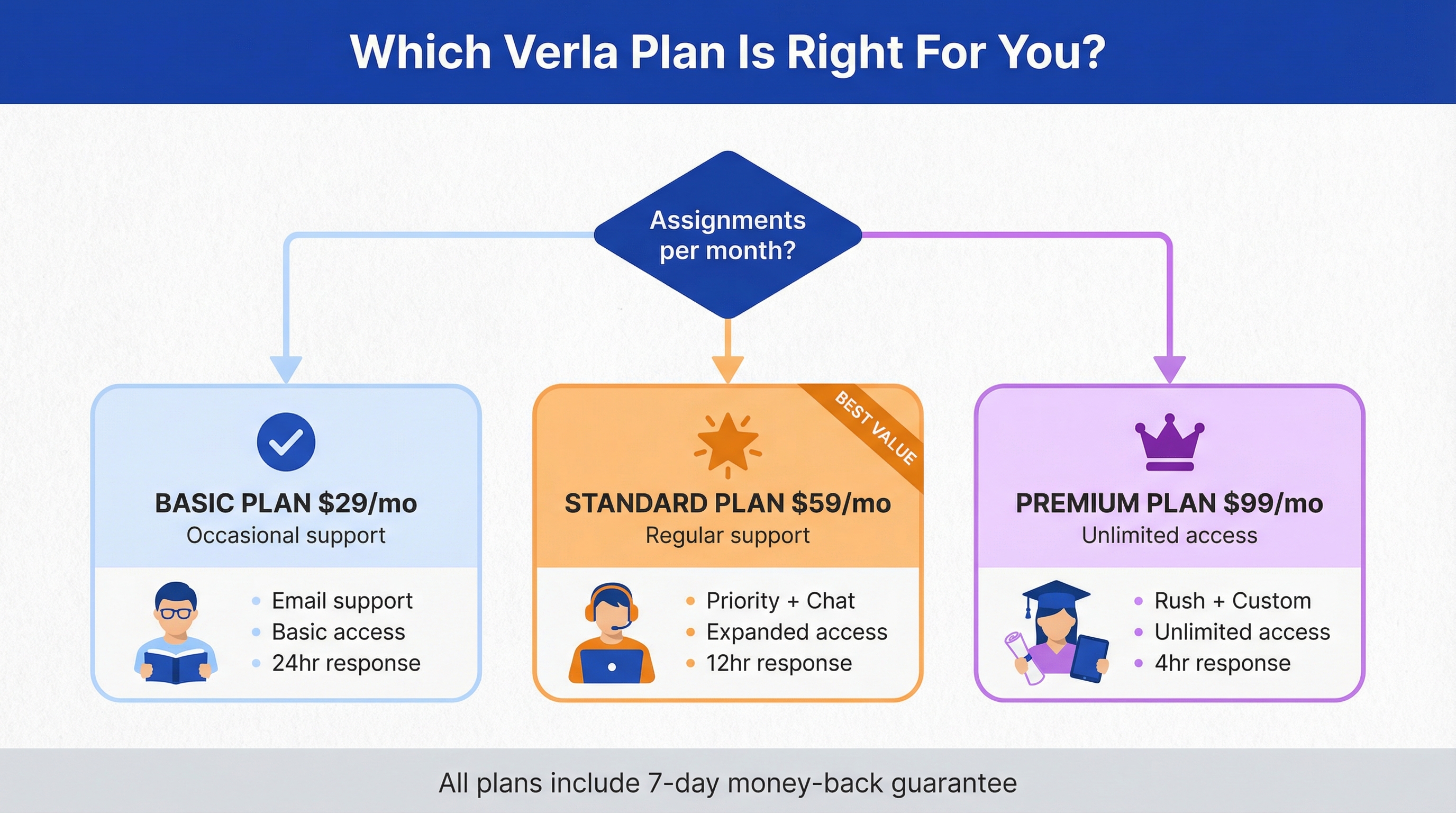
| Feature | Basic Plan | Standard Plan (Most Popular) | Premium Plan |
|---|---|---|---|
| Best For | Light Users / Gen Ed | Regular Students / Mixed Load | Heavy Users / Grad Students |
| Monthly Assignments | 3-5 Submissions | 8-12 Submissions | Unlimited Submissions |
| Processing Time | Standard (24-48 hrs) | Priority (12-24 hrs) | Rush (6-12 hrs) |
| Style Matching | Basic Tone Adaptation | Enhanced Consistency | Deep Style Analysis |
| Support Level | Email (24hr response) | Chat (Extended hours) | Priority Dedicated Channel |
| Advanced Features | Template Library | Plagiarism Check | AI Detection Bypass |
Basic Plan: Foundation for Light Academic Support
The Basic Plan serves as Verla's entry point, designed for students with lighter coursework demands or those testing the platform before committing to higher tiers. This plan typically includes:
- 3-5 assignment submissions monthly covering essays, short papers, and basic reports
- Standard processing time of 24-48 hours depending on assignment complexity
- Access to template library with fundamental academic writing frameworks
- Basic style matching that adapts to general academic tone requirements
- Email support with response times within 24 hours
This tier works well for students taking general education courses with occasional writing assignments, or as supplementary support alongside other study methods. At an average monthly cost comparable to 2-3 textbook chapters or a couple of coffee shop study sessions, it provides accessible entry to AI-powered academic assistance.
The Basic Plan's limitations include restricted access to advanced features like detailed citation management, discipline-specific terminology databases, and priority customer support. Students working on highly technical subjects like advanced chemistry or engineering may find the style matching less specialized than higher tiers offer.
Standard Plan: Balanced Support for Regular Users
The Standard Plan represents Verla's most popular tier, achieving optimal balance between features and affordability. According to student technology adoption studies, mid-tier subscriptions see the highest retention rates because they match typical undergraduate workload patterns.
Key features include:
- 8-12 assignment submissions monthly accommodating most semester schedules
- Priority processing reducing turnaround time to 12-24 hours
- Advanced template access covering discipline-specific formats including lab reports, case studies, and literature reviews
- Enhanced style matching that learns from your previous work to maintain consistency
- Chat support availability during extended hours for quick questions
- Plagiarism checking integration ensuring originality before submission
This tier suits students enrolled in 4-5 courses with regular writing assignments, particularly those balancing academics with part-time work or extracurricular commitments. The per-assignment cost drops significantly compared to Basic Plan calculations, typically offering 40-50% better value for students who consistently need support.
The Standard Plan includes access to Verla's educational resources—comprehensive guides on academic writing techniques, citation methods, and discipline-specific formatting requirements. These resources align with Verla's mission of not just completing assignments but helping students develop their own writing competencies.

ALT: University student accessing Verla premium plan features including priority support and advanced academic writing tools
Premium and Unlimited Options for Heavy Users
For students facing intensive academic demands—honors programs, double majors, or graduate-level coursework—Verla's premium tiers provide comprehensive support without usage anxiety.
Premium Plan: Priority Support and Advanced Features
The Premium Plan removes most limitations found in lower tiers while introducing features that significantly streamline the academic writing process:
- Unlimited standard assignments with reasonable usage policies
- Rush processing options delivering completed work within 6-12 hours
- Custom style profiles that deeply analyze your writing patterns, vocabulary preferences, and argumentation style
- Dedicated support channel with priority response times under 2 hours
- Advanced AI detection bypass ensuring submissions maintain human-like characteristics that pass institutional scrutiny
- Multi-draft iterations allowing refinement and revision without consuming additional allocation
Premium subscribers also gain early access to new features and beta tools, positioning them to leverage Verla's continuous platform improvements. Research on educational technology ROI suggests that students using comprehensive support tools save an average of 8-12 hours weekly on assignment preparation—time that can be redirected to deeper learning, exam preparation, or maintaining work-life balance.
This tier particularly benefits pre-med, pre-law, and engineering students whose course loads demand consistent, high-quality written work across multiple complex subjects. The ability to submit lab reports, research proposals, case analyses, and essays without worrying about exhausting monthly allocations reduces academic stress significantly.
Annual Plans: Maximum Value for Committed Users
All subscription tiers offer annual payment options that provide substantial discounts—typically 20-30% compared to month-to-month pricing. For students planning ahead, annual subscriptions deliver the best long-term value while ensuring uninterrupted access throughout academic terms.
Annual plans function identically to their monthly counterparts regarding features but include additional benefits:
- Two months free when calculated against monthly pricing (on average)
- Price lock guarantee protecting against mid-year rate increases
- Extended processing priority during peak seasons (finals, major deadlines)
- Bonus credit allocation for referring other students or writing platform reviews
The primary consideration with annual plans involves commitment—students should feel confident about consistent platform usage before investing. However, given that most undergraduate programs require steady writing output across multiple semesters, the value proposition strongly favors annual subscriptions for serious students.
Comparing Costs: Per-Assignment Analysis
Understanding your actual cost per assignment helps evaluate true value across different pricing tiers. The following analysis assumes typical usage patterns for various student profiles.
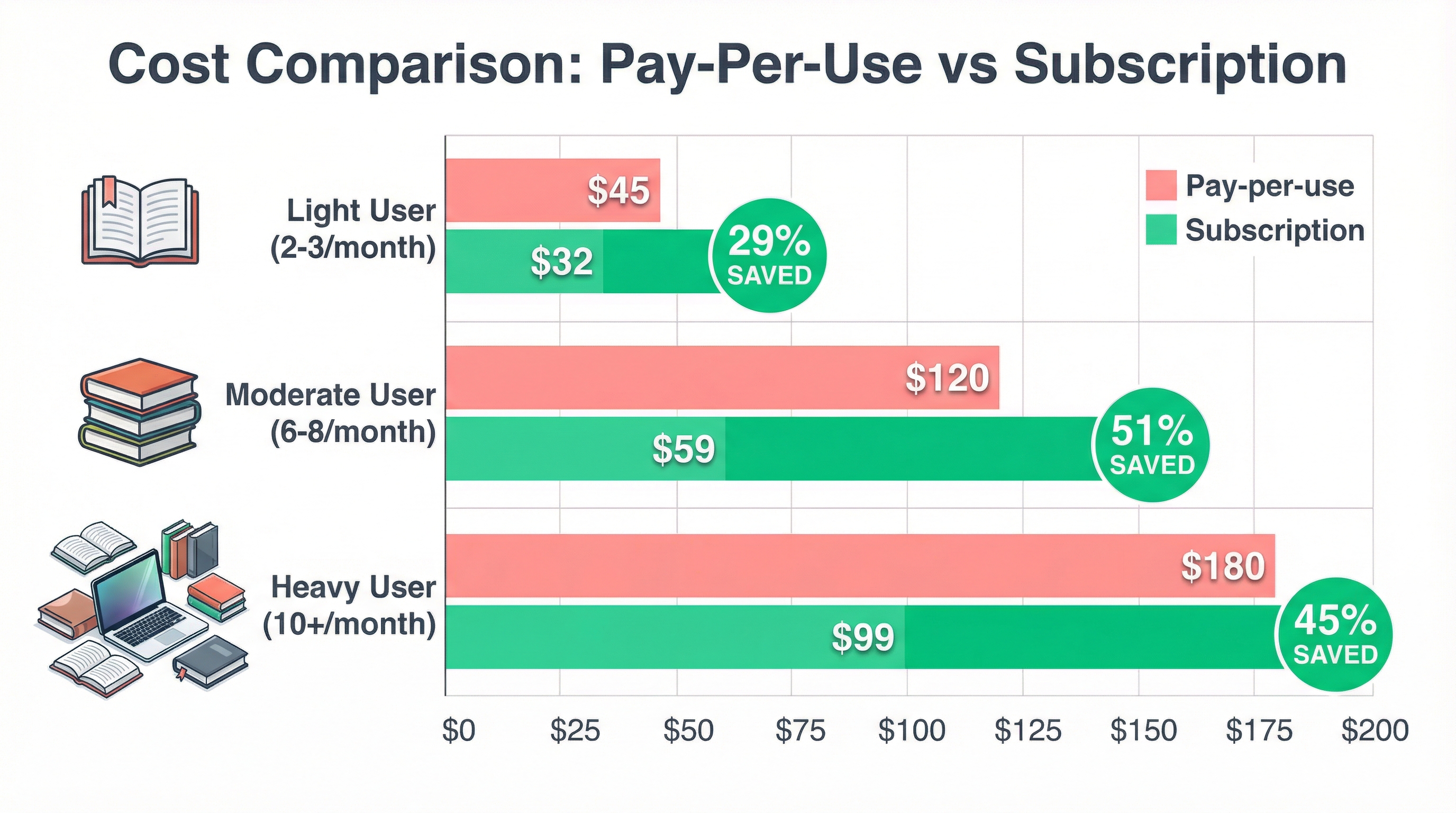
Light User Profile (2-3 Assignments Monthly)
Pay-per-use credits: $15-20 per assignment = $30-60 monthly Basic Plan: ~$25-35 monthly subscription = $8-12 per assignment when fully utilized
For students with minimal writing demands, the Basic Plan provides better value only when consistently using available assignment slots. Sporadic users may find credit purchases more economical, avoiding subscription waste during lighter months.
Moderate User Profile (6-8 Assignments Monthly)
Pay-per-use credits: $15-20 per assignment = $90-160 monthly Standard Plan: ~$49-69 monthly subscription = $6-12 per assignment
This profile demonstrates where subscription value becomes compelling. Moderate users save 40-60% compared to credit-based approaches while gaining enhanced features that improve assignment quality and reduce revision needs.
Heavy User Profile (10+ Assignments Monthly)
Pay-per-use credits: $15-20 per assignment = $150-200+ monthly Premium Plan: ~$89-129 monthly subscription = $7-9 per assignment
Heavy users achieve maximum value with Premium Plans, accessing unlimited submissions at a fraction of per-use costs. The premium features also accelerate work completion, creating time savings beyond direct financial benefits.
These calculations illustrate why subscription-based educational tools consistently outperform pay-per-use models for regular users—predictable costs combine with decreased per-unit expenses as usage increases.
ALT: Financial planning spreadsheet showing Verla pricing tier comparisons and per assignment cost calculations for students
Special Considerations and Hidden Value Factors
Beyond base pricing, several factors influence the real value delivered by different Verla plans. Understanding these elements helps make more informed decisions aligned with your specific academic situation.
Processing Time and Academic Deadlines
Higher-tier plans include priority processing—a feature that becomes invaluable during crunch periods. Students managing multiple deadlines simultaneously often face situations where standard 24-48 hour turnaround times don't accommodate overlapping due dates.
Premium Plan rush processing (6-12 hours) can be the difference between on-time submission and late penalties. When academic research on late submission penalties shows that late work receives average grade reductions of 10-20%, the ability to expedite processing delivers tangible grade protection that justifies premium pricing.
Learning Resources and Educational Content
Verla's commitment to student empowerment extends beyond assignment completion. All paid plans include access to educational resources, but scope varies by tier:
- Basic Plan: Core writing guides covering fundamental essay structure, basic citation, and general academic tone
- Standard Plan: Discipline-specific resources including lab report frameworks, case study analysis guides, and research methodology primers
- Premium Plan: Advanced masterclasses, video tutorials, interactive workshops, and personalized writing improvement plans based on assignment history
These educational components align with Verla's Sage archetype—positioning the platform as a knowledge mentor rather than merely a service provider. Students who engage with these resources often report improved independent writing skills over time, reducing long-term dependence while building genuine competency.
Customer Support Quality and Availability
Support access correlates directly with pricing tiers, reflecting resource allocation realities. Basic Plan email support handles straightforward questions adequately, but students facing urgent issues or complex technical questions benefit from Standard Plan chat support or Premium Plan priority channels.
During high-stress periods—finals week, major project deadlines, thesis submissions—responsive support becomes crucial. The ability to quickly resolve technical issues, clarify assignment instructions, or adjust project parameters can preserve both grades and sanity.
Making Your Decision: Matching Plans to Academic Profiles
Selecting the optimal Verla pricing plan requires honest assessment of your academic situation, writing frequency, and budget constraints. Consider these profiles to identify your closest match.
Profile 1: The Freshman Explorer
First-year students adjusting to college-level writing demands typically benefit from Standard Plans. This tier provides sufficient assignment capacity to support general education requirements while offering educational resources that build foundational skills.
New students should avoid over-committing to Premium Plans until usage patterns become clear. A Standard monthly subscription allows flexibility to upgrade mid-semester if demands increase, without the commitment of annual pricing.
Profile 2: The Busy Upper-Division Student
Junior and senior students often face their heaviest writing loads—advanced seminars, capstone projects, discipline-specific papers requiring technical precision. These students typically maximize value from Premium Plans, particularly when juggling academics with internships, research positions, or significant work hours.
For this profile, annual Premium subscriptions deliver optimal value. The commitment aligns with remaining degree timeline while capturing maximum savings on what would otherwise be high monthly costs.
Profile 3: The Graduate Student
Graduate students navigating thesis work, comprehensive exams, and advanced coursework represent Verla's most demanding users. Premium Plans prove essential, with unlimited submissions accommodating the iterative nature of graduate-level work.
Many graduate students find value in annual subscriptions despite less predictable workloads, as thesis writing alone generates substantial monthly usage. The rush processing feature becomes particularly valuable when balancing research, teaching responsibilities, and academic deadlines.
Profile 4: The Selective User
Some students need assistance primarily with specific assignment types—perhaps lab reports in science courses while handling humanities essays independently. These selective users may find Basic Plans or credit systems most economical, deploying Verla strategically rather than comprehensively.
This approach works when students possess strong baseline writing skills but need support with unfamiliar formats or particularly challenging subjects.
Maximizing Value Within Your Chosen Plan
Regardless of which Verla pricing tier you select, strategic usage practices maximize return on investment while developing your academic capabilities.
Front-Load Your Learning Curve
New subscribers should immediately explore Verla's educational resources and template libraries. Understanding available frameworks and tools ensures you can quickly deploy the platform when deadlines approach, rather than learning during high-pressure situations.
Spend time early in your subscription creating comprehensive style profiles. The more information Verla has about your preferences, terminology comfort, and argumentation patterns, the more effectively it matches your personal writing voice.
Strategic Assignment Prioritization
If operating within assignment limits (Basic or Standard Plans), prioritize Verla usage for:
- Highest-value assignments carrying significant grade weight
- Unfamiliar formats like first-time lab reports or case studies
- Time-constrained situations where deadlines overlap
- Weakest subjects where you need the most support
This strategic approach ensures subscription value concentrates on assignments delivering maximum academic impact.
Leverage Educational Content for Independence
Engage seriously with Verla's learning resources to gradually reduce dependence. The platform's educational mission supports developing genuine competency—students who actively learn from provided guides often find their own writing improves, potentially allowing tier downgrades in later semesters while maintaining quality.
This progression embodies Verla's commitment to student empowerment rather than creating perpetual dependence.
Time Your Upgrades Strategically
Most students experience workload fluctuations across semesters. Consider upgrading to higher tiers before known intensive periods (thesis semesters, heavy course loads) and potentially downgrading during lighter terms.
Verla's flexible subscription management accommodates these adjustments, allowing you to match costs to actual needs rather than maintaining unnecessary premium access during summer breaks or lighter quarters.
Conclusion
Selecting the right Verla pricing plan ultimately depends on honest assessment of your academic demands, budget parameters, and learning goals. Basic Plans serve exploratory users and light workloads, Standard Plans deliver optimal value for typical undergraduate schedules, and Premium Plans prove essential for intensive academic demands. The platform's 95% satisfaction rate across all tiers demonstrates consistent quality, with differences primarily reflecting feature access and capacity rather than fundamental effectiveness.
For most full-time students managing regular writing assignments across multiple courses, Standard annual subscriptions offer the best balance of comprehensive support and affordability. However, your specific situation—course load, writing confidence, time availability, and financial constraints—should drive your final decision.
Ready to transform your academic writing process? Explore Verla's comprehensive plan comparison tool to see detailed breakdowns of features across all pricing tiers, or start with a trial period to experience the platform's capabilities firsthand before committing to a subscription level.
Frequently Asked Questions
Q1: Can I switch between Verla pricing plans mid-semester if my workload changes? A: Yes, Verla allows flexible plan upgrades at any time, with prorated pricing adjustments. Downgrades typically take effect at the next billing cycle to ensure you retain paid features through the current period. Students frequently upgrade before intensive project periods and downgrade during lighter terms to optimize costs while maintaining access when needed most.
Q2: Does Verla offer student discounts or financial aid options for pricing plans? A: Verla provides verified student discounts averaging 15-20% off standard pricing across all tiers. Additionally, students demonstrating financial need can apply for subsidized access through Verla's student support program. Many universities also include Verla subscriptions in technology fee packages, so check with your institution's student services office before purchasing independently.
Q3: What happens to unused assignment credits or allocations at the end of each month? A: Monthly subscription allocations reset at each billing cycle and don't roll over to subsequent months. However, purchased credit bundles remain in your account indefinitely without expiration, making them suitable for irregular usage patterns. Premium unlimited plans don't have allocation concerns, providing consistent access regardless of usage fluctuations throughout the semester.
Q4: Are there additional costs beyond the base Verla subscription pricing? A: Standard subscriptions include all core features without hidden fees. Rush processing (expedited turnaround under 6 hours) may incur nominal additional charges on Basic and Standard Plans, while Premium Plans include rush options. Specialty services like extended research assistance beyond standard assignment parameters might involve supplementary costs, but typical academic writing needs fall within base subscription coverage.
Q5: How does Verla pricing compare to traditional tutoring services for academic writing support? A: Traditional tutoring typically costs $30-80 per hour, with complex assignments requiring multiple sessions totaling $100-300 per project. Even Premium Verla subscriptions cost less than 2-3 traditional tutoring sessions monthly while providing unlimited access and 24/7 availability. Research shows students using AI-assisted platforms like Verla save an average of 60-75% compared to equivalent human tutoring services while maintaining comparable quality outcomes.
Q6: Can I share my Verla subscription with roommates or classmates to reduce costs? A: Verla subscriptions are individual accounts tied to specific user profiles for style matching and educational tracking. Account sharing violates terms of service and compromises the personalized features that make the platform effective. However, Verla offers referral discounts where both referring and new users receive subscription credits, providing legitimate cost reduction through community growth rather than account sharing.
Q7: Does annual Verla pricing lock me into 12 months without cancellation options? A: Annual plans represent prepayment for 12 months of service at discounted rates rather than obligatory contracts. While refund policies vary by circumstances, students experiencing extenuating situations (medical withdrawal, financial hardship, program completion) can typically request prorated refunds for unused portions. Review specific refund terms during purchase, but Verla maintains flexible policies recognizing that student circumstances change unpredictably throughout academic years.