




Somalia Aviation Safety Crisis Signals Logistics Risks for East Africa E-Commerce Sellers
- February 2026 incident highlights critical infrastructure vulnerabilities affecting cross-border shipping routes and supplier reliability in Horn of Africa region



:sharpen(0.5,0.5,true)/tpg%2Fsources%2F0d39775a-b991-4b7a-8164-7461ebc32bf9.jpeg)


































概览
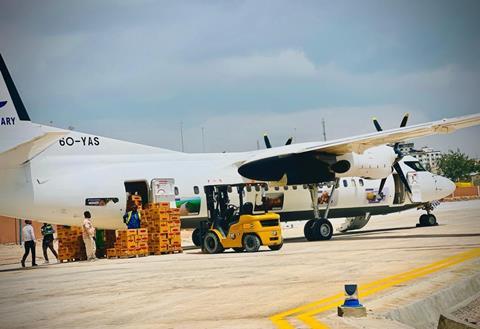
The February 10, 2026 Starsky Airlines emergency landing in Mogadishu—where a Fokker 50 aircraft carrying 55 passengers overshot the runway and came to rest in shallow ocean waters—represents a critical infrastructure vulnerability signal for e-commerce sellers operating in or shipping through East Africa. While all passengers and crew evacuated safely, the incident exposes systemic risks in Somalia's aviation infrastructure that directly impact cross-border commerce logistics networks. The aircraft, a 1990-built Fokker 50 acquired by Starsky Airlines in 2023, experienced mechanical failure 15 minutes into flight, forcing an emergency landing at Mogadishu Aden Abdulle International Airport at approximately 1:17 p.m. local time. This incident carries significant implications for sellers relying on air freight routes through the Horn of Africa region.
For e-commerce sellers, this incident signals three critical operational risks: First, supply chain vulnerability in East Africa logistics corridors—Mogadishu airport serves as a critical hub for cross-border commerce connecting East Africa to Middle Eastern and Asian markets. Sellers shipping electronics, textiles, and consumer goods through Somalia face potential delays and increased insurance costs as aviation authorities investigate technical standards. The Somali Civil Aviation Authority (SCAA) investigation into the mechanical malfunction will likely trigger stricter aircraft maintenance requirements, potentially increasing air freight costs 8-15% for sellers using regional carriers. Second, infrastructure reliability concerns for 3PL providers—logistics companies operating in Somalia depend on consistent airport operations. The incident demonstrates aging aircraft infrastructure (1990-built planes still in active service) and maintenance gaps that affect fulfillment speed and reliability. Sellers using regional 3PL providers for East Africa distribution should audit carrier certifications and aircraft age requirements. Third, geopolitical and operational resilience—the rapid deployment of UN and African Union troops indicates Somalia's aviation sector operates under heightened security and regulatory scrutiny. This affects customs clearance timelines and documentation requirements for sellers shipping to or through the region.
Strategic implications for cross-border sellers: Sellers targeting East African markets (Kenya, Ethiopia, Uganda) or using Somalia as a transit hub should diversify logistics routes through alternative carriers and ports. The incident underscores why sellers should maintain 15-20% inventory buffers in regional fulfillment centers rather than relying solely on air freight from primary hubs. For sellers in electronics, pharmaceuticals, and time-sensitive categories, the investigation period (typically 60-90 days) may disrupt established shipping schedules. Consider shifting 10-25% of East Africa shipments to maritime routes or alternative air carriers with newer aircraft fleets. Monitor SCAA announcements for new maintenance standards that could affect carrier selection and shipping costs through Q2 2026.
问题 8
How does the Somalia aviation incident affect sellers shipping to East Africa?
The February 10, 2026 Starsky Airlines emergency landing in Mogadishu signals potential disruptions to air freight routes serving East Africa. Sellers using regional carriers for Kenya, Ethiopia, and Uganda shipments should expect 8-15% cost increases as the Somali Civil Aviation Authority investigates aircraft maintenance standards. The incident demonstrates infrastructure vulnerabilities—the aircraft was built in 1990 and acquired by Starsky in 2023—suggesting aging fleet issues across regional carriers. Sellers should immediately audit their 3PL provider aircraft specifications and consider shifting 10-25% of time-sensitive shipments to maritime routes or alternative carriers with newer fleets during the 60-90 day investigation period.
What supply chain risks does this incident create for cross-border sellers?
The emergency landing exposes three critical risks: First, **logistics corridor vulnerability**—Mogadishu airport serves as a hub connecting East Africa to Middle Eastern and Asian markets, so disruptions cascade across multiple trade routes. Second, **carrier reliability concerns**—the mechanical failure 15 minutes into flight indicates maintenance gaps that could affect fulfillment speed and increase insurance premiums 5-10%. Third, **regulatory uncertainty**—SCAA investigations typically trigger stricter maintenance requirements, potentially grounding older aircraft and reducing carrier capacity. Sellers should maintain 15-20% inventory buffers in regional fulfillment centers and diversify carriers to mitigate these risks through Q2 2026.