

U.S. University Foreign Funding Transparency Initiative | Cross-Border Education Market Implications for EdTech & International Student Services Sellers
- Trump administration releases $5.2B foreign funding data affecting 555 universities; creates compliance risks and market opportunities for education-related e-commerce sellers serving international student populations and academic institutions










概览
The Trump administration's release of comprehensive foreign funding disclosure data through the Section 117 Foreign Gift and Contract Reporting portal (foreignfundinghighered.gov) represents a watershed moment for transparency in U.S. higher education, with significant indirect implications for cross-border e-commerce sellers serving educational institutions and international student markets. The February 2026 data release revealed $5.2 billion in foreign gifts and contracts for 2025 alone, part of nearly $70 billion accumulated since 1986, with Qatar ($1.1 billion annually), the United Kingdom ($633 million), and China ($528 million) leading funding sources. Four elite institutions—Harvard ($4.2B historical), Carnegie Mellon ($3.9B), MIT ($3.5B), and Stanford—received over 50% of all foreign funding, while 555 universities reported across the portal covering countries of concern including China, Russia, Iran, North Korea, Cuba, and Venezuela.
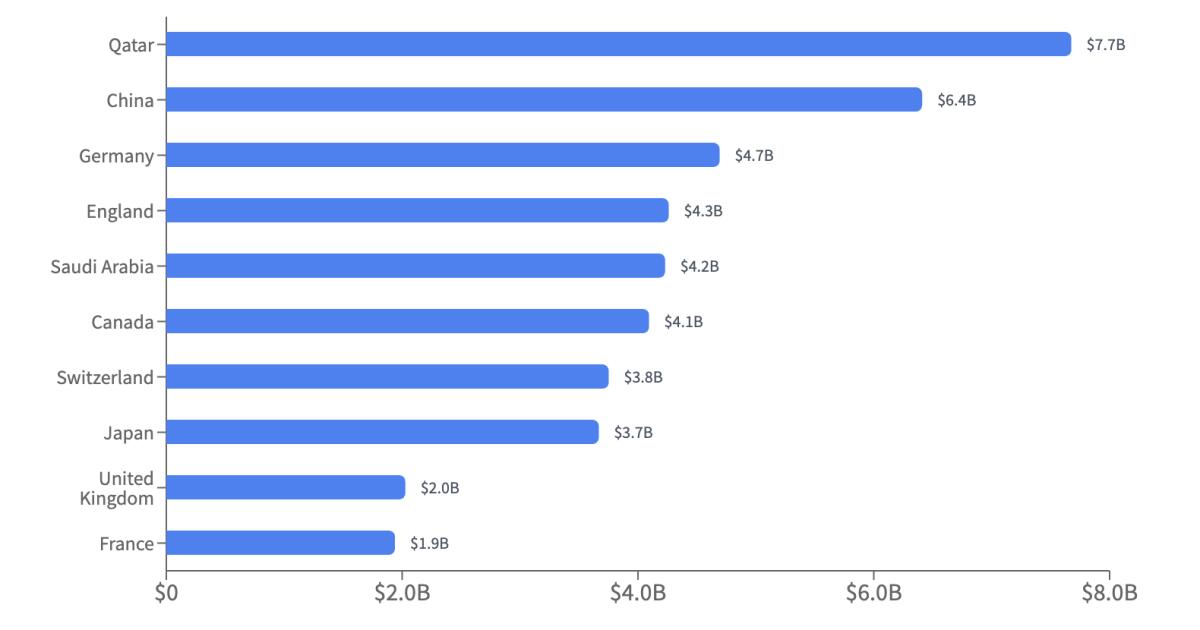
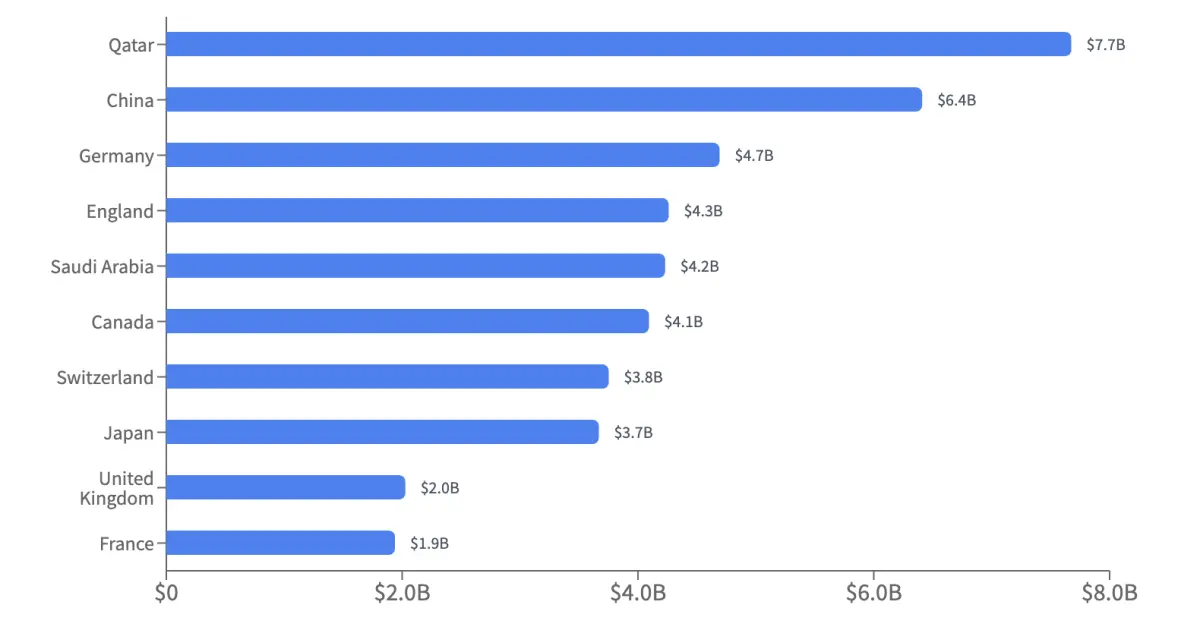
For e-commerce sellers, this transparency initiative creates three distinct market dynamics: First, the compliance burden on universities (35-40% noncompliance rates despite improvements) signals increased institutional spending on compliance software, data management systems, and consulting services—opportunities for B2B sellers offering university-focused SaaS solutions, document management platforms, and audit tools. Second, the geopolitical scrutiny of foreign funding sources, particularly from China ($6.4B historical, $528M in 2025) and Qatar ($7.7B historical, $1.1B in 2025), may accelerate institutional diversification away from concentrated foreign funding toward domestic partnerships and alternative revenue streams, potentially reducing international student recruitment and creating demand for domestic student acquisition tools and services. Third, Columbia University's case exemplifies the political leverage now applied to universities—the institution received $400 million in federal grant cancellations in March 2025 and subsequently agreed to launch Tel Aviv Global Center programming, demonstrating how geopolitical policy directly influences institutional priorities and spending patterns.
Critical market insight: The $903 million annual economic contribution from Columbia's 39% international student population (highest in Ivy League) illustrates the scale of the international education market vulnerable to policy shifts. Universities facing federal scrutiny may reduce international student recruitment, directly impacting sellers of international student services (visa preparation, housing platforms, cultural adaptation products), English language learning tools, and cross-border payment solutions. Conversely, the compliance crisis creates immediate opportunities: more than $2.1 billion of the $5.2 billion disclosed in 2025 was not timely reported, indicating systemic data management failures. Universities under investigation (Harvard, Penn, UC Berkeley, Michigan) will require enhanced reporting infrastructure, creating demand for compliance automation, data analytics platforms, and institutional management software. The political scientist Alexander Cooley's critique—that the data lacks granularity on actual donor provenance and conflates legitimate activities like tuition reimbursements with strategic influence—suggests universities will invest in more sophisticated tracking systems to defend against reputational and financial penalties, benefiting sellers of enterprise data solutions and institutional analytics platforms.
问题 8
What are the key differences between Qatar and China funding patterns that affect e-commerce market segmentation?
Qatar's $1.1 billion in 2025 funding primarily supports legitimate educational initiatives including satellite campuses and joint academic programs, according to political scientist Alexander Cooley. In contrast, China's $528 million in 2025 funding includes concerning examples like the University of North Dakota's $37 million in pilot training contracts while simultaneously serving as a federal drone technology partner. This distinction matters for e-commerce sellers: Qatar-funded programs may continue relatively unscathed, while China-funded research partnerships face heightened scrutiny. Sellers should differentiate their compliance solutions by funding source risk level, offering enhanced monitoring for China-related partnerships while providing streamlined reporting for traditional ally funding (UK, Germany, Switzerland).
How can e-commerce sellers leverage the foreignfundinghighered.gov portal data to identify institutional market opportunities?
The Education Department's public portal provides detailed breakdowns of foreign funding by institution, source country, and funding type (gifts vs. contracts). E-commerce sellers can use this data to identify: (1) Universities with highest compliance risk (those with large unreported funding), (2) Institutions most dependent on scrutinized nations (China, Russia, Iran), (3) Sectors most affected (research institutions like MIT, Harvard, Stanford), and (4) Geographic clusters of compliance burden. The portal covers 555 universities, enabling sellers to segment markets by institutional size, funding concentration, and geopolitical risk exposure. Sellers offering compliance solutions should target the 35-40% of institutions with noncompliance issues, while sellers serving international students should focus on institutions with lower foreign funding dependency and stronger domestic enrollment.