
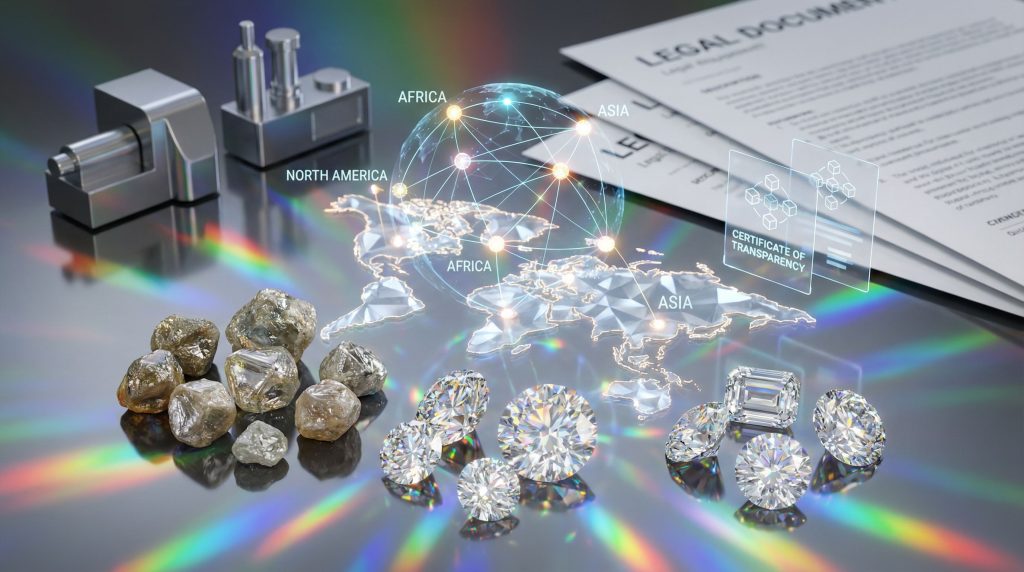
Diamond Industry Partnerships Drive Supply Chain Transformation | Seller Sourcing Opportunities
- Strategic alliances reshape luxury goods sourcing; lab-grown diamonds offer 30-40% cost savings vs natural alternatives for cross-border sellers
概览
The global diamond industry's shift toward strategic partnerships represents a fundamental supply chain restructuring with direct implications for cross-border e-commerce sellers in luxury goods, jewelry, and high-value merchandise categories. The news reveals that traditional supply chain fragmentation across mining, manufacturing, and retail segments is being replaced by technology-enabled partnerships, creating new sourcing opportunities and reducing market entry barriers for sellers. Natural diamond producers face significantly higher extraction costs and longer development timelines (18-36 months) compared to laboratory-grown alternatives, driving consolidation through technology partnerships. Synthetic diamond manufacturers are leveraging partnerships to scale production capabilities through chemical vapor deposition (CVD) technology collaborations, enabling faster time-to-market and 30-40% cost reductions compared to natural diamond sourcing.
For cross-border sellers, the immediate logistics opportunity centers on Asian manufacturing hubs emphasizing technology transfer agreements and supply chain integration. Sellers sourcing from India, China, and Southeast Asia can now access lab-grown diamond suppliers with 60-90 day lead times versus 12-24 months for natural diamonds. This dramatically improves inventory turnover and reduces working capital requirements. The shift toward blockchain-enabled supply chain transparency and quality control systems creates competitive advantages for sellers who can verify authenticity and ethical sourcing—critical differentiators in the $87B global diamond market. E-commerce partnerships are becoming critical as consumer purchasing behavior shifts online, with retailers collaborating on virtual try-on technology and 360-degree product visualization, reducing return rates by 15-25% for high-value items.
Regional warehouse positioning becomes strategic: North American and European fulfillment centers should prioritize lab-grown diamond inventory given consumer demand for ethical sourcing in these markets. African mining regions face political volatility risks, making direct sourcing risky; instead, sellers should source through established Asian manufacturing hubs with government-private sector stability. Payment processing partnerships enabling seamless high-value transactions with fraud prevention and international currency capabilities reduce transaction costs by 2-4% compared to traditional banking channels. The total landed cost advantage for lab-grown diamonds sourced from Asia (manufacturing + shipping + customs) ranges from $8-15 per carat versus $20-35 for natural diamonds, representing 40-60% margin improvement for sellers. Currency volatility in international trade remains a risk; sellers should implement forward contracts for 60-90 day supply commitments to lock in costs.
问题 8
Which warehouse locations offer strategic advantages for lab-grown diamond fulfillment?
North American and European fulfillment centers should prioritize lab-grown diamond inventory given strong consumer demand for ethical sourcing in these markets. Specifically, positioning inventory in US East Coast warehouses (New Jersey, Pennsylvania) and EU hubs (Germany, Netherlands) reduces shipping times to primary consumer markets by 40-50% compared to Asian fulfillment. For high-value items like diamonds, consider dedicated 3PL providers specializing in luxury goods with enhanced security, insurance, and customs clearance capabilities. Regional positioning also enables compliance with local ethical sourcing regulations—EU markets increasingly require blockchain-verified supply chain transparency, making European warehouse positioning strategically important for regulatory compliance.
How can cross-border sellers reduce sourcing costs by shifting from natural to lab-grown diamonds?
Lab-grown diamonds offer 30-40% cost savings compared to natural alternatives due to shorter production timelines (60-90 days vs 12-24 months) and lower extraction costs. Asian manufacturing hubs—particularly India, China, and Vietnam—now offer CVD technology partnerships that enable sellers to source directly from manufacturers rather than through traditional mining-retail intermediaries. The total landed cost advantage ranges from $8-15 per carat for lab-grown versus $20-35 for natural diamonds. Sellers should prioritize partnerships with certified CVD manufacturers in Asia to lock in supply agreements for 3-6 month inventory commitments, reducing working capital requirements by 25-35% compared to natural diamond sourcing.