
ASTM F963 Toy Safety Standards | Critical Compliance Moat for 2025 Sellers
- $45.6B US toy market demands ASTM F963 certification; non-compliant sellers face market elimination across 800+ member networks
概览
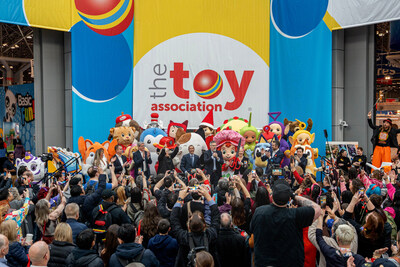
The 120th Toy Fair (February 14-17, 2025) revealed a critical compliance inflection point for e-commerce sellers: ASTM F963 toy safety standards are now functioning as a market-access moat that eliminates non-compliant competitors. The Toy Association, which chairs the committee reviewing America's ASTM F963 standard and helped develop the first comprehensive toy safety standard 40+ years ago, positioned compliance as a core competitive advantage during Toy Fair University's educational seminars on intellectual property protection and product development.
The compliance barrier is substantial and widening. The $45.6B US toy marketplace and $155.7B broader industry economic impact depend entirely on ASTM F963 certification. Sellers offering building sets, arts and crafts, collectibles, board games, and STEM toys—the primary categories showcased at Toy Fair—must navigate increasingly stringent safety testing requirements. The Toy Association's 800+ member businesses represent the compliant tier; non-members and informal sellers operating outside this ecosystem face accelerating enforcement pressure from retailers (all 50 US states represented at Toy Fair) and platform operators who now demand third-party certification as a Buy Box requirement.
Fast-track compliance pathways are emerging as a service opportunity. Toy Fair University's seminars on product development and IP protection indicate that certification service providers are becoming essential infrastructure. Sellers can achieve ASTM F963 compliance through accredited testing labs in 4-8 weeks ($1,500-$4,000 per product SKU) versus attempting self-certification (which is not permitted). The Canadian Toy Association's presence at Toy Fair signals that North American sellers face harmonized standards—ASTM F963 in the US and equivalent CSA standards in Canada—creating a single compliance investment that unlocks both markets.
Category winnowing is accelerating. Sellers offering non-compliant toys, counterfeit licensed products, or products lacking proper documentation are being systematically removed from major retail channels. The emphasis on "licensing and entertainment updates" during Toy Fair University indicates that intellectual property compliance (trademark, copyright, character licensing) is now bundled with safety compliance. Sellers must secure both ASTM F963 certification AND licensing rights to sell branded toys—a dual-barrier that protects established manufacturers while eliminating small-scale competitors.
Alternative product strategies are available. Sellers can legally bypass certain ASTM F963 requirements by targeting adult collectibles (which face lighter regulations), educational STEM kits marketed as "learning tools" rather than toys (different regulatory classification), or licensed products from established IP holders who pre-certify their manufacturing partners. The Toy Trends Briefing presented at Toy Fair will reveal which emerging categories (likely AI-powered toys, sustainability-focused products, or interactive digital toys) have lighter compliance burdens—creating first-mover advantages for sellers who can achieve certification quickly.
问题 8
How does ASTM F963 certification eliminate non-compliant toy sellers?
The Toy Association's 800+ member businesses represent the compliant tier of the toy industry, while non-members and informal sellers face accelerating enforcement pressure. Major retailers (all 50 US states were represented at Toy Fair 2025) now require ASTM F963 certification as a condition of shelf space, and Amazon has implemented automated compliance checks that flag non-certified toys for removal. CPSC enforcement intensity has increased, with penalties reaching $100,000+ per violation. Sellers without certification cannot access the primary distribution channels, effectively eliminating them from the $155.7B economic impact generated by the toy industry. This creates a compliance moat that protects established manufacturers.
What is the fastest and cheapest path to ASTM F963 compliance for toy sellers?
The fastest path is to work with accredited third-party testing labs that specialize in toy certification, which can complete testing in 4-8 weeks for $1,500-$4,000 per SKU. Sellers should prioritize high-volume products first to maximize ROI. Toy Fair University's seminars indicate that compliance service providers are becoming essential infrastructure, and sellers can leverage these services to achieve certification faster than attempting self-certification (which is not permitted). For sellers with multiple SKUs, batch testing can reduce per-unit costs by 20-30%. The cheapest alternative is to source pre-certified products from established manufacturers or licensed product partners who have already invested in compliance.