
Omnichannel Retail Integration Drives 60% E-Commerce Growth | Seller Opportunities
- Do it Best/True Value merger achieves $2.5B revenue with 91% snow removal growth; same-day pickup orders surge 24% YoY as independent retailers capitalize on integrated digital + local fulfillment strategy
概览
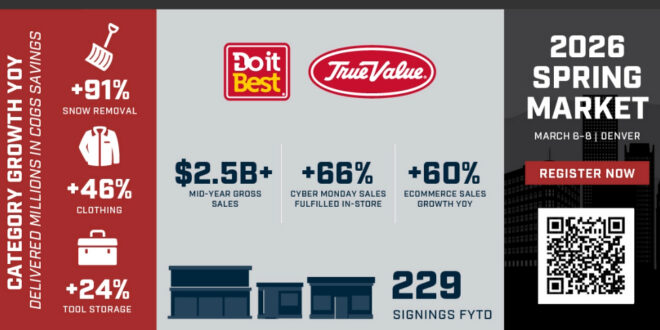
The Do it Best and True Value integration represents a critical case study in omnichannel retail marketing strategy, demonstrating how consolidated distribution networks can drive explosive e-commerce growth while maintaining independent retailer relevance. With Q2 fiscal 2026 consolidated revenues exceeding $2.5 billion and December 2025 recording nearly 60% year-over-year e-commerce sales growth, this merger signals a fundamental shift in how hardware and home improvement sellers should approach digital marketing and fulfillment strategy.
The core marketing insight: True Value's restored national brand awareness campaign—where participating retailers invest directly in campaigns with flexibility and accountability—proves that decentralized brand investment outperforms centralized control for independent retail networks. During the critical Black Friday through Cyber Monday period, 63% of orders utilized same-day pickup or ship-to-store fulfillment, while Cyber Monday became the highest single sales day ever with 66% of traffic driven to member locations. This indicates that omnichannel messaging emphasizing local convenience and rapid fulfillment converts significantly better than pure e-commerce positioning.
Category-specific marketing opportunities are explosive: Snow removal equipment surged 91% year-over-year, clothing grew 46% YoY, and tool storage solutions increased 24% YoY. These aren't random spikes—they reflect seasonal demand patterns and consumer behavior shifts that sellers can exploit through targeted PPC campaigns and content marketing. The 24% year-over-year increase in same-day pickup orders as a percentage of total orders demonstrates that consumers actively seek local fulfillment options, creating arbitrage opportunities for sellers who can position inventory near population centers and emphasize rapid delivery in ad copy.
The operational context matters for seller strategy: The integration achieved significant cost-of-goods savings through consolidated purchasing, which CEO Dan Starr emphasized alongside digital execution and local retailer support. For third-party sellers, this means competing against increasingly efficient wholesale operations requires either category specialization (targeting high-growth segments like snow removal) or geographic arbitrage (leveraging local fulfillment networks that larger competitors haven't optimized). The upcoming Spring Market will showcase integrated merchandising wins and technology advancements, signaling that vendor partnerships and data-driven merchandising are becoming table stakes for suppliers.
Marketing channel implications are immediate: The shift toward same-day pickup and ship-to-store fulfillment suggests that local search marketing (Google Local Services, Facebook/Instagram location-based targeting) will outperform national brand campaigns for hardware and home improvement categories. Sellers should reallocate PPC budgets from broad national keywords toward local intent keywords ("snow removal equipment near me," "tool storage same-day pickup") where conversion rates are demonstrably higher and customer acquisition costs are lower due to reduced competition.
问题 8
What does the $2.5B consolidated revenue and 31% True Value sales growth signal about market consolidation trends?
The news reports True Value sales increased 31% year-over-year from December 2024 to December 2025, following integration into Do it Best Group. This demonstrates that consolidated distribution networks can drive significant growth through operational efficiency and integrated marketing. For sellers, this signals that independent retailers are consolidating into larger networks to compete effectively against Amazon and big-box retailers. Sellers should prioritize relationships with consolidated buying groups and integrated retail networks, as these organizations have greater marketing budgets, better data analytics, and more sophisticated omnichannel capabilities. The upcoming Spring Market will showcase integrated merchandising wins and technology advancements, indicating that sellers must align with these consolidated networks to access growth opportunities.
How should sellers interpret the 63% same-day pickup adoption rate during peak shopping periods?
This 63% adoption rate during Black Friday through Cyber Monday indicates that consumers actively prefer rapid fulfillment when available, even during peak e-commerce periods. This contradicts the assumption that online shoppers prioritize lowest price over speed. For sellers, this means investing in local fulfillment infrastructure or partnerships with regional 3PLs can drive significant conversion improvements. The news shows that Cyber Monday became the highest single sales day ever with 66% of traffic driven to member locations, proving that local fulfillment messaging drives traffic and conversions. Sellers should prioritize same-day pickup options in their fulfillment strategy and emphasize this capability prominently in marketing materials, especially during peak seasons when consumers value speed most highly.