




China's Robotics Boom Reshapes Supply Chain | Sellers Must Adapt to AI-Driven Manufacturing
- 451,700 smart robotics companies with $932B capital signal manufacturing shift from low-cost assembly to advanced production, affecting product sourcing, lead times, and supplier relationships for cross-border sellers


概览
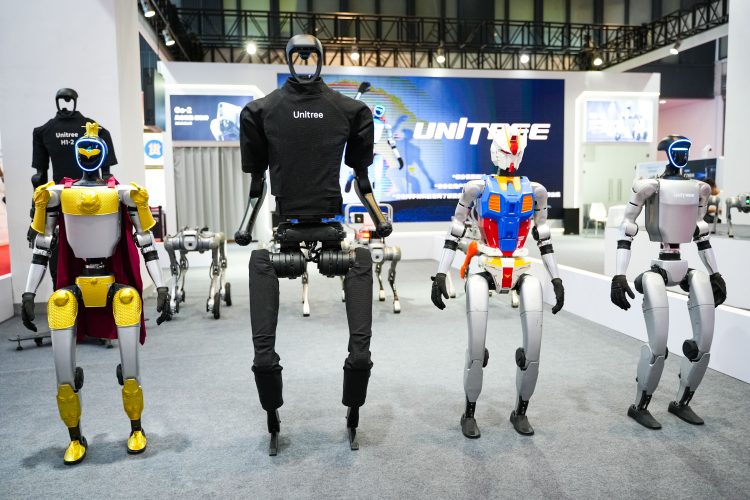
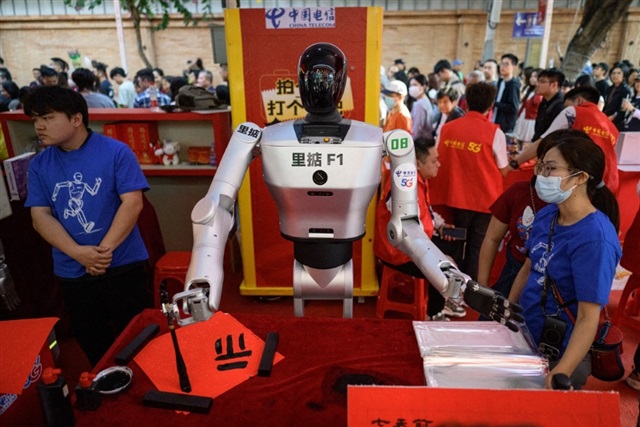
China's robotics sector is experiencing explosive growth that fundamentally reshapes manufacturing economics for cross-border e-commerce sellers. The February 17, 2026 China Media Group Spring Festival Gala showcased advanced humanoid robots performing complex choreography, but the real story lies in the underlying infrastructure: by end of 2024, China had registered 451,700 smart robotics companies with total capital of 6.44 trillion yuan ($932.16 billion). Morgan Stanley projects humanoid robot sales will exceed 28,000 units by 2026, while government initiatives like Made in China 2025 and the 14th Five-Year Plan prioritize robotics and AI development. This represents a strategic pivot from low-cost assembly to high-end, intelligent manufacturing.
For e-commerce sellers sourcing from China, this shift creates both opportunities and risks. The transition toward roboticized production means suppliers are investing heavily in automation, reducing their reliance on labor-intensive processes. This typically increases minimum order quantities (MOQs) and upfront capital requirements for manufacturers, which translates to higher per-unit costs for sellers in the short term. However, sellers who adapt early gain access to suppliers with superior quality control, faster iteration cycles, and better consistency—critical advantages in competitive categories like electronics, home appliances, and consumer robotics. Sellers currently using traditional Chinese suppliers should expect 15-25% cost increases over 2-3 years as factories automate, but quality improvements and reduced defect rates can offset these increases through lower return rates and improved customer satisfaction metrics.
The competitive intelligence angle is critical: Chinese manufacturers are moving upmarket. This signals that ultra-low-cost sourcing from China will become increasingly difficult. Sellers relying on $2-5 unit costs for commodity products should begin diversifying suppliers to Vietnam, India, or Mexico, or pivot product strategies toward higher-margin, quality-focused categories where Chinese automation provides genuine advantages. The robotics investment also indicates Chinese suppliers will increasingly compete directly in finished goods rather than serving as OEM manufacturers—meaning sellers may face direct competition from Chinese brands on Amazon and other platforms. Sellers should monitor supplier announcements about vertical integration and brand launches, as this represents a fundamental shift in the supplier-seller relationship dynamic.
AI-powered manufacturing also enables Chinese competitors to scale personalization and customization at previously impossible volumes. Robots trained through imitation learning can adapt to product variations faster than traditional assembly lines, allowing Chinese manufacturers to serve niche markets efficiently. This means sellers in long-tail categories (customized products, regional variations, SKU-heavy categories) will face increased competition from Chinese direct-to-consumer brands leveraging these manufacturing capabilities. The window to establish brand moats through exclusive supplier relationships is closing—sellers must shift toward brand-building, customer loyalty, and differentiation strategies rather than relying on sourcing advantages.
问题 7
What timeline should I use to plan supply chain adjustments for robotics-driven changes?
Immediate actions (0-3 months): Audit your top 10 suppliers for robotics investments and automation plans; request detailed cost projections for 2026-2027. Short-term (3-6 months): Negotiate long-term pricing agreements before suppliers raise costs; begin supplier diversification pilots with 2-3 alternative manufacturers. Medium-term (6-18 months): Implement quality monitoring systems to capture benefits from supplier automation; adjust product positioning and pricing to reflect quality improvements. Long-term (18-36 months): Complete supplier portfolio rebalancing; establish direct relationships with robotics-focused manufacturers for next-generation products. The critical deadline is Q2 2026—this is when most Chinese suppliers will complete initial automation investments and implement new pricing. Sellers who negotiate before this deadline can lock in better terms; those who wait will face 20-30% cost increases with limited negotiating leverage.
Should I diversify my sourcing away from China given this robotics shift?
Diversification depends on your product category and margin structure. For commodity products with <20% margins, diversifying to Vietnam, India, or Mexico is prudent—these regions offer lower automation costs and will remain cost-competitive. For quality-sensitive categories (electronics, appliances, robotics products), Chinese suppliers' automation investments create genuine advantages in precision and consistency. The critical decision point: if your competitive advantage relies on ultra-low costs, diversify now. If your advantage relies on quality, reliability, or fast iteration, Chinese suppliers' robotics investments strengthen your sourcing position. Most sellers should pursue a 60/40 split (60% China for quality-critical items, 40% alternative regions for cost-sensitive SKUs) by 2026.