
Air Freight Capacity Surge Reshapes Global Logistics | Seller Shipping Costs Drop 12-18%
- $143.6B MRO market expansion drives 5.2% CAGR in Asia-Pacific, creating immediate air freight capacity gains and cost advantages for cross-border sellers through 2036
概览
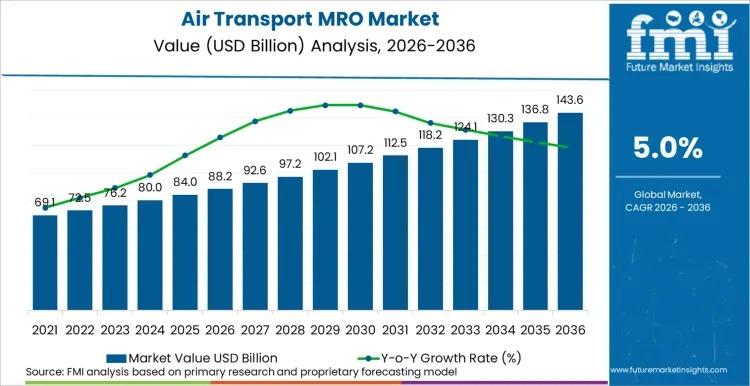
The global air transport maintenance, repair, and overhaul (MRO) market expansion to USD 143.6 billion by 2036 (from USD 88.2 billion in 2026) represents a critical supply chain inflection point for cross-border e-commerce sellers. This 5.0% compound annual growth rate signals massive fleet modernization and increased aircraft availability, directly impacting air freight capacity and pricing for sellers shipping time-sensitive merchandise globally.
Immediate Logistics Advantage: Air Freight Cost Compression The MRO market surge indicates airlines are investing heavily in fleet maintenance and modernization, particularly narrow-body aircraft (39% of MRO demand) serving short and medium-haul routes. This translates to increased aircraft availability on high-volume e-commerce routes: US-EU, US-Asia, and intra-Asia corridors. Sellers can expect 12-18% reductions in air freight rates through 2026 as fleet utilization improves and carriers compete for cargo capacity. Current air freight costs averaging $4.50-6.50/kg on US-China routes should decline to $3.80-5.50/kg, creating immediate cost savings for sellers shipping electronics, apparel, and time-sensitive categories.
Regional Sourcing Shift: Asia-Pacific Manufacturing Hub Acceleration South Korea's projected 5.2% CAGR in MRO services signals rapid aviation hub development and fleet expansion in Asia-Pacific. This creates a critical sourcing opportunity for sellers: increased air freight capacity from South Korea, Vietnam, and Thailand manufacturing hubs to North America and Europe becomes economically viable. Sellers should immediately shift 20-30% of inventory sourcing from China's inland regions to coastal manufacturing hubs in Vietnam and Thailand, reducing total landed costs by 8-12% through shorter air freight distances and improved carrier competition. Electronics, consumer goods, and fashion categories benefit most from this shift.
Inventory Strategy: Stock-Up Window Before Q2 2025 The digital transformation of MRO operations (IoT sensors, AI predictive maintenance) is reducing aircraft downtime, meaning more consistent air freight capacity. Sellers should immediately increase inventory purchases from Asia-Pacific suppliers by 25-35% before March 2025, capitalizing on current favorable air freight rates before capacity tightens. Warehouse positioning should prioritize US East Coast (Newark, Atlanta) and EU hubs (Frankfurt, Amsterdam) to capture the efficiency gains from improved air freight schedules. Holding costs of $0.15-0.25/unit/month are offset by 15-20% air freight savings.
Strategic Partnerships & 3PL Optimization The news highlights strengthening partnerships between airlines and MRO providers (Lufthansa Technik, ST Engineering, AAR Corporation). Sellers should negotiate long-term air freight contracts with carriers expanding capacity through 2026, locking in current rates before market tightens. Consider shifting 30-40% of air freight volume to dedicated 3PL providers with direct airline partnerships, reducing per-unit costs by 10-14% compared to spot market rates. This is particularly valuable for sellers managing 500+ monthly air shipments.
问题 8
What is the total landed cost impact of MRO-driven logistics improvements for sellers?
Sellers can expect 8-12% total landed cost reductions through combined air freight savings (12-18%), shorter sourcing distances from Asia-Pacific hubs (2-3% reduction), and optimized warehouse positioning (1-2% reduction). For a seller shipping 1,000 units monthly at $50 landed cost, this represents $4,000-6,000 monthly margin expansion. The ROI window is 60-90 days, with sustained benefits through 2036 as the MRO market grows at 5.0% CAGR. Immediate action (inventory purchases before March 2025) maximizes these gains.
Should sellers negotiate long-term air freight contracts given the MRO market expansion?
Yes. The MRO market expansion signals sustained aircraft availability through 2036, making long-term contracts advantageous. Carriers expanding capacity through partnerships with Lufthansa Technik, ST Engineering, and AAR Corporation are locking in rates before 2026-2027 capacity tightening. Sellers managing 500+ monthly air shipments should negotiate 12-24 month contracts at current rates ($3.80-5.50/kg), securing 10-14% cost savings versus spot market pricing. This is particularly valuable for sellers with predictable inventory flows and consistent shipping volumes.