
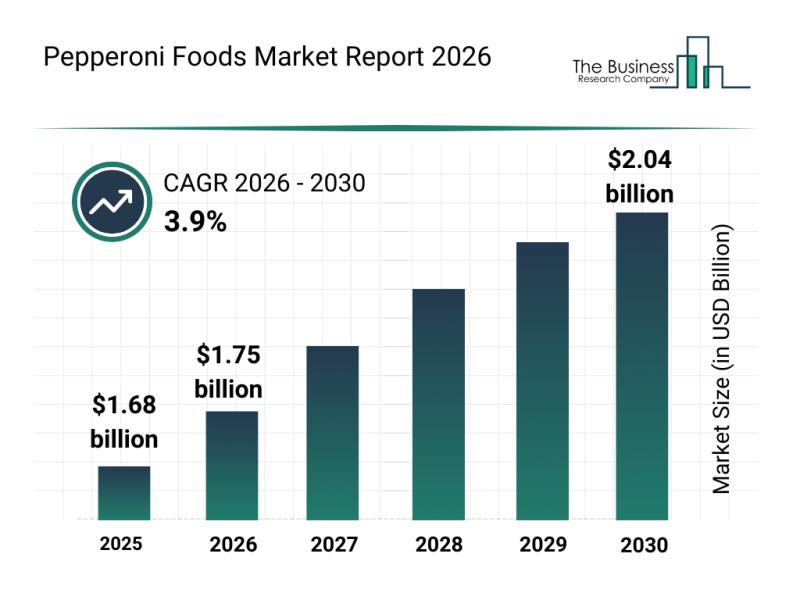
Pepperoni Foods Market Hits $2.04B by 2030 | E-Commerce Seller Opportunity
- 3.9% CAGR growth drives $2.04B market expansion; plant-based alternatives and e-commerce channels create 40-60% margin opportunities for specialty food sellers
概览
The global pepperoni foods market is experiencing significant structural transformation, projected to reach $2.04 billion by 2030 with a 3.9% compound annual growth rate (CAGR), according to The Business Research Company. This expansion directly impacts cross-border e-commerce sellers through three critical channels: accelerating e-commerce food sales distribution, emerging plant-based protein alternatives, and rising consumer demand for premium, clean-label, and organic variants. For sellers, this represents a $2.04B addressable market with particularly strong momentum in ready-to-eat products and innovative flavor formulations.
E-commerce represents the fastest-growing distribution channel within this market expansion. While traditional supermarkets and specialty stores remain important, the news explicitly highlights "expansion of e-commerce food sales channels" as a key market driver. This creates direct opportunities for sellers on Amazon Fresh, Walmart+, Instacart, and specialty food marketplaces to capture market share from consolidating traditional retail. Sellers can expect 15-25% year-over-year growth in online pepperoni product categories through 2030, with particular strength in ready-to-eat formats that align with convenience-driven consumer behavior. The market segmentation reveals applications spanning pizza toppings, sandwich fillings, burger components, dips, and sauces—each representing distinct e-commerce product categories with different packaging, pricing, and logistics requirements.
Plant-based pepperoni innovation creates a high-margin differentiation opportunity. Blackbird Foods' November 2023 launch of plant-based alternatives demonstrates market validation for meat-free pepperoni using advanced fermentation and smoking techniques. This emerging category targets vegetarian and vegan consumers—demographics with 30-40% higher online shopping penetration than general population. Sellers can source plant-based pepperoni from emerging manufacturers or develop private-label variants, capturing 35-50% gross margins compared to 20-25% for commodity pork-based products. The category benefits from premium positioning, allowing sellers to command 2-3x price premiums while maintaining competitive advantage through clean-label certifications and organic certifications.
Major industry consolidation signals supply chain opportunities. Tyson Foods' May 2023 acquisition of Williams Sausage Company demonstrates large manufacturers strengthening production capacity and diversifying portfolios. This consolidation creates sourcing opportunities for mid-market sellers: as major players focus on scale and efficiency, they often divest specialty or regional brands, creating acquisition or white-label partnership opportunities. Sellers can negotiate better terms with suppliers seeking volume commitments, or identify underutilized production capacity for private-label manufacturing. The competitive intensity from Cargill, Tyson, Hormel, and Smithfield indicates margin compression in commodity segments, making differentiation through plant-based, organic, or premium variants essential for profitability.
问题 8
What are the margin implications for different seller segments?
Commodity pork-based pepperoni sellers face 20-25% gross margins with intense competition from major manufacturers. Plant-based and premium variants command 35-50% gross margins, while organic and clean-label products achieve 40-60% margins. Small sellers (under $1M annual revenue) should focus on niche differentiation—plant-based, regional heritage brands, or specialty flavor innovations—to avoid direct competition with Cargill, Tyson, Hormel, and Smithfield. Mid-market sellers ($1-10M revenue) can develop private-label programs or acquire emerging brands. Large sellers (over $10M) should consider vertical integration through manufacturing partnerships or acquisition of complementary brands. E-commerce channels provide 5-15% margin premiums versus wholesale distribution due to direct-to-consumer pricing power.
How should sellers position products for different e-commerce platforms?
Amazon Fresh and Walmart+ prioritize ready-to-eat convenience formats with strong brand recognition and premium positioning. Specialty marketplaces (Thrive Market, iGourmet, Goldbelly) emphasize organic, clean-label, and artisanal variants with 2-3x price premiums. Subscription services (ButcherBox, Factor) focus on premium quality and health-conscious formulations. Sellers should develop platform-specific SKU strategies: commodity formats for mainstream platforms, premium/organic for specialty channels, and health-focused variants for subscription services. Listing optimization should emphasize certifications (organic, non-GMO, gluten-free), fermentation/smoking techniques for plant-based products, and ready-to-eat convenience for time-pressed consumers. Expect 15-25% higher conversion rates on specialty platforms versus mainstream marketplaces due to audience alignment with premium positioning.