

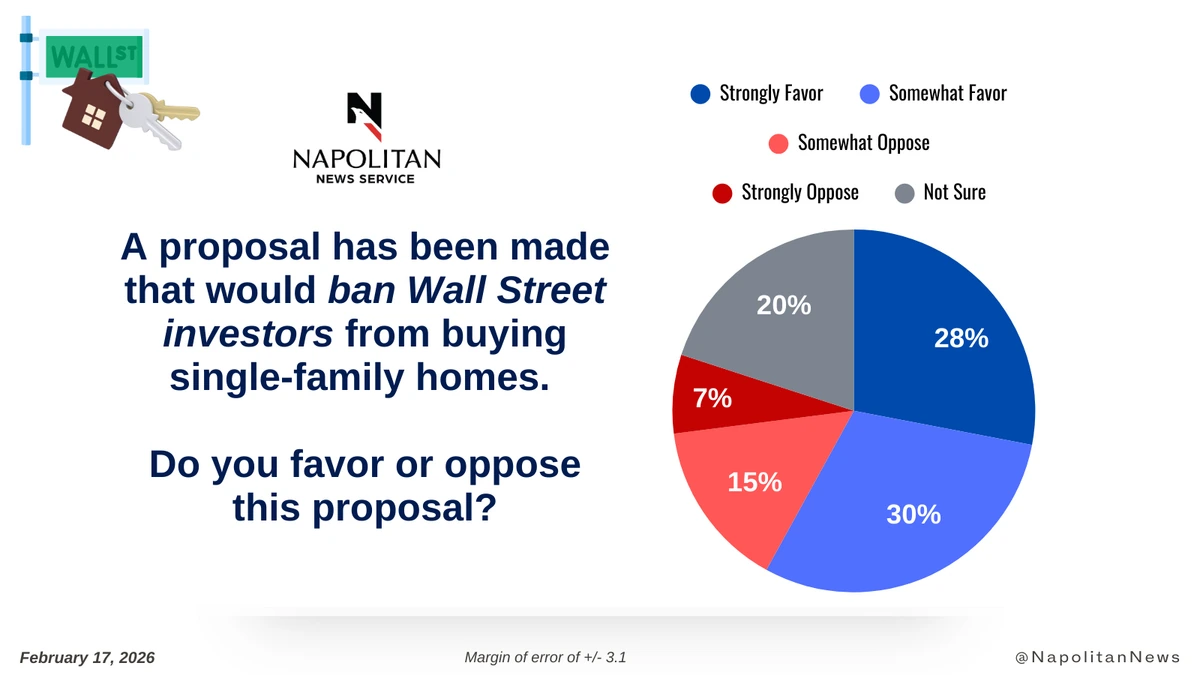


Housing Investor Ban Reshapes Residential Real Estate | 100-Home Threshold Creates Market Disruption
- White House memo (Feb 19-20, 2026) targets 100+ property owners; exempts build-to-rent developers; affects hundreds of investment firms and rental market dynamics














概览
The Trump administration's proposed institutional investor ban represents a significant policy intervention with cascading implications for residential real estate markets, rental housing supply, and consumer spending patterns. On February 19-20, 2026, the White House submitted detailed memos to House and Senate committee leaders outlining a ban on institutional investors owning more than 100 single-family homes from purchasing additional properties. This policy targets hundreds of mid-sized investment firms that have aggressively accumulated residential portfolios since the 2008 financial crisis, while strategically exempting investors who build or heavily renovate homes for rental purposes.
The 100-home threshold creates a clear regulatory boundary with significant market implications. According to the proposal, Treasury Secretary Scott Bessent will have discretionary authority to define institutional investors and modify exemption criteria. The policy directly addresses housing affordability concerns, though data reveals institutional investors (defined as 1,000+ unit landlords) control only 3% of single-family rentals and 0.5% of total single-family housing stock. Critically, large institutional investors have been net sellers for seven consecutive quarters—selling 5,798 homes while purchasing only 4,663 in Q3 2025—indicating they're shifting capital toward build-to-rent development projects rather than competing for existing homes.
For cross-border e-commerce sellers, this policy creates indirect but meaningful market opportunities through consumer spending pattern shifts. The housing affordability crisis drives consumer behavior across multiple categories: (1) Home improvement and renovation products will surge as the exemption incentivizes heavy renovation projects—sellers should prioritize DIY tools, building materials, and home furnishing categories on Amazon, eBay, and Shopify; (2) Rental property management software and supplies will see increased demand from smaller landlords (mom-and-pop operators holding <10 properties) who control 97% of investor-owned housing and face reduced competition; (3) Affordable housing-adjacent products—budget furniture, space-saving solutions, and rental-friendly décor—will experience demand spikes in markets like Houston, Miami, Phoenix, and Las Vegas where investment firms previously controlled 20%+ of home sales; (4) Construction and development equipment will benefit from the policy's incentive structure favoring new construction over acquisition.
The policy's implementation timeline creates urgent compliance and market-entry windows. Congressional approval remains uncertain but the administration is actively lobbying legislative leaders, suggesting 2-4 quarter implementation window if passed. The exemption for renovation-focused investors creates a competitive advantage for sellers offering renovation supplies, contractor tools, and property management solutions. However, the policy may inadvertently reduce new housing supply development by restricting investor capital flows, potentially increasing rental prices and shifting consumer spending toward rental-friendly products rather than homeownership-enabling categories.
Risk factors for sellers include policy uncertainty and potential market contraction. If the ban passes, mid-sized investment firms may divest existing portfolios, flooding secondary markets with properties and potentially depressing home prices—reducing demand for home improvement products. Conversely, if the ban fails or faces constitutional challenges, the policy provides no market disruption. The Treasury Secretary's discretionary authority creates regulatory ambiguity that could affect implementation scope and exemption definitions, making it difficult for sellers to forecast demand with precision.
问题 7
What are the compliance challenges and implementation uncertainties?
The policy faces significant implementation challenges: (1) defining what constitutes 'heavy renovation' for exemption purposes; (2) determining how to measure portfolio ownership across multiple entities and shell companies; (3) addressing constitutional concerns regarding property rights restrictions; (4) Treasury Secretary's discretionary authority creates regulatory ambiguity. The real estate investment industry has expressed concerns about market disruption and reduced rental housing supply. These implementation uncertainties make it difficult for affected entities to plan compliance strategies or for sellers to forecast market impacts with precision.
What are the key markets most affected by institutional investor restrictions?
Housing advocates identify Houston, Miami, Phoenix, and Las Vegas as markets where investment firms accounted for over 20% of home sales during the pandemic. These concentrated markets represent the policy's primary target areas. However, the 100-home threshold is significantly broader than initially anticipated—some investors expected restrictions only on firms with 1,000+ homes. The broader threshold affects more mid-sized firms but may have limited real-world impact given institutional investors' small overall market share (2% of total housing supply).