



AI and Biotech Converge: Revolutionizing Healthcare Through Radical Innovation
- Transformative medical technologies redefine patient care and treatment possibilities for global healthcare ecosystem




概览
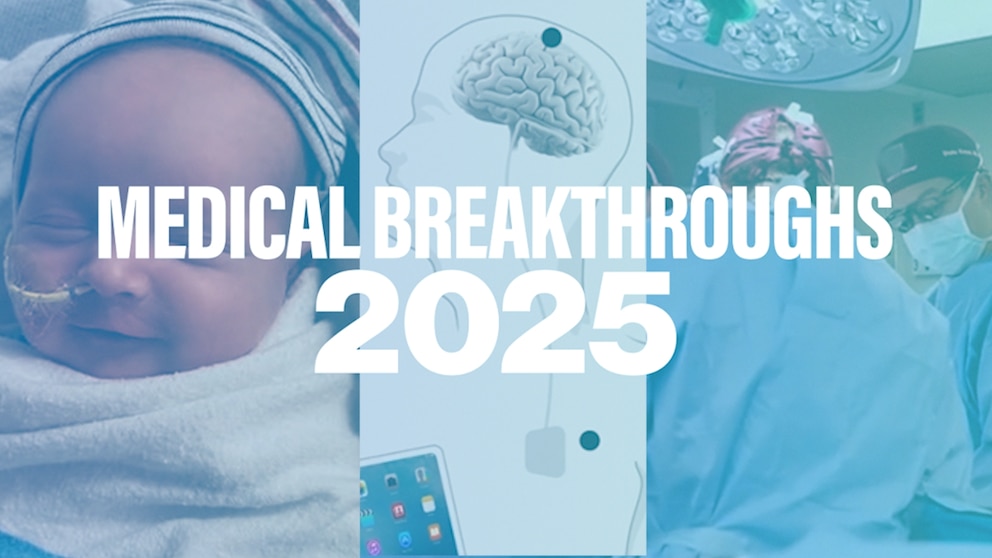
The medical landscape of 2025 represents a pivotal moment where technological convergence meets human-centric healthcare, showcasing unprecedented breakthroughs that challenge traditional treatment paradigms. At the intersection of neurotechnology, artificial intelligence, and precision medicine, we're witnessing a fundamental reimagining of human health capabilities.
Neurological breakthroughs exemplify this transformation, with Synchron's brain-computer interface (BCI) enabling ALS patients like Mark Jackson to control digital devices through thought alone. This isn't merely a technological achievement, but a profound restoration of human agency for individuals with severe mobility limitations. The milestone underscores how neural interfaces are transitioning from experimental technology to practical medical solutions.
Pharmaceutical innovation equally demonstrates remarkable progress. Apnimed Inc.'s groundbreaking oral pill for obstructive sleep apnea and Vertex Pharmaceuticals' non-opioid pain medication Journavx represent strategic advances in targeted treatment development. These innovations signal a shift towards more personalized, precise medical interventions that minimize side effects and maximize patient outcomes.
The regenerative medicine domain shows equally compelling developments. Duke University Medical Center's pediatric heart transplant technique and Legend Biotech's CAR-T immunotherapy for multiple myeloma treatment showcase how interdisciplinary research is expanding therapeutic possibilities. Notably, the multiple myeloma treatment demonstrated disease disappearance in one-third of clinical trial patients, a statistic that would have been unimaginable just years earlier.
Critically, these advancements are not occurring in isolation but represent a systemic transformation of healthcare delivery. UC Davis Health's remote patient monitoring program for hypertension illustrates how technology-enabled personalized healthcare can dramatically improve patient management, reducing blood pressure and associated heart disease risks through continuous, data-driven interventions.
The emerging landscape suggests we are moving beyond treating symptoms towards a holistic, predictive, and personalized approach to human health. As AI, biotechnology, and medical research continue to converge, we can anticipate increasingly sophisticated solutions that not only treat diseases but fundamentally reimagine human physiological potential.
问题 4
What makes the 2025 medical breakthroughs particularly significant?
These innovations represent a paradigm shift from reactive to predictive healthcare, leveraging technologies like brain-computer interfaces, AI-driven diagnostics, and personalized treatment approaches that fundamentally expand human health capabilities.
What are the potential long-term implications of these medical innovations?
These breakthroughs suggest a future of healthcare that is increasingly personalized, predictive, and technologically integrated, with potential to extend human health spans, reduce treatment complexity, and address previously untreatable medical conditions.