

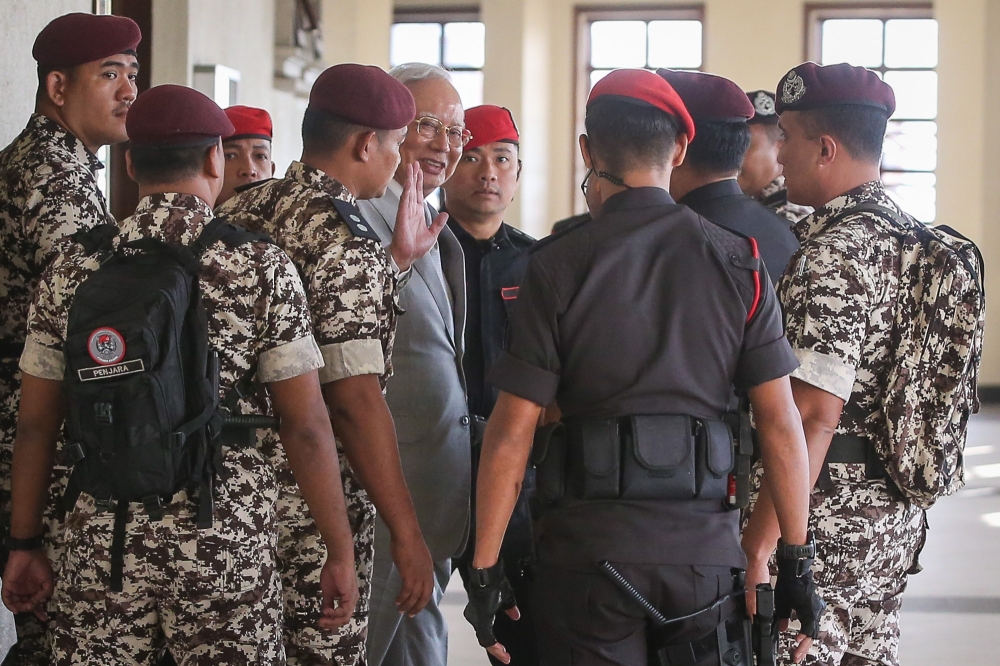

Malaysian Judicial Integrity Triumphs: Najib Razak's House Arrest Bid Crushed
- Landmark ruling reinforces legal accountability for high-profile political corruption in Southeast Asia

























概览
Judicial independence has emerged as a powerful force in Malaysia's ongoing battle against political corruption, with the recent court ruling against former Prime Minister Najib Razak representing a critical moment in the nation's legal and political landscape. The Kuala Lumpur High Court's decisive rejection of Najib's house arrest request sends an unequivocal message about the rule of law transcending political influence.
Systemic Accountability Mechanism: The court's ruling hinges on a crucial procedural point—that the royal order for house arrest was invalid without proper consultation with the Pardons Board. This demonstrates a sophisticated institutional check that prevents arbitrary legal modifications, even for politically connected figures. By emphasizing that no individual, including former political leaders, stands above legal scrutiny, the judiciary has reinforced the fundamental principles of institutional integrity.
Corruption Deterrence Strategy: The 1MDB scandal, involving an alleged $4.5 billion in stolen and laundered funds, represents more than just a personal legal battle. It symbolizes a broader national reckoning with systemic corruption. Najib's continued imprisonment, despite his ongoing political influence, signals a transformative approach to accountability. The court's unwavering stance suggests that Malaysia is systematically dismantling the historical protections that shielded political elites from meaningful legal consequences.
The strategic implications extend far beyond Najib's individual case. By maintaining a standard correctional facility sentence and rejecting house arrest, the Malaysian judicial system is constructing a powerful deterrent framework. Political figures now understand that corruption carries genuine, non-negotiable legal risks. This approach not only punishes individual misconduct but also reshapes the entire political ecosystem's perception of legal vulnerability.
Critically, Najib's continued political relevance—he remains influential in his party, now part of Prime Minister Anwar Ibrahim's unity government—adds complexity to this narrative. The judicial system's independence becomes even more remarkable when it can enforce consequences against a still-connected political operator.
问题 3
How does Najib Razak's case impact future political corruption investigations?
By maintaining a standard prison sentence and rejecting special treatment, the court establishes a powerful deterrence mechanism. Future political figures will recognize that corruption carries genuine legal consequences, potentially transforming the risk calculus for potential misconduct.
What makes this court ruling significant for Malaysia's legal system?
The ruling demonstrates unprecedented judicial independence by rejecting a high-profile political figure's house arrest request. It shows that procedural integrity trumps political connections, reinforcing the principle that no individual is above the law, regardless of their previous political status.