




Atomic Clock Chaos When Microseconds Matter National Time Precision at Risk
- Technological Vulnerability Exposes Critical Infrastructure Timing Dependencies

概览
In an era of hyper-precise technological systems, a seemingly minor 4.8-microsecond disruption at the National Institute of Standards and Technology (NIST) reveals the razor-thin margins of modern timekeeping infrastructure. The incident at the Boulder, Colorado facility underscores a critical vulnerability in national time standards that could have far-reaching implications for critical infrastructure, telecommunications, and global positioning systems.
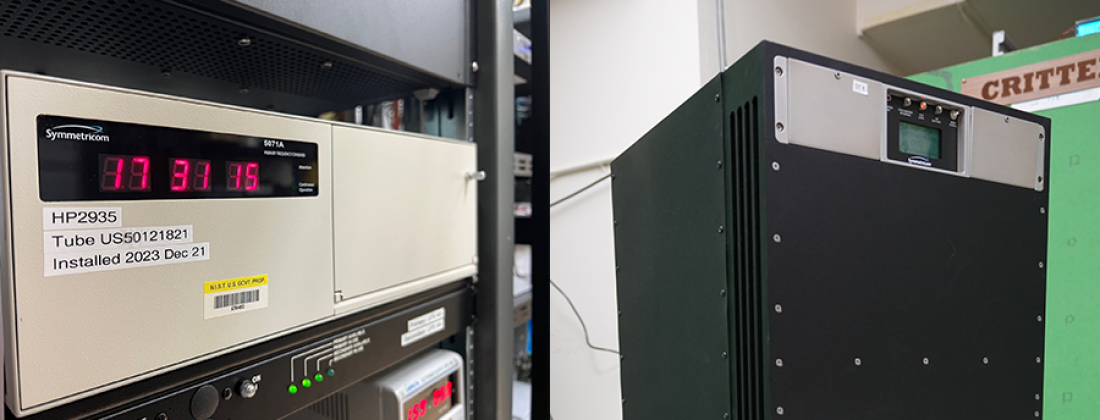
Precision Engineering Under Pressure emerges as the core narrative. During a destructive windstorm, a backup generator failure created a microscopic but potentially significant time measurement drift. Despite the facility's 16 atomic clocks continuing to operate through battery backup, the connection between measurement and distribution systems was temporarily compromised. This minuscule 4.8-microsecond deviation—less than 1/350,000th of a blink—highlights the extraordinary sensitivity of modern technological ecosystems.
Infrastructure Resilience Challenges become immediately apparent. The incident exposes the complex and delicate nature of maintaining ultra-precise national timekeeping systems. Hydrogen masers and cesium beam clocks that measure time through atomic resonant frequencies represent the pinnacle of technological precision, yet remain vulnerable to basic infrastructure failures. The quick response—activating a reserve diesel generator and rapidly restoring power—demonstrates the critical importance of redundant systems in maintaining technological reliability.
The broader implications extend far beyond a simple power interruption. Telecommunications networks, GPS systems, and financial transaction platforms rely on microsecond-level precision to function effectively. This event serves as a stark reminder of the invisible technological infrastructure that underpins modern digital civilization, where a fraction of a second can mean the difference between seamless operation and systemic failure.
Strategic takeaway: Organizations must recognize that technological resilience is not just about high-tech solutions, but also about robust backup systems, redundant infrastructure, and the ability to rapidly respond to unexpected disruptions.
问题 3
What are the potential consequences of time measurement disruptions?
Disruptions in national time standards can affect multiple critical sectors: GPS navigation could experience positioning errors, financial transactions might face synchronization challenges, and telecommunications networks could experience signal interference. The cascading effects demonstrate how fundamental precise timekeeping is to modern technological ecosystems.
How do atomic clocks maintain such precise measurements?
Atomic clocks use atomic resonant frequencies—specifically hydrogen masers and cesium beam clocks—to measure time by tracking the oscillations of atoms. These methods are exponentially more precise than traditional mechanical timekeeping, allowing measurements accurate to within fractions of a microsecond over extended periods.