
Health-Conscious Beverage Revolution Reshapes Global Drink Markets
- Emerging consumer trends drive massive transformation in beverage segment targeting wellness-minded drinkers
概览
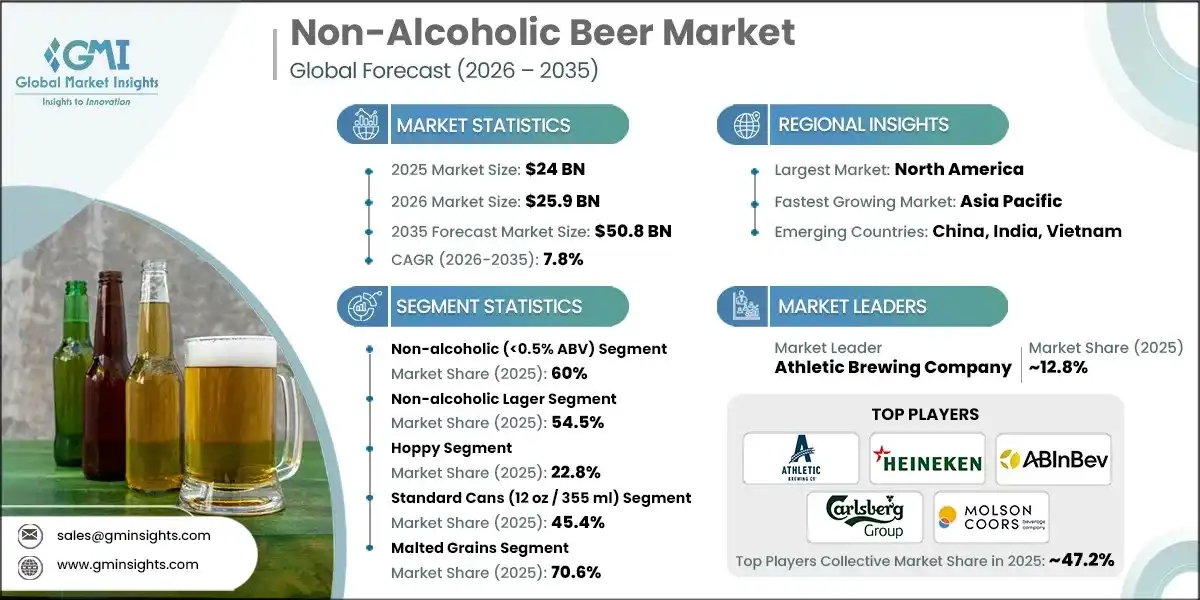
The global beverage landscape is undergoing a profound transformation, with non-alcoholic beer emerging as a pivotal indicator of broader consumer health consciousness. Projected to grow from USD 24 billion in 2025 to USD 50.8 billion by 2035, this market represents more than just a niche trend—it signals a fundamental shift in how consumers approach traditional beverage categories.
Market dynamics are being reshaped by three critical forces: health awareness, technological innovation, and changing lifestyle preferences. The non-alcoholic beer segment is particularly noteworthy, demonstrating a robust 7.8% CAGR that outpaces traditional beer markets. This isn't simply about removing alcohol; it's about creating sophisticated, health-aligned drinking experiences that cater to increasingly discerning consumers.
Regional growth patterns reveal fascinating strategic opportunities. While North America and Europe currently dominate the market, the Asia-Pacific region is experiencing the fastest expansion. Driven by rising disposable incomes and urbanization, this market represents a critical frontier for beverage innovators. Non-alcoholic lagers, which constitute over 53% of the current market, are becoming a strategic battleground for breweries seeking to remain relevant in a rapidly evolving landscape.
Technological innovation is the key differentiator in this emerging market. Major breweries are investing heavily in advanced brewing technologies like arrested fermentation and vacuum distillation. These techniques aren't just about removing alcohol—they're about crafting authentic taste experiences that challenge traditional perceptions of non-alcoholic beverages. The goal is clear: create products that compete not on alcohol content, but on flavor, quality, and lifestyle alignment.
The market isn't without challenges. Taste perception and higher production costs remain significant hurdles. However, the convergence of health trends, premiumization, and brewing innovation suggests a dynamic future. For sellers and manufacturers, this represents a critical opportunity to reimagine beverage offerings, targeting health-conscious consumers across diverse demographics and consumption occasions.
问题 3
Which regions are driving non-alcoholic beer market growth?
While North America and Europe currently lead the market, the Asia-Pacific region is experiencing the fastest growth. This is driven by rising disposable incomes, urbanization, and changing consumer preferences toward health-oriented beverage options.
What challenges do non-alcoholic beer manufacturers face?
Key challenges include overcoming taste perception issues, managing higher production costs, and creating brewing technologies that can deliver authentic flavor without alcohol. Successful brands are investing heavily in advanced techniques like arrested fermentation to address these obstacles.