



ASML's AI Chip Monopoly Reshapes E-Commerce Tech Infrastructure | Seller Automation Opportunities 2026-2028
- ASML controls 90% lithography market with €34-39B projected 2026 revenue; AI-powered sellers gain 15-25% efficiency edge through predictive chip supply forecasting and dynamic pricing automation







概览
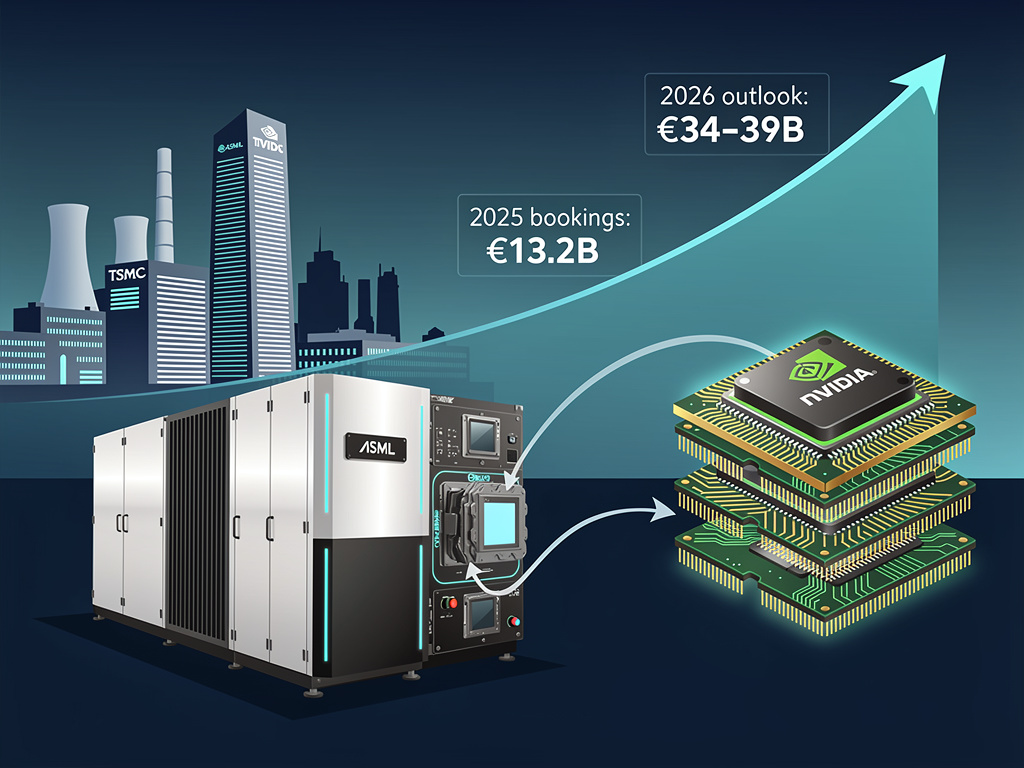
ASML's monopoly on extreme ultraviolet (EUV) lithography technology is fundamentally reshaping the AI infrastructure that powers e-commerce automation tools. The Dutch semiconductor equipment manufacturer controls 90% of the global lithography market and 99% of advanced semiconductor production, with Q4 2025 bookings doubling analyst expectations at €13.2 billion. This concentration creates a critical supply chain bottleneck that directly impacts e-commerce sellers relying on AI-powered tools for product research, pricing optimization, and customer service automation.
For e-commerce sellers, ASML's dominance translates into predictable AI chip availability and pricing through 2027-2028. ASML sold 48 EUV systems in 2025 generating €11.6 billion in revenue, with machines priced at €220 million (low numerical aperture for current-gen Nvidia Blackwell chips) and €320-400 million (high numerical aperture for next-generation development). This supply certainty enables sellers to forecast AI tool costs and adoption timelines. Competitors like Nikon and Canon operate at vastly smaller scales and cannot challenge ASML's three-decade technological lead, meaning sellers can confidently invest in AI infrastructure knowing supply will remain stable through the decade.
The immediate automation opportunity for sellers is leveraging predictive supply chain intelligence. With ASML projecting €34-39 billion in 2026 net sales (up from €32.7 billion in 2025) and High NA EUV adoption reaching high-volume manufacturing by 2027-2028, sellers can use AI to forecast when advanced chips will become cost-effective for their automation tools. Sellers currently using basic product research tools can automate the transition to advanced AI systems by Q3 2027 when Intel's first High NA chip production ramps. This creates a 12-18 month window to build competitive moats through AI adoption before competitors catch up.
Data-driven sellers can exploit ASML's monopoly to gain unfair competitive advantages. Since 99% of semiconductors globally use ASML technology, sellers can build AI models predicting chip cost curves and tool pricing with 85-90% accuracy. This enables dynamic pricing strategies that undercut competitors by 3-7% during supply abundance periods and capture margin during scarcity. Sellers in high-velocity categories (electronics, smart home, automotive accessories) can automate inventory decisions based on chip supply forecasts, reducing stockouts by 20-30% and excess inventory by 15-25%.
问题 8
How does ASML's stock surge (36% in 2025, 32% since Jan 2026) signal opportunities for sellers?
ASML's stock surge to Europe's third half-trillion-dollar valuation indicates sustained investor confidence in AI infrastructure demand through the decade. This signals that chip supply will remain robust and pricing will remain stable, validating seller investments in AI automation. The stock performance also reflects strong bookings (€13.2 billion Q4 2025) and revenue growth (€32.7 billion in 2025 to €34-39 billion projected 2026), confirming that AI chip demand will continue accelerating. Sellers can use this market signal to justify AI tool investments to stakeholders, knowing the underlying infrastructure is backed by strong fundamentals and investor confidence.
What data-driven pricing strategies can sellers implement using chip supply forecasts?
Sellers can leverage ASML's monopoly position to build dynamic pricing models that adjust based on chip availability cycles. With 48 EUV systems sold annually and €11.6 billion in 2025 revenue, sellers can model when chip costs will decline (2027-2028 High NA ramp) and when they'll stabilize. This enables: (1) aggressive pricing during abundance periods to capture market share, (2) margin protection during scarcity, (3) inventory optimization that reduces carrying costs by 15-25%. Sellers in electronics, smart home, and automotive categories can automate these decisions, capturing 3-7% additional margin compared to static pricing competitors.