



AI Platform Valuations Cooling | E-Commerce Sellers Face Tech Investment Uncertainty
- Post-earnings stock momentum drops 58% (120% to 51% six-month gains Q1 2024-Q1 2025); signals investor reassessment of AI spending priorities affecting seller technology adoption budgets









/Palantir%20(PLTR)%20by%20Piotr%20Swat%20via%20Shutterstock.jpg)







概览
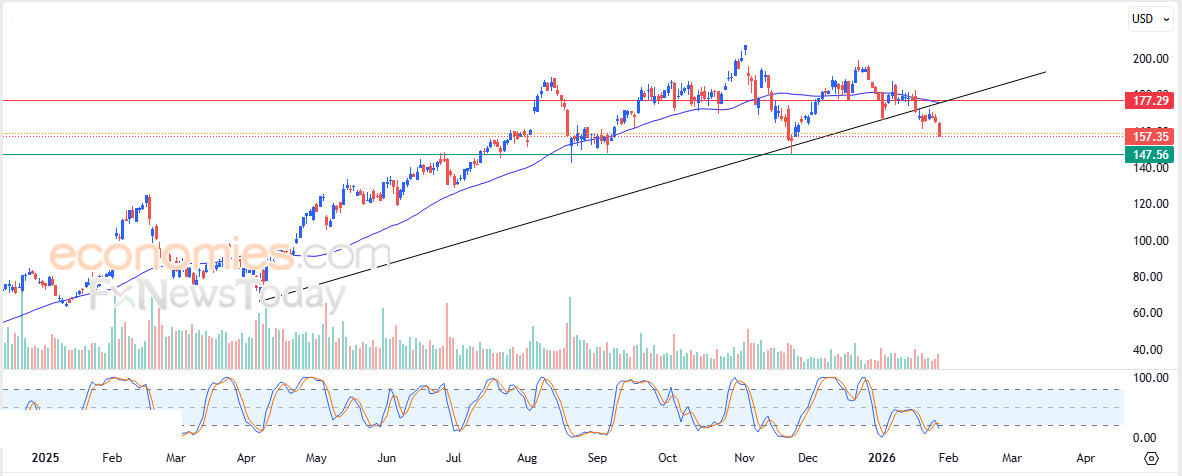
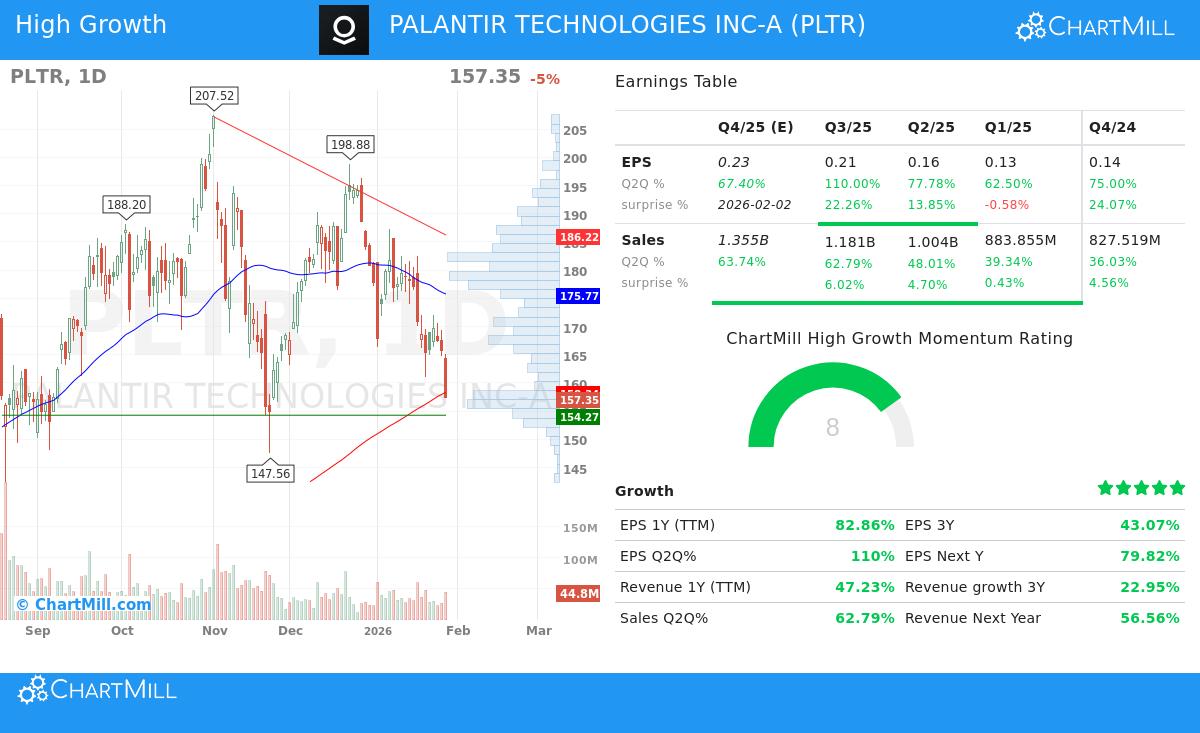
Palantir Technologies' stock momentum deceleration reveals critical market dynamics affecting e-commerce sellers' technology investment decisions. The company's shares advanced 2,200% over three years on its Artificial Intelligence Platform (AIP) success, but recent quarterly earnings show concerning trend reversal: six-month post-earnings gains collapsed from 120% (Q1 2024) to 51% (Q1 2025), while two-week post-earnings performance dropped from 47% (Q3 2024) to just 2% (Q1 2025). This 58% deceleration in momentum signals investor sentiment shift from explosive growth expectations to valuation concerns, with AI stock prices reaching historically elevated levels despite recent corrections.
For e-commerce sellers, this valuation pressure directly impacts technology investment decisions and vendor selection. Palantir's dual revenue model—mature government contracts plus rapidly expanding commercial segment powered by AIP—mirrors the broader AI software market where sellers increasingly deploy AI tools for inventory optimization, demand forecasting, and customer analytics. The company's earnings growth and balanced profitability remain strong, with management highlighting robust AIP demand from commercial customers. However, the stock momentum deceleration indicates investors now demand more reasonable entry points and realistic growth expectations, suggesting AI software vendors may face pricing pressure and reduced customer acquisition spending in Q1-Q2 2025.
This market correction creates both risks and opportunities for seller-focused AI vendors. Smaller AI platforms targeting e-commerce (inventory management, listing optimization, pricing automation) may struggle to raise capital or expand sales teams as investor appetite for high-valuation AI companies cools. Conversely, established vendors with profitable operations—like Palantir—maintain fundamental strength despite near-term volatility. Sellers should expect AI tool pricing to stabilize or decline as vendors compete for market share rather than pursuing growth-at-any-cost strategies. The February 2, 2025 earnings report will provide critical clarity on commercial customer growth and AIP adoption rates, potentially signaling whether AI software spending by enterprise and mid-market sellers continues accelerating or enters consolidation phase.
Immediate implications for sellers: Technology investment budgets may shift toward proven, profitable AI solutions rather than high-growth startups. Sellers evaluating AI tools for demand forecasting, dynamic pricing, or supply chain optimization should prioritize vendors with sustainable unit economics over those burning capital. The valuation correction suggests a 6-12 month window where AI software pricing becomes more competitive and vendor consolidation accelerates, creating opportunities for sellers to negotiate better terms or switch platforms at lower switching costs.
问题 8
How does AI stock valuation pressure affect seller access to inventory and pricing optimization tools?
As AI stock valuations face investor pressure, vendors providing inventory optimization and dynamic pricing tools may reduce R&D spending and customer support expansion. Palantir's earnings growth and balanced profitability remain strong, but the stock momentum deceleration indicates investors demand more reasonable entry points. This creates a 'squeeze' where vendors must maintain profitability while competing for market share, potentially leading to: (1) slower feature releases, (2) reduced customer onboarding support, (3) price increases to offset lower customer acquisition, or (4) consolidation through acquisition. Sellers should audit their current AI tool's feature roadmap and support quality now, before potential vendor consolidation. Consider diversifying across multiple vendors to reduce dependency on any single platform during this volatile period.
What is the difference between Palantir's government and commercial revenue streams for sellers?
Palantir operates dual revenue streams: a mature government business (stable, predictable contracts) and a rapidly expanding commercial segment (powered by AIP, driving significant customer acquisition). For sellers, this distinction matters because government contracts typically involve longer sales cycles and higher switching costs, while commercial customers (like e-commerce platforms and logistics companies) demand faster innovation and competitive pricing. The stock momentum deceleration suggests investors are concerned about commercial segment growth sustainability at current valuations. Sellers should recognize that AI vendors serving government contracts (like Palantir) have more stable revenue bases but may prioritize government customer retention over commercial feature development. Evaluate whether your vendor's product roadmap aligns with commercial e-commerce needs or is skewed toward government requirements.