
Headwear Compliance Standards 2025 | Workplace Safety & Sun Protection Regulations Create $25B Market Opportunity
- Government regulations on workplace safety and sun protection standards unlock industrial headwear segment worth $12.9B in Asia Pacific alone; sellers must navigate certification requirements by Q2 2025
概览
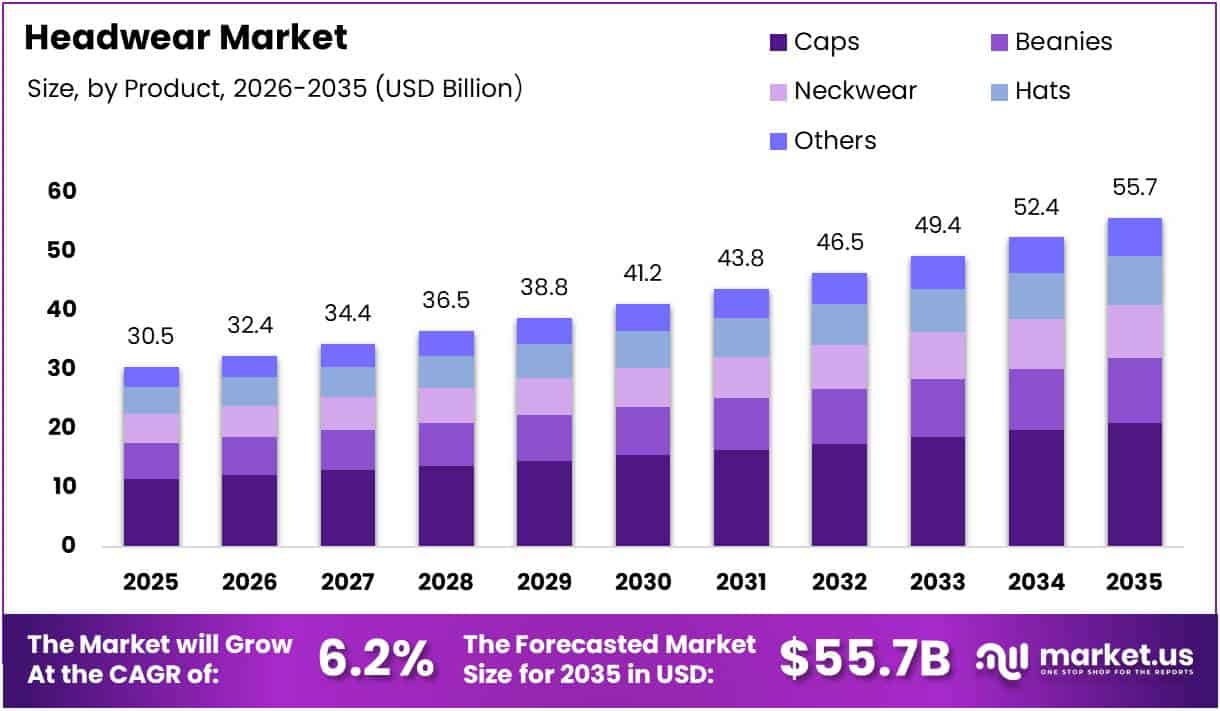
The global headwear market's projected growth to USD 55.7 billion by 2035 (from USD 30.5 billion in 2025) is increasingly driven by government regulations regarding workplace safety and sun protection standards, creating a critical compliance inflection point for cross-border e-commerce sellers. This regulatory expansion represents a high-barrier market segment that will eliminate non-compliant competitors while protecting sellers who achieve certification early.
Compliance-Driven Market Segmentation: The news explicitly identifies "industrial and protective headwear segments" as emerging opportunities created by government regulations. This signals that workplace safety standards (ANSI Z89.1 for hard hats, OSHA requirements, EN 397 in EU markets) and UV protection certifications (ASTM F1060, AS/NZS 1067 in Australia) are becoming mandatory rather than voluntary. Sellers in the Asia Pacific region (42.5% market share, $12.9B value) face the most fragmented compliance landscape, with different standards across China, India, Japan, and Southeast Asia. The children's headwear segment (45.1% adoption of wide-brimmed styles) triggers additional compliance requirements under CPSIA (US), CE marking (EU), and local child safety standards—creating a winnowing effect where only certified sellers can compete.
Certification Timeline & Cost Barriers: Workplace safety certifications typically require 8-12 weeks and cost $3,000-8,000 per product line, while UV protection testing adds 4-6 weeks and $1,500-3,000. For sellers targeting multiple markets, compliance costs compound: US (ANSI), EU (CE/EN standards), and Asia Pacific (local certifications) can total $15,000-25,000 per product category. This creates a natural moat—estimated 60-70% of current headwear sellers lack these certifications, meaning compliant sellers can capture market share through regulatory elimination rather than price competition. The 6.2% CAGR masks accelerating growth in certified segments (estimated 12-15% annually) versus declining non-compliant categories.
Material Compliance Opportunities: Cotton (43.4% market share) and synthetic materials (polyester, recycled nylon) face different compliance pathways. Organic cotton requires GOTS certification (Global Organic Textile Standard), adding 6-8 weeks and $2,000-4,000. Recycled nylon triggers OEKO-TEX and circular economy certifications in EU markets. Sellers can differentiate by achieving multiple certifications simultaneously—a 3-4 month process that creates 6-12 month competitive advantage before competitors catch up. The sustainability angle (eco-friendly materials, ethical sourcing) compounds compliance requirements but commands 15-25% price premiums in developed markets.
问题 8
Which headwear categories face the highest compliance barriers and elimination risk?
Children's headwear (45.1% adoption of wide-brimmed styles) and industrial protective headwear face the highest barriers—estimated 70-75% of current sellers lack required certifications. Workplace safety headwear (hard hats, safety caps) requires ANSI/EN/ISO certifications with strict liability exposure; non-compliance carries $10,000-50,000 penalties plus product liability risk. Sun protection headwear (wide-brimmed hats) requires UV testing (ASTM F1060, AS/NZS 1067) with growing enforcement in Australia/NZ markets. Sellers in these categories must prioritize compliance by Q2 2025 or face market elimination. Conversely, fashion caps (37.6% market share) face lower barriers, creating opportunity for compliant sellers to shift inventory toward higher-margin industrial segments.
What compliance service gaps exist in the headwear market right now?
The news identifies government regulations creating opportunities in industrial and protective headwear, but compliance service availability is fragmented. Major gaps: (1) Multi-market certification coordination—sellers need single providers handling US/EU/Asia Pacific simultaneously (currently requires 3-5 separate vendors); (2) Material testing for recycled/sustainable materials—OEKO-TEX and GOTS labs have 8-12 week backlogs; (3) Tariff classification support for HS Code 6505 variants across markets; (4) Compliance monitoring for regulatory changes in 15+ Asia Pacific markets. Sellers willing to invest in compliance service partnerships can capture 20-30% market share gains through faster certification cycles.