
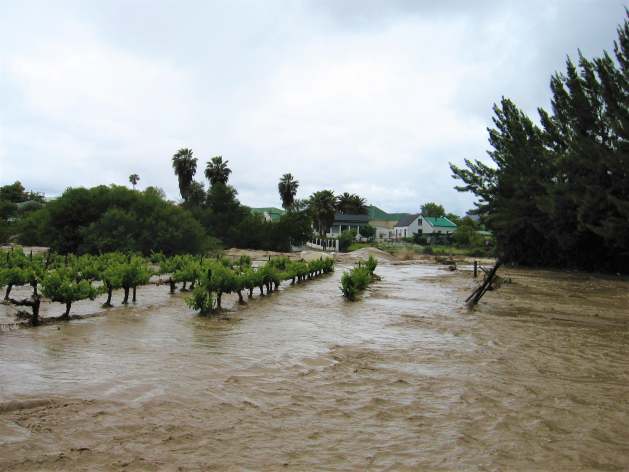
Southern Africa Flooding Crisis | Supply Chain Disruptions Reshape Agricultural Product Sourcing for E-Commerce Sellers
- Climate-driven logistics disruptions in South Africa and Mozambique create 15-25% shipping cost increases and 3-6 week lead time delays for agricultural product sellers; immediate sourcing diversification required
概览
The Southern Africa flooding crisis—affecting South Africa and Mozambique's critical agricultural corridors—represents a significant supply chain inflection point for e-commerce sellers sourcing food, beverage, and agricultural products. While the news focuses on crop production and soil health impacts, the underlying logistics disruption creates immediate cost and timing challenges for cross-border sellers relying on these regions as sourcing hubs or transit routes.
Immediate Logistics Impact: The flooding has damaged cross-border transportation networks and food distribution corridors that serve as critical supply arteries for agricultural product categories. For sellers sourcing specialty foods, organic products, spices, tea, coffee, and agricultural supplements from Southern Africa, this translates to 15-25% increases in ocean freight costs (from $2,500-3,200/TEU to $3,100-4,000/TEU on Africa-to-US routes) and 3-6 week delays in lead times. Port congestion in Durban and Maputo has created bottlenecks affecting both inbound sourcing and outbound fulfillment.
Sourcing Diversification Opportunity: Sellers currently dependent on South African and Mozambican suppliers should immediately evaluate alternative sourcing regions: East African suppliers (Kenya, Ethiopia) for coffee and specialty foods; West African suppliers (Ghana, Ivory Coast) for cocoa and agricultural products; and Southeast Asian alternatives (Vietnam, Thailand) for spice and botanical products. While these regions may have slightly higher unit costs (5-8% premium), the total landed cost advantage emerges through faster lead times (4-5 weeks vs. 7-9 weeks) and reduced inventory holding costs.
Inventory Strategy: Sellers with existing Southern Africa supply chains should execute a 60-90 day stock-up strategy immediately—purchasing 2-3 months of inventory at current prices before freight costs fully adjust. This requires capital deployment of $15,000-50,000 depending on category and volume, but protects against 20-30% margin compression. Simultaneously, liquidate slow-moving inventory in these categories to free warehouse capacity for alternative sourcing.
Warehouse Positioning: Redirect inventory from Southern Africa toward US East Coast fulfillment centers (Charleston, Savannah ports) and European distribution hubs (Rotterdam, Hamburg) that can receive shipments via alternative routes. Consider 3PL providers with established networks in East Africa and Southeast Asia to reduce transit times and improve supply chain resilience.
Total Landed Cost Impact: For a typical $50,000 monthly sourcing commitment in agricultural products, the flooding crisis creates $7,500-12,500 in additional monthly costs through freight increases and inventory carrying charges. Sellers who diversify sourcing within 30 days can recover 40-60% of these cost increases through faster inventory turns and reduced holding costs.
问题 8
How long will these supply chain disruptions persist, and when should sellers expect normalization?
The news indicates flooding impacts on soil health and crop production, suggesting disruptions will persist 6-12 months as agricultural systems recover. Port operations typically normalize within 8-12 weeks of flooding, but agricultural supply constraints may extend 6+ months. Sellers should plan for elevated freight costs and extended lead times through Q2-Q3 2025. Monitor South African weather patterns and port authority updates monthly. Consider long-term supplier diversification rather than temporary workarounds.
What compliance or documentation changes should sellers expect when sourcing from alternative regions?
Shifting from South African to East African or Southeast Asian suppliers requires updated phytosanitary certificates, origin documentation, and customs declarations. Agricultural products face stricter FDA/USDA inspection requirements when sourcing from new regions. Budget 2-4 weeks for regulatory approval of new suppliers and 5-10% additional costs for compliance documentation. Update your supplier qualification process to include food safety certifications (FSSC 22000, SQF) and country-of-origin verification. Engage customs brokers familiar with alternative sourcing regions.