




AI Automation Surge 2026 | E-Commerce Sellers Must Act Now
- Corporate AI adoption accelerates with 600+ employee companies deploying automation tools; Amazon commits $200B to AI infrastructure; sellers face urgent need to automate operations or risk competitive disadvantage


概览
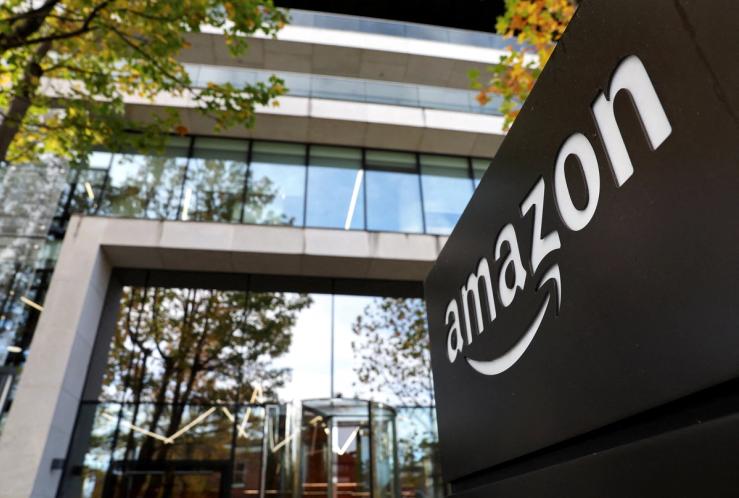
The AI Inflection Point for E-Commerce Sellers Has Arrived. According to Wall Street Journal reporting from February 6, 2026, corporate America is experiencing a critical inflection point where artificial intelligence transitions from experimental technology to essential business infrastructure. Authentic Brands Group (600 employees, owning Reebok and Champion) exemplifies this trend—leadership is actively encouraging workforce experimentation with AI tools like Anthropic's document review solution, replacing specialized legal software. Simultaneously, Amazon announced a $200 billion AI investment for 2026, exceeding analyst predictions by $50 billion, signaling massive capital reallocation toward AI infrastructure. This creates an urgent competitive dynamic for e-commerce sellers: companies delaying AI integration face measurable disadvantages throughout 2026.
For cross-border e-commerce sellers, this trend translates into three immediate automation opportunities. First, product research and competitive intelligence automation can now be performed by AI tools that analyze competitor pricing, inventory levels, and customer sentiment across Amazon, eBay, and Shopify in real-time—saving 15-20 hours weekly compared to manual research. Second, customer service automation using AI chatbots can handle 60-70% of routine inquiries (order status, returns, shipping questions), reducing support costs by $800-1,200 monthly for mid-sized sellers. Third, inventory and order processing automation can synchronize stock levels across multiple channels, automatically adjust pricing based on demand signals, and flag slow-moving inventory—eliminating 10-12 hours of weekly manual data entry. The market reaction (software stocks down significantly, Amazon shares down 7% on February 6) reflects investor concerns about software vendor disruption, but this creates opportunity for sellers who adopt AI-native tools immediately.
The competitive advantage window is narrow. Industry observers note that organizations moving beyond pilot programs to mainstream adoption are embedding AI into corporate culture, creating structural advantages for early adopters. Sellers who implement AI automation for product research, pricing optimization, and customer service by Q2 2026 will capture 3-6 months of competitive advantage before the market normalizes. Conversely, sellers relying on legacy third-party software solutions face vendor uncertainty—investment funds are tightening lending standards for software companies, potentially increasing costs for inventory management and logistics optimization tools. The data is clear: companies demonstrating AI-driven productivity improvements and cost savings throughout 2026 will command higher valuations and market share. For sellers, this means immediate action on automation is not optional—it's a prerequisite for maintaining competitive positioning.
问题 7
What are the risks of relying on third-party AI tools versus building in-house?
Third-party AI tools offer immediate deployment (weeks vs. months) and lower upfront costs, but face vendor risk—software companies are experiencing market volatility and potential disruption. Building in-house AI capabilities requires significant engineering resources but creates defensible competitive moats. For most e-commerce sellers, the optimal strategy is hybrid: use third-party tools for commodity functions (chatbots, basic pricing) while building proprietary AI for differentiated capabilities (niche product discovery, customer segmentation). Sellers should prioritize tools from well-capitalized vendors (Anthropic, major cloud providers) and avoid single-vendor dependency by choosing platforms with data portability and API access.
How can sellers measure ROI from AI automation investments?
Key metrics for AI automation ROI include: (1) Time savings—track hours spent on product research, customer service, and inventory management before/after implementation (target: 15-20 hours/week reduction); (2) Cost reduction—monitor support costs, software subscriptions, and operational overhead (target: $800-1,200/month savings for mid-sized sellers); (3) Revenue impact—measure pricing optimization lift (target: 3-5% margin improvement) and inventory turnover acceleration; (4) Competitive positioning—track Buy Box win rate and ranking improvements. Sellers should establish baseline metrics by March 2026, implement AI tools by April-May, and measure impact by June 2026 to validate ROI before market saturation occurs.