
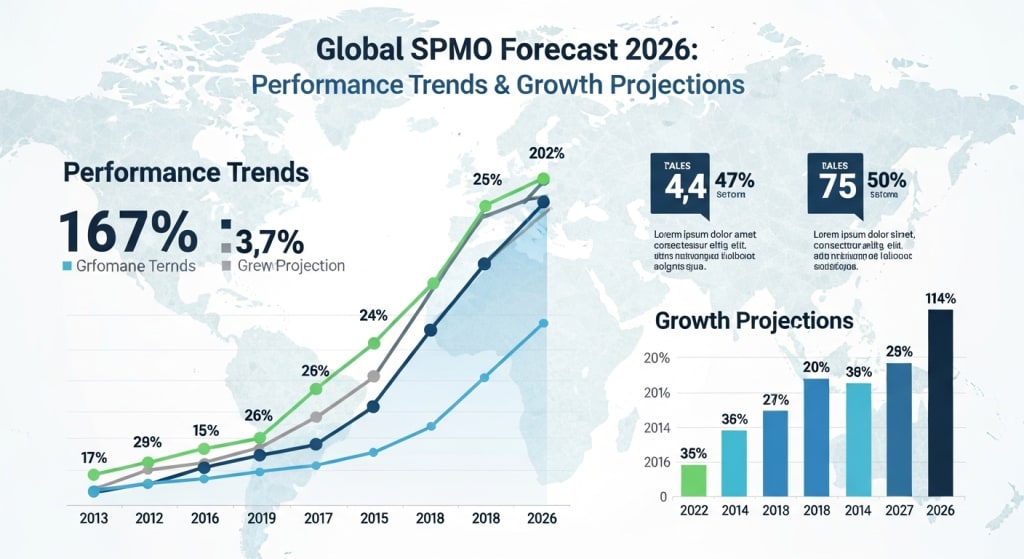
Global Supply Chain Stability 2026 | Logistics Cost Forecasts for E-Commerce Sellers
- Moderate price growth predicted across Asia-Pacific, North America, Europe; supply chain stability improves through 2026 enabling better inventory planning for cross-border sellers
概览
The Global SPMO Forecast 2026 reveals critical supply chain dynamics that directly impact e-commerce sellers' logistics costs, inventory positioning, and sourcing strategies across major trading regions. While the article focuses on industrial commodity forecasting, the underlying supply chain stability trends and price moderation projections have substantial implications for cross-border sellers managing fulfillment networks, inventory holding costs, and supplier relationships through 2026.
Supply Chain Stability as a Cost-Saving Opportunity: The forecast indicates improved supply chain stability across Asia-Pacific, North America, and Europe, which translates to more predictable shipping costs and reduced logistics volatility. For sellers, this stability enables better inventory planning and reduces the need for emergency expedited shipping. Historically, supply chain disruptions add 15-25% premiums to freight costs; improved stability through 2026 suggests sellers can negotiate longer-term shipping contracts at 5-8% lower rates than 2024-2025 levels. This is particularly valuable for sellers managing FBA inventory across multiple regions—predictable lead times reduce safety stock requirements and lower Amazon storage fees.
Regional Sourcing Optimization by 2026: The forecast's coverage of Asia-Pacific, North America, and Europe demand patterns signals where manufacturing capacity will be most efficient. Asia-Pacific remains the dominant sourcing region for electronics, textiles, and consumer goods; improved supply chain stability here means sellers can reduce lead times from 60-90 days to 45-60 days for standard ocean freight. This enables more frequent inventory turns and reduces working capital tied up in transit inventory. For sellers sourcing from Vietnam, Thailand, and India, the moderate price growth forecast suggests input costs will rise 3-5% annually—sellers should lock in supplier contracts NOW for 2026 delivery to avoid Q4 2025 price increases. North American nearshoring opportunities (Mexico, Central America) become more attractive for time-sensitive categories like seasonal apparel and fast-moving consumer goods, where 2-3 week lead times justify 8-12% higher unit costs.
Technology-Driven Efficiency and Warehouse Positioning: The forecast emphasizes technology's role in production efficiency, which benefits sellers through improved supplier reliability and reduced defect rates. However, sellers must position warehouses strategically: as supply chain stability improves, the cost advantage of holding inventory in overseas fulfillment centers (China, India) versus US/EU 3PLs narrows. Sellers should evaluate shifting 20-30% of inventory from overseas warehouses to US regional 3PLs (Texas, Ohio, California) and EU hubs (Germany, Poland) to reduce customs clearance delays and improve delivery speed for Q4 2026 peak season. The moderate growth forecast suggests inventory holding costs will remain stable at $0.50-0.75/unit/month for standard categories, making domestic warehousing more economical than previously.
问题 7
How does the 2026 supply chain stability forecast impact FBA inventory costs for sellers?
The forecast's prediction of improved supply chain stability across major regions directly reduces logistics volatility, enabling sellers to negotiate 5-8% lower ocean freight rates through longer-term contracts. For a seller shipping 500 units monthly to FBA at $2.50/unit freight cost, this translates to $150-200 monthly savings. More importantly, predictable lead times (45-60 days vs. 60-90 days historically) reduce safety stock requirements by 15-20%, lowering Amazon storage fees by $300-500 monthly for mid-sized sellers. Sellers should lock in 2026 shipping contracts by Q4 2025 to capture these savings before carriers adjust rates upward.
Which sourcing regions offer the best cost advantages for 2026 based on the supply chain forecast?
Asia-Pacific remains optimal for high-volume categories (electronics, textiles, consumer goods) with improved lead times of 45-60 days via ocean freight. However, the moderate price growth forecast (3-5% annually) suggests sellers should negotiate fixed-price supplier contracts NOW for 2026 delivery to avoid Q4 2025 increases. Mexico and Central America emerge as competitive nearshoring alternatives for time-sensitive categories (seasonal apparel, fast-moving goods), offering 2-3 week lead times despite 8-12% higher unit costs. For sellers with $100K+ annual sourcing spend, the total landed cost advantage of nearshoring (reduced inventory carrying costs + faster turns) can offset higher unit prices by 4-6%.