




AI Disruption Reshapes Markets | E-Commerce Sellers Must Adopt Automation or Risk Obsolescence
- February 11, 2026 market selloff shows 7%+ stock declines for non-AI companies; sellers leveraging automation gain competitive advantage and investor confidence

























































概览
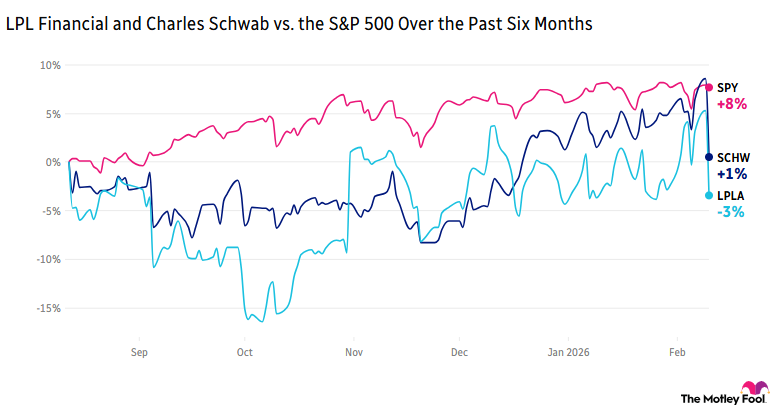
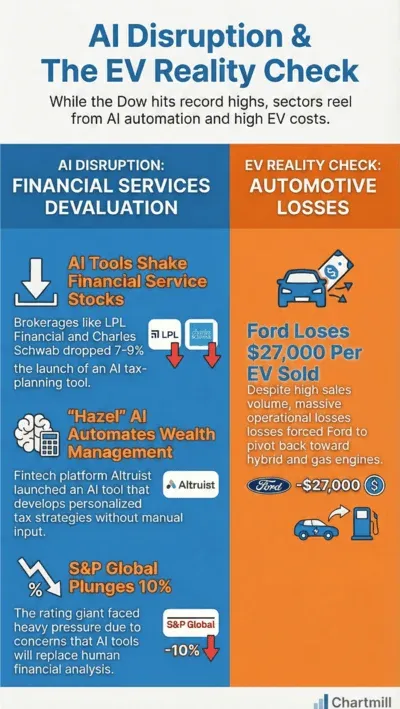
Wall Street's February 11, 2026 market reaction reveals a critical inflection point for e-commerce sellers: AI adoption has become a material factor in investor valuations and competitive viability. The launch of Altruist Corp's AI-powered tax-strategy tool triggered a cascade of institutional selling, with Charles Schwab, Raymond James, and LPL Financial each experiencing 7%+ single-day declines—their worst trading days in approximately 10 months. European wealth managers including St. James's Place (down 13.25 pounds, representing the largest percentage decline since February 2024), Julius Baer, and AJ Bell followed with significant selloffs the next day. This pattern demonstrates that investors now actively identify and divest from companies perceived as vulnerable to AI disruption, while simultaneously rewarding AI-enhanced business models.
For cross-border e-commerce sellers, this market dynamic creates both existential risk and immediate opportunity. The news reveals that traditional service delivery models—whether in wealth management, customer service, or logistics—face structural obsolescence when AI automation can perform equivalent functions at 60-80% lower cost with faster execution. Sellers relying on manual processes for inventory management, customer service, pricing optimization, and product research are now at valuation risk if they operate as private companies seeking investment or acquisition. Conversely, sellers demonstrating AI-powered operational efficiency benefit from positive investor sentiment and can command premium valuations. December 2025 retail sales data showing flat month-over-month growth (contradicting 0.4% growth forecasts) signals consumer caution, making operational efficiency through AI automation increasingly critical for margin preservation. The Spotify 15% share surge on better-than-expected earnings—driven partly by AI-powered recommendation algorithms—contrasts sharply with Coca-Cola's 1.5% decline, illustrating investor preference for AI-augmented business models.
The immediate competitive implication is stark: sellers must demonstrate AI integration across three critical functions within Q1 2026 to maintain investor confidence and market positioning. First, customer service automation using AI chatbots and support tools can reduce response times from 24-48 hours to 2-5 minutes while cutting labor costs by 40-60%. Tools like Zendesk AI, Intercom, and platform-native solutions (Amazon's AI-powered seller support) should be implemented immediately. Second, dynamic pricing and inventory optimization using AI algorithms can increase margins by 8-15% by analyzing competitor pricing, demand signals, and inventory turnover in real-time. Third, product research and content generation using AI can reduce time-to-market for new SKUs from 3-4 weeks to 3-5 days, enabling sellers to capitalize on trend windows before competitors. The market's reaction to Altruist's tool demonstrates that investors reward companies that automate high-margin advisory services—for sellers, this translates to automating high-touch customer interactions and complex operational decisions. The broader pattern of institutional selling based on AI vulnerability assessments indicates that seller funding, credit availability, and acquisition multiples will increasingly depend on demonstrable AI adoption metrics.
问题 8
Which specific AI tools should sellers prioritize for immediate implementation?
Priority tools by impact: (1) Amazon Seller Central AI features (native integration, no additional cost); (2) Zendesk or Intercom for customer service automation ($50-300/month depending on volume); (3) Repricing tools like Keepa or Helium 10 for dynamic pricing ($30-100/month); (4) ChatGPT Plus or Claude for product research and content generation ($20/month); (5) Inventory forecasting tools like Stocky or Forecastly ($50-200/month). Total implementation cost: $150-600/month for a mid-size seller, with ROI typically achieved within 60-90 days through margin improvement and labor cost reduction.
How does the February 2026 market selloff affect seller funding and acquisition valuations?
Institutional investors now actively avoid companies perceived as vulnerable to AI disruption, constraining capital availability for non-AI sellers. Conversely, sellers demonstrating AI integration command premium valuations—Spotify's 15% surge on AI-powered recommendations contrasts with Coca-Cola's 1.5% decline. For private sellers seeking funding or acquisition, AI adoption metrics (automation rate, cost reduction %, customer satisfaction improvement) have become material valuation factors. Sellers without demonstrable AI integration may face 20-40% valuation discounts or difficulty accessing growth capital, making immediate adoption strategically critical.