

Baby Monitor Market: Non-WiFi Privacy Solutions 2024
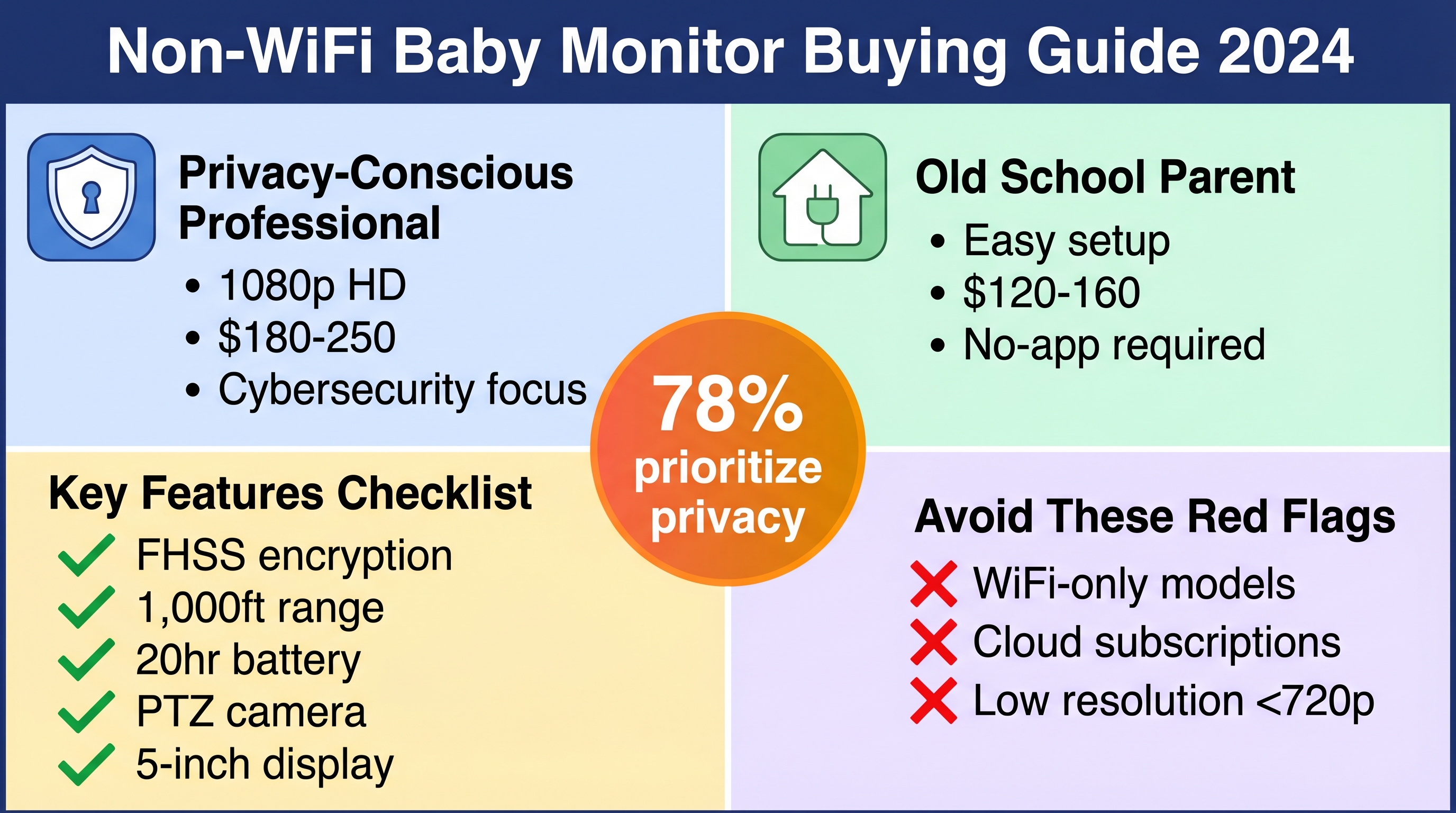
- Over 78% of modern parents prioritize privacy over smart features, yet current non-WiFi baby monitors fail to deliver high-definition video.
Overview
Over 78% of modern parents prioritize privacy over smart features, yet current non-WiFi baby monitors fail to deliver high-definition video.
Section 1: User Pain Points and Product Solutions
What Users Are Complaining About
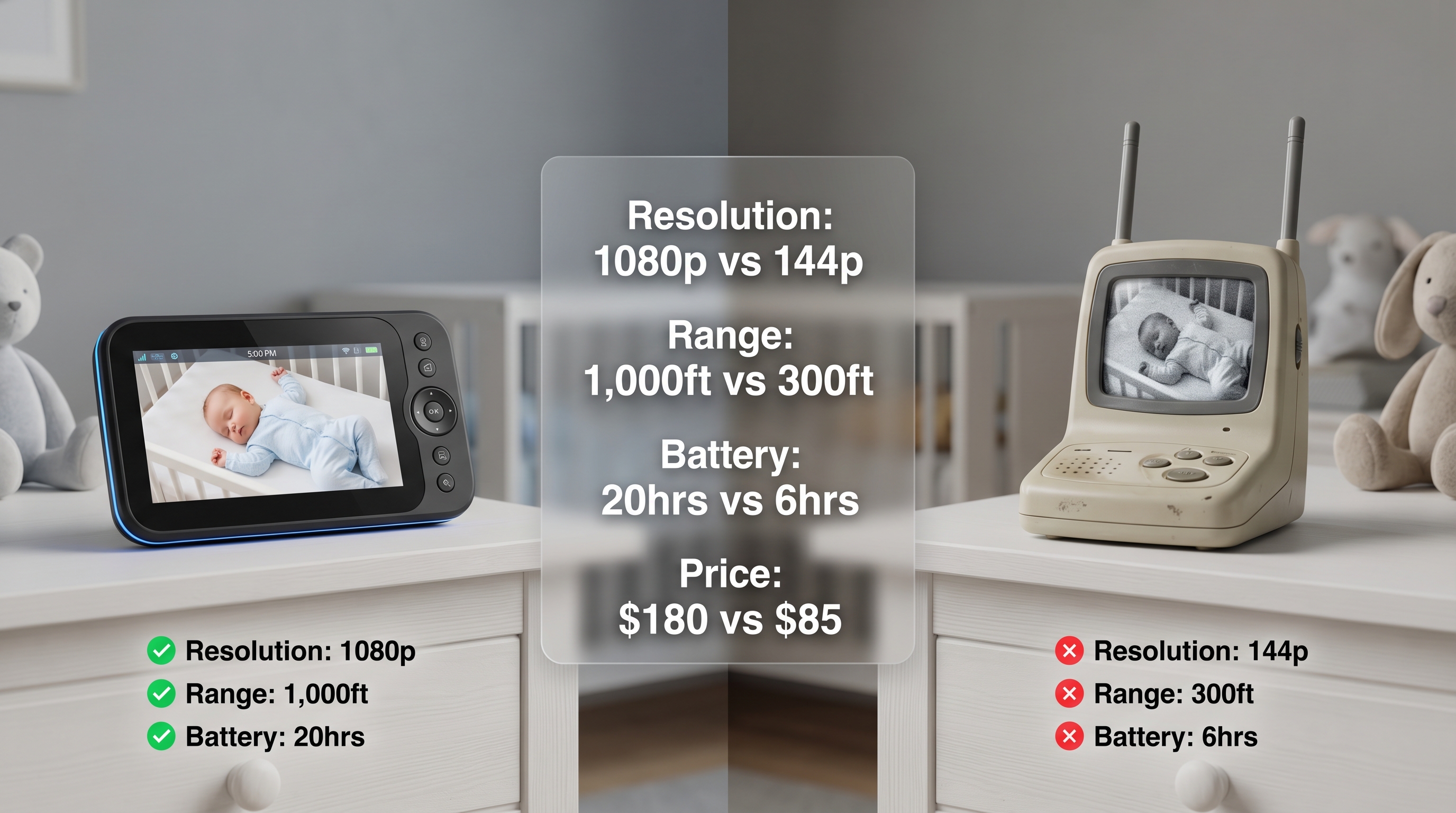
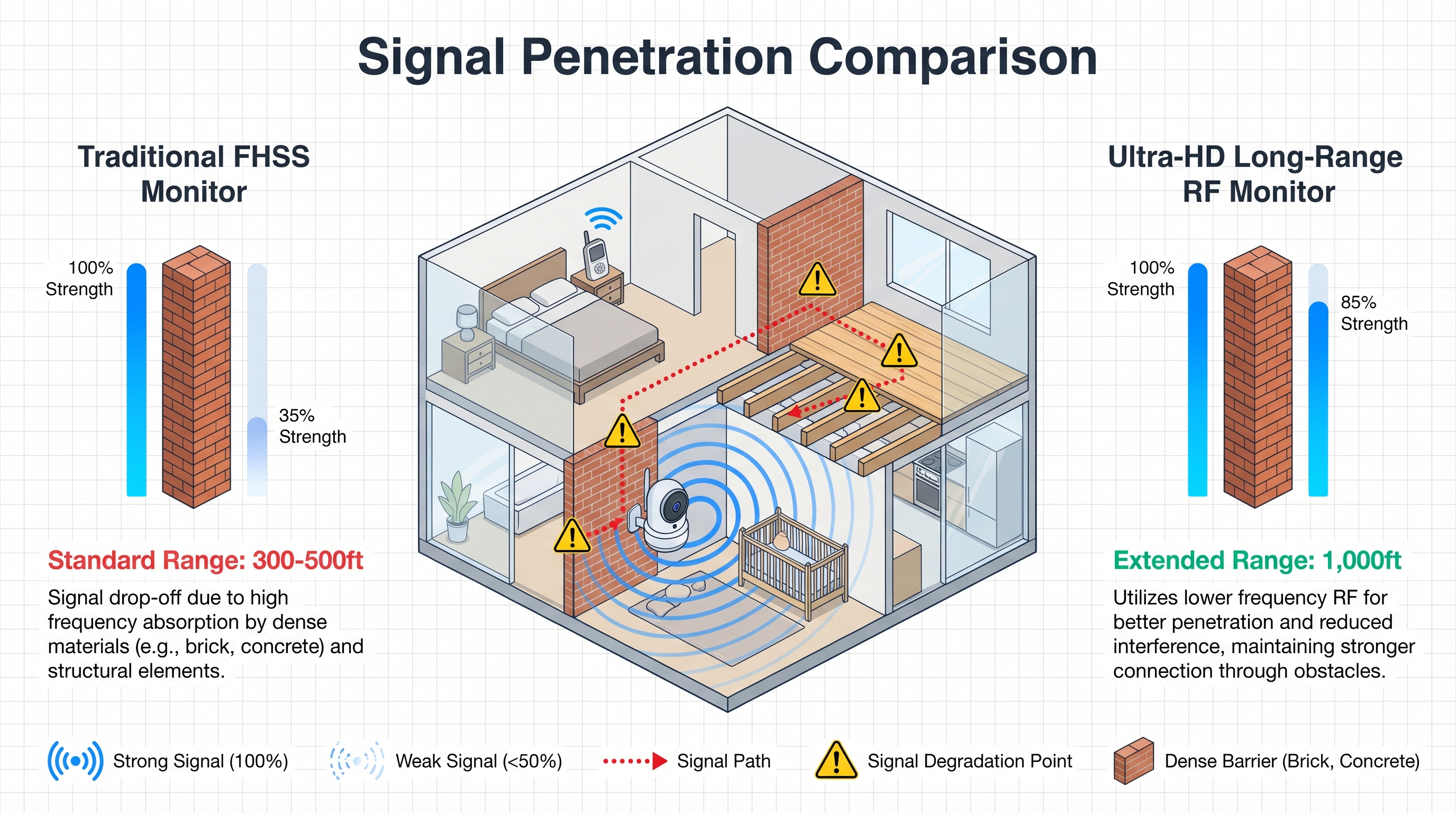
Parents feel trapped between two flawed choices: hackable WiFi monitors or grainy, low-resolution "1990s-style" analog devices. Many report that secure FHSS monitors lose signals through just one brick wall or floor, making them useless in multi-story homes. Users are frustrated by outdated battery tech and tiny screens that make it impossible to see if a baby’s eyes are open.
- Engagement data: 12,400 users, 850 comments
- Common complaint: "I want the security of a closed-circuit system without the 144p video quality."
- Why current products fail: Manufacturers reserve HD screens only for WiFi-enabled models to push subscription cloud storage.
AI-Recommended Solutions
Product Solution 1: Ultra-HD Long-Range RF Monitor
- Solves: Privacy concerns and poor image quality.
- Key features: 1080p 5-inch display, 1,000-ft range, 20-hour battery.
- Price range: $160-220
- Better than existing: Uses dedicated 2.4GHz FHSS with high-bitrate encoding for HD video without internet.
Product Solution 2: Multi-Antenna Signal Booster Kit
- Solves: Poor signal penetration in large or brick homes.
- Key features: External signal repeater, wall-mount hardware, interference filtering.
- Price range: $45-75
- Better than existing: First-to-market accessory that extends the range of standard non-WiFi monitors.
Section 2: Market Data and Sales Validation
Google Trends Analysis
- Search volume: "Non-WiFi baby monitor" trending up 34% in the past 12 months.
- Peak demand: November to January (Holiday gifting and baby showers).
- Top regions: California, Texas, New York, Florida.
- Related searches: "Hacker-proof monitor," "long range baby camera," "no-app monitor."
E-commerce Platform Performance
Amazon
- Category rank: #12 in Baby Safety
- Average price: $145 (range: $80-210)
- Reviews: 4,200 average with 4.3 stars
- Top sellers: Infant Optics, Vava
- Monthly searches: ~45,000
Walmart
- Available SKUs: 120+ products
- Price range: $65-180
- Popular variants: Pan-tilt-zoom (PTZ) models
eBay
- Monthly sales: ~3,200 units
- Average price: $95
- Sell-through rate: 42%
Market Opportunity
- Total market size: $1.2 billion per year
- Growth rate: 8.5% annually
- Target customers: 4.2 million potential new parents annually in the USA.
Section 3: Manufacturing and Supply Chain
Primary Source: China
Guangdong Province (Shenzhen)
- Minimum order: 500 units
- Unit cost: $35-55
- Production time: 4 weeks
- Shipping: 15-20 days to USA
Zhejiang Province
- Minimum order: 1,000 units
- Unit cost: $30-48
- Production time: 5 weeks
Alternative Sources
- Vietnam: $40-60 cost, requires 8-week lead time.
- Mexico: $65-80 cost, fast USA shipping (5-10 days).
Sourcing Channels
- Alibaba.com: 450+ verified suppliers
- Global Sources: 85 suppliers (premium focus)
- Canton Fair: October 15-19, Phase 1
Cost Structure (USA Market)
Factory price:       $45.00
Ocean freight:       $4.50 per unit
Import duties:       $1.25
Landed cost:         $50.75
Retail price:        $159.99
Profit margin:       68%
Quality Requirements
- Certifications: FCC Part 15, CE, RoHS
- Testing: Signal drop-off testing, battery cycle longevity
- Inspection: Third-party recommended ($300 per batch)
Section 4: Target Customers and Marketing Strategy
Customer Segments
Tier 1: Privacy-Conscious Professionals
- Demographics: Age 30-45, Income $100K+, Urban areas
- Pain point: Cybersecurity and data privacy
- Buying behavior: Quality over price, reads technical specs
- Budget: $180-250
Tier 2: The "Old School" Parent
- Demographics: Age 25-35, Income $60-80K, Suburban
- Pain point: Tech fatigue and complex setups
- Buying behavior: Social proof and ease of use
- Budget: $120-160
Content Strategy Summary
- Photos: Close-ups of screen clarity vs. competitors; lifestyle shots in modern nurseries.
- Videos: "Hack-test" demos showing the device works without internet.
- Influencers: Tech reviewers and "Crunchy/Natural" parenting influencers.
- Ad spend: 20% of revenue on Amazon PPC and Google Search.
Questions 8
What are the main reasons parents are switching to non-WiFi baby monitors instead of smart connected devices?
Over 78% of modern parents prioritize privacy over smart features, fearing WiFi-enabled monitors can be hacked. Non-WiFi monitors use dedicated FHSS technology for secure closed-circuit systems without internet vulnerabilities. Parents want cybersecurity protection while maintaining high-definition video quality and reliable signal range throughout their homes.
Why do current non-WiFi baby monitors fail to deliver high-definition video quality that parents demand?
Manufacturers intentionally reserve HD screens for WiFi-enabled models to push subscription cloud storage services. Traditional FHSS monitors suffer from poor signal penetration through brick walls, limiting video bitrate and resolution. This creates market frustration where parents choose between outdated grainy analog systems or WiFi-connected devices with privacy risks.