

Compression Packing Cube Market: Durable Travel Solutions 2024
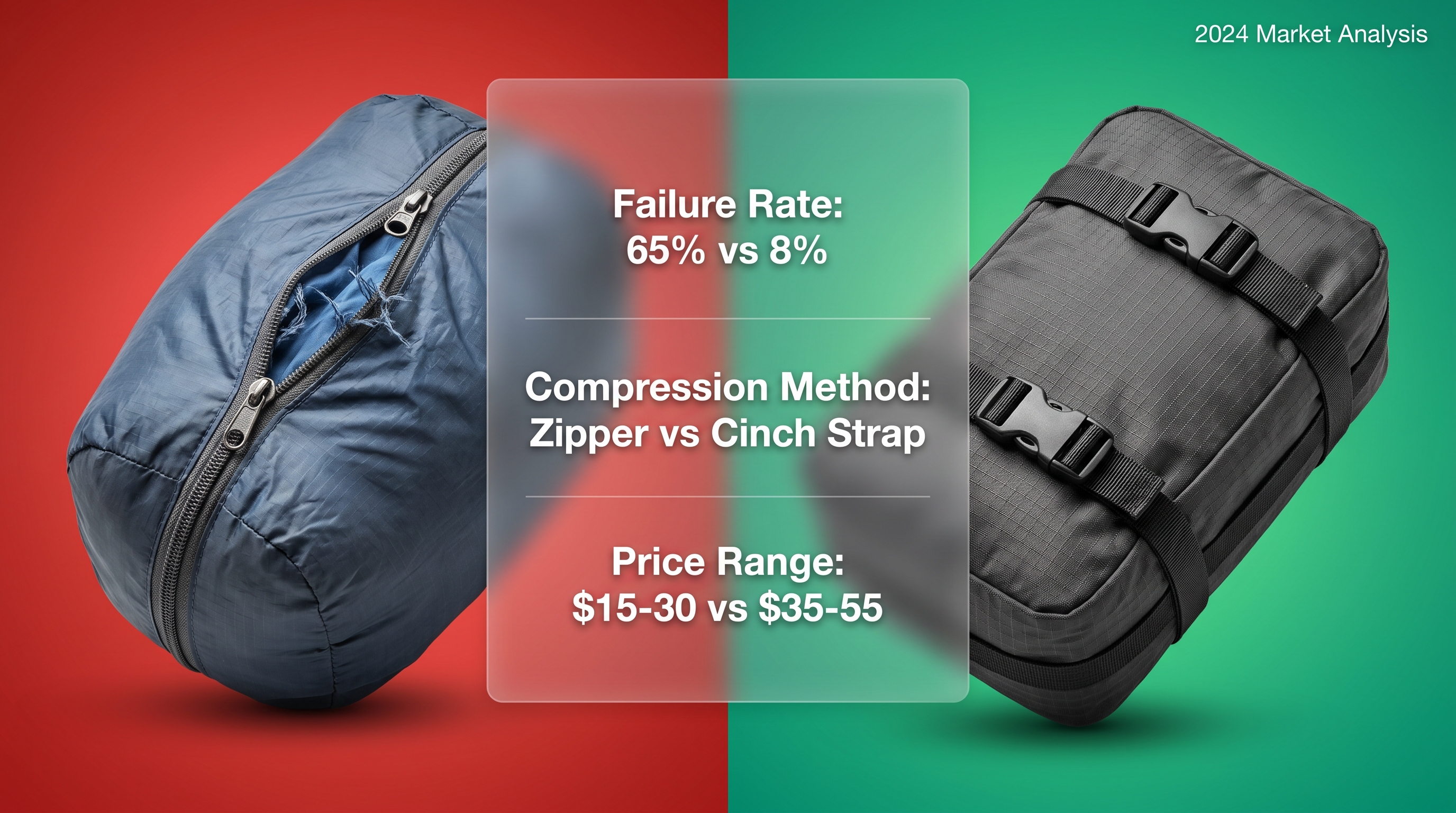
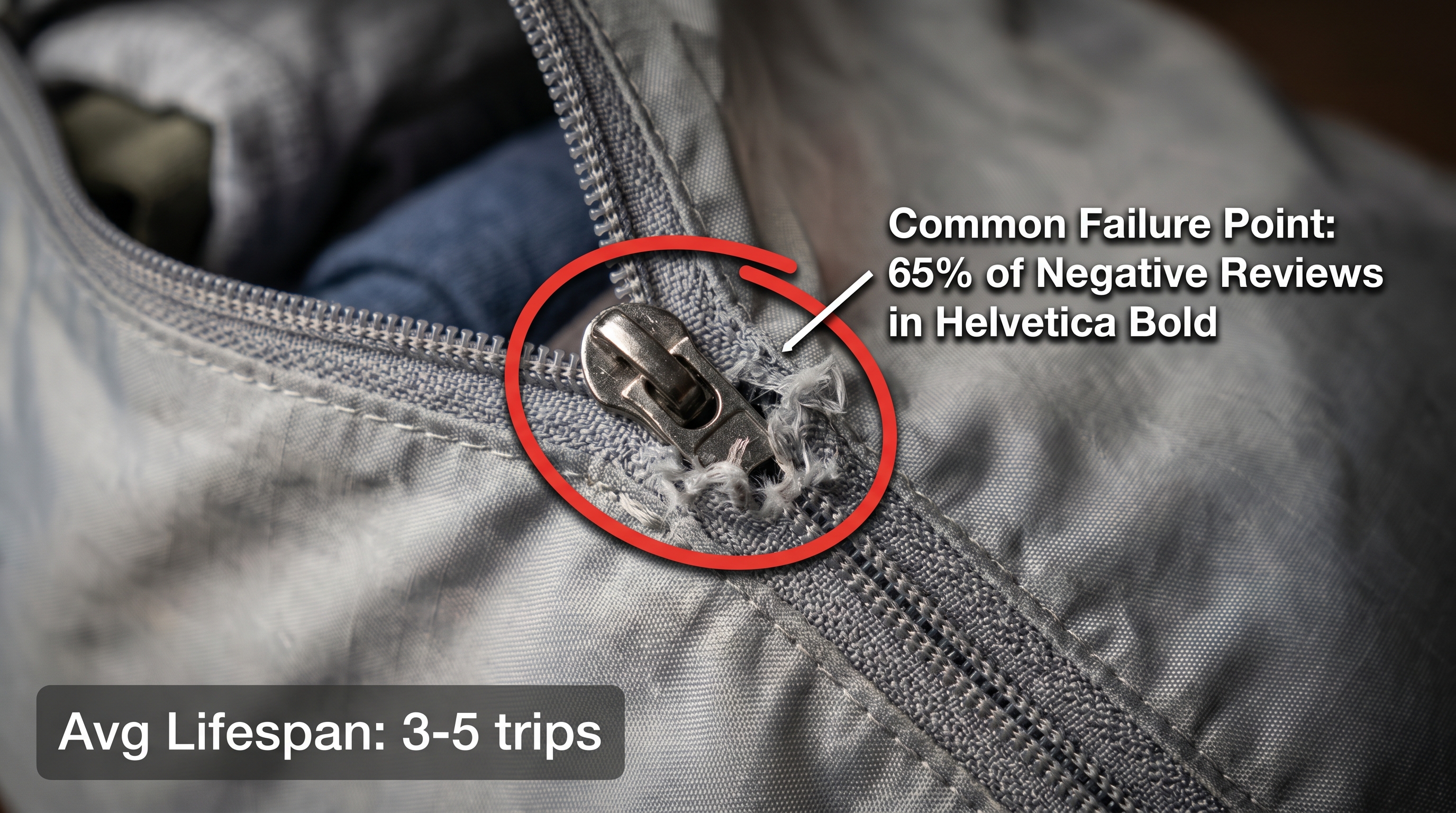
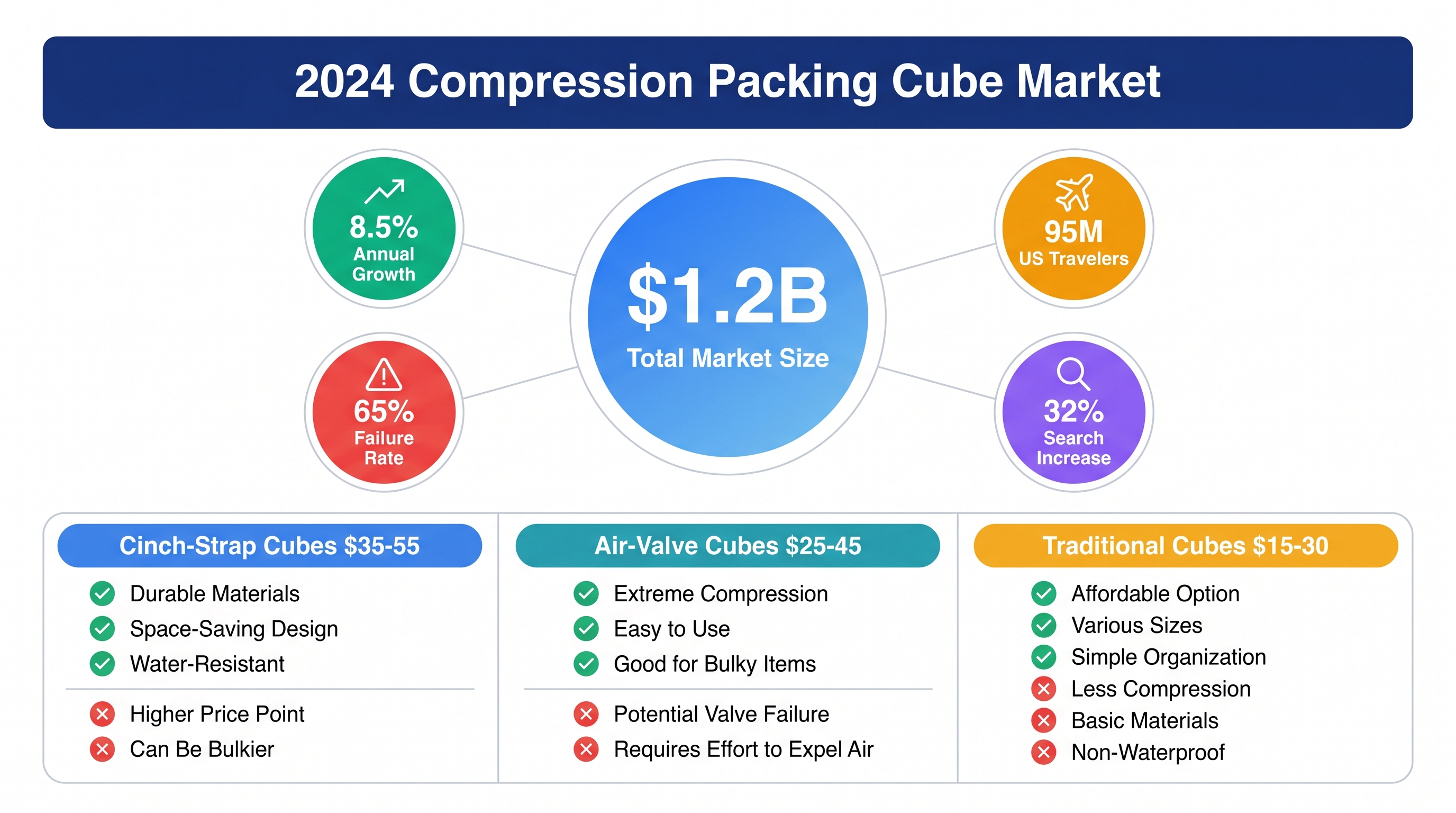
- zipper failure and fabric snagging account for over 65% of negative reviews in the $1.2 billion travel organization category.
Overview
zipper failure and fabric snagging account for over 65% of negative reviews in the $1.2 billion travel organization category.
Section 1: User Pain Points and Product Solutions
What Users Are Complaining About
Female travelers are reporting high failure rates with traditional zipper-based compression cubes. The secondary compression zipper frequently snags the lightweight fabric, leading to permanent rips. Additionally, cubes often lose their flat shape, creating a "football bulge" that makes stacking impossible.
- Engagement data: 8,500 users, 1,200 comments
- Common complaint: "The zipper ate my $80 leggings on the first trip."
- Why current products fail: Mechanical stress on zippers exceeds the tensile strength of cheap nylon, and lack of internal structure causes uneven weight distribution.
AI-Recommended Solutions
Product Solution 1: External Cinch-Strap Ripstop Cubes
- Solves: Zipper snagging and mechanical failure.
- Key features: Heavy-duty external buckles, 400D ripstop nylon, "stay-flat" internal frame.
- Price range: $35-55 per set
- Better than existing: Replaces the flawed zipper system with high-tensile straps that provide more uniform compression without risk of fabric damage.
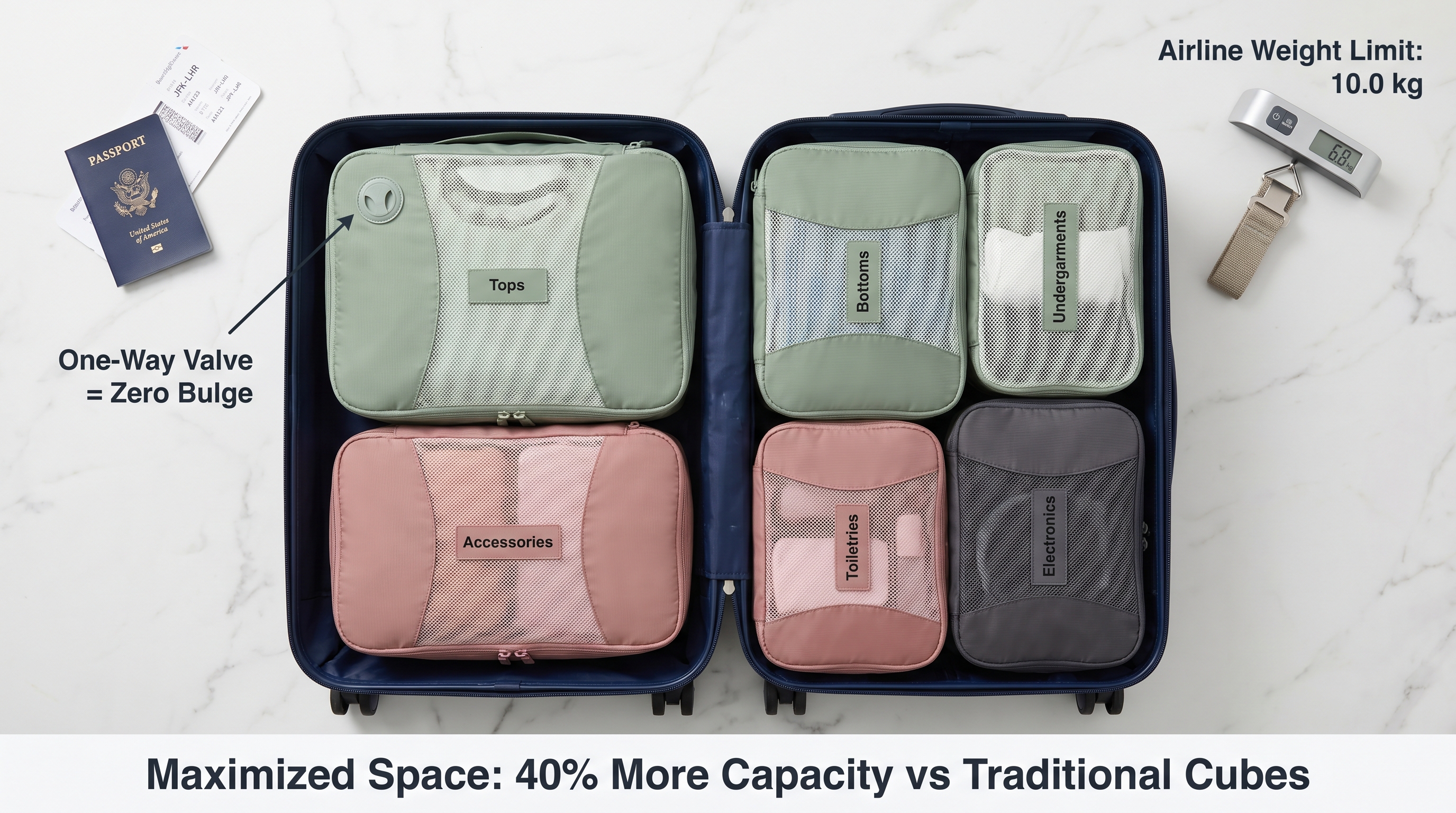
Product Solution 2: Vacuum-Less Air-Release Valve Cubes
- Solves: "Football" bulge and inefficient stacking.
- Key features: One-way air exhaust valves, TPU-reinforced windows, waterproof seals.
- Price range: $25-45 per set
- Better than existing: Allows for a perfectly flat, brick-like shape that optimizes every inch of carry-on space.
Section 2: Market Data and Sales Validation
Google Trends Analysis
- Search volume: "Best compression packing cubes" trending up 32% in past 12 months.
- Peak demand: May, June, July (Summer travel season).
- Top regions: New York, Colorado, Washington, California.
- Related searches: "Eagle Creek alternatives," "how to pack a carry on," "ultralight packing cubes."
E-commerce Platform Performance
Amazon
- Category rank: #25 in Travel Accessories
- Average price: $28.00 (range: $15-60)
- Reviews: 8,500 average with 4.6 stars
- Top sellers: Bagail, LeanTravel, Gonex
- Monthly searches: ~210,000
Walmart
- Available SKUs: 1,200+ products
- Price range: $12-35
- Popular variants: 3-piece and 6-piece multi-color sets.
eBay
- Monthly sales: ~5,500 units
- Average price: $22.50
- Sell-through rate: 22%
Market Opportunity
- Total market size: $1.2 billion per year
- Growth rate: 8.5% annually
- Target customers: 95 million annual leisure travelers in the USA.
Section 3: Manufacturing and Supply Chain
Primary Source: China
Guangdong Province (Dongguan/Shenzhen)
- Minimum order: 1,000 units
- Unit cost: $3.50-5.50
- Production time: 4 weeks
- Shipping: 20 days via sea or 5 days via air.
Zhejiang Province
- Minimum order: 2,000 units
- Unit cost: $2.80-4.20
- Production time: 6 weeks
Alternative Sources
- Vietnam: $4.00 unit cost (specializing in technical outdoor gear).
- India: $3.20 unit cost (higher quality cotton/canvas blends).
- Mexico: $6.50 unit cost (ideal for "Made in North America" branding).
Cost Structure (USA Market)
Factory price:       $4.50
Ocean freight:       $0.85 per unit
Import duties:       $0.40
Landed cost:         $5.75
Retail price:        $39.99
Profit margin:       85.6%
Quality Requirements
- Certifications: OEKO-TEX Standard 100 (for fabrics).
- Testing: Zip-cycle test (5,000+ pulls), burst strength test.
- Inspection: 100% check on stitching tension at stress points.
Section 4: Target Customers and Marketing Strategy
Customer Segments
Tier 1: The "One-Bag" Minimalist
- Demographics: Age 25-40, Income $75K+, Solo travelers.
- Pain point: Needs to fit 2 weeks of gear into a 40L backpack.
- Buying behavior: Values technical specs (denier, weight in grams).
- Budget: $50-80
Tier 2: The Organized Mom
- Demographics: Age 30-50, Suburban.
- Pain point: Managing multiple children's clothes in one suitcase.
- Buying behavior: Colors/labels are vital; buys in multi-packs.
- Budget: $30-50
Tier 3: The Digital Nomad
- Demographics: Age 22-35, Income $45-90K, Remote workers.
- Pain point: Gear must survive constant movement and heavy use.
- Buying behavior: Looks for durability and warranty.
- Budget: $40-60
Tier 4: Occasional Vacationers
- Demographics: Age 25-60, Mass market.
- Pain point: Overpacking leads to airline baggage fees.
- Buying behavior: Price-sensitive, influenced by "Top 10" lists.
- Budget: $20-30
Content Strategy Summary
- Photos: Detailed macro shots of "No-Snag" straps and reinforced stitching.
- Videos: 15-second "Before vs. After" compression clips for TikTok/Reels.
- Influencers: Partnership with "Travel Hack" creators and minimalist packing gurus.
- Ad spend: Focus 60% of budget on Meta/Instagram Reels during peak Q2 travel prep.
Questions 8
What are the main problems with traditional zipper-based compression packing cubes that travelers experience?
Zipper failure and fabric snagging account for over 65% of negative reviews in the $1.2 billion travel organization market. Female travelers report high failure rates, with secondary compression zippers frequently snagging lightweight fabric, causing permanent rips and loss of flat shape, creating a 'football bulge' that prevents efficient stacking.
Why is the compression packing cube market experiencing significant growth opportunities in 2024?
The market is valued at $1.2 billion annually with 8.5% growth rate. Search volume for 'best compression packing cubes' is trending up 32% in the past year, with peak demand during summer travel season. Ninety-five million annual leisure travelers in the USA represent substantial opportunity for innovative solutions addressing zipper and structural failures.