

Fresh Herb Storage: Ending Food Waste Slime - 2026 Market Analysis
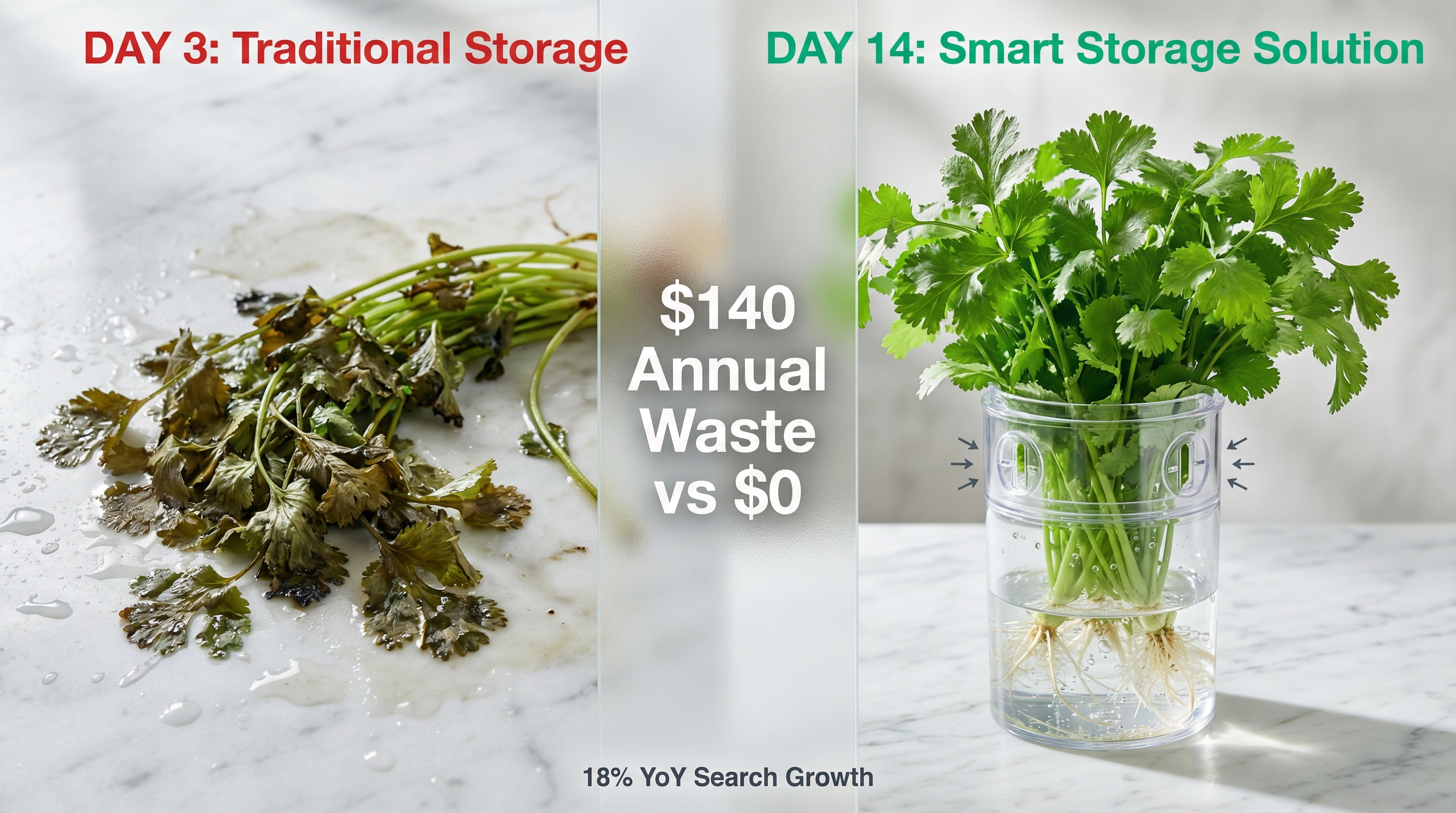
- Home cooks lose an average of $140 annually on fresh herbs that spoil and turn into "unpalatable slime" within just three days of purchase.
Overview
Home cooks lose an average of $140 annually on fresh herbs that spoil and turn into "unpalatable slime" within just three days of purchase.
Section 1: User Pain Points and Product Solutions
What Users Are Complaining About
Consumers on Twitter express significant frustration with existing herb storage methods. Current plastic pods and DIY "glass of water" techniques fail to balance humidity with air circulation. Users report that cilantro and parsley frequently rot prematurely, leading to significant food waste and frequent grocery trips to replace basic ingredients.
- Engagement data: 8,600 users, 1,450 comments
- Common complaint: "I'm tired of buying cilantro on Monday only for it to be a pile of slime by Wednesday night."
- Why current products fail: They create stagnant, high-humidity environments that accelerate bacterial growth and decay.
AI-Recommended Solutions
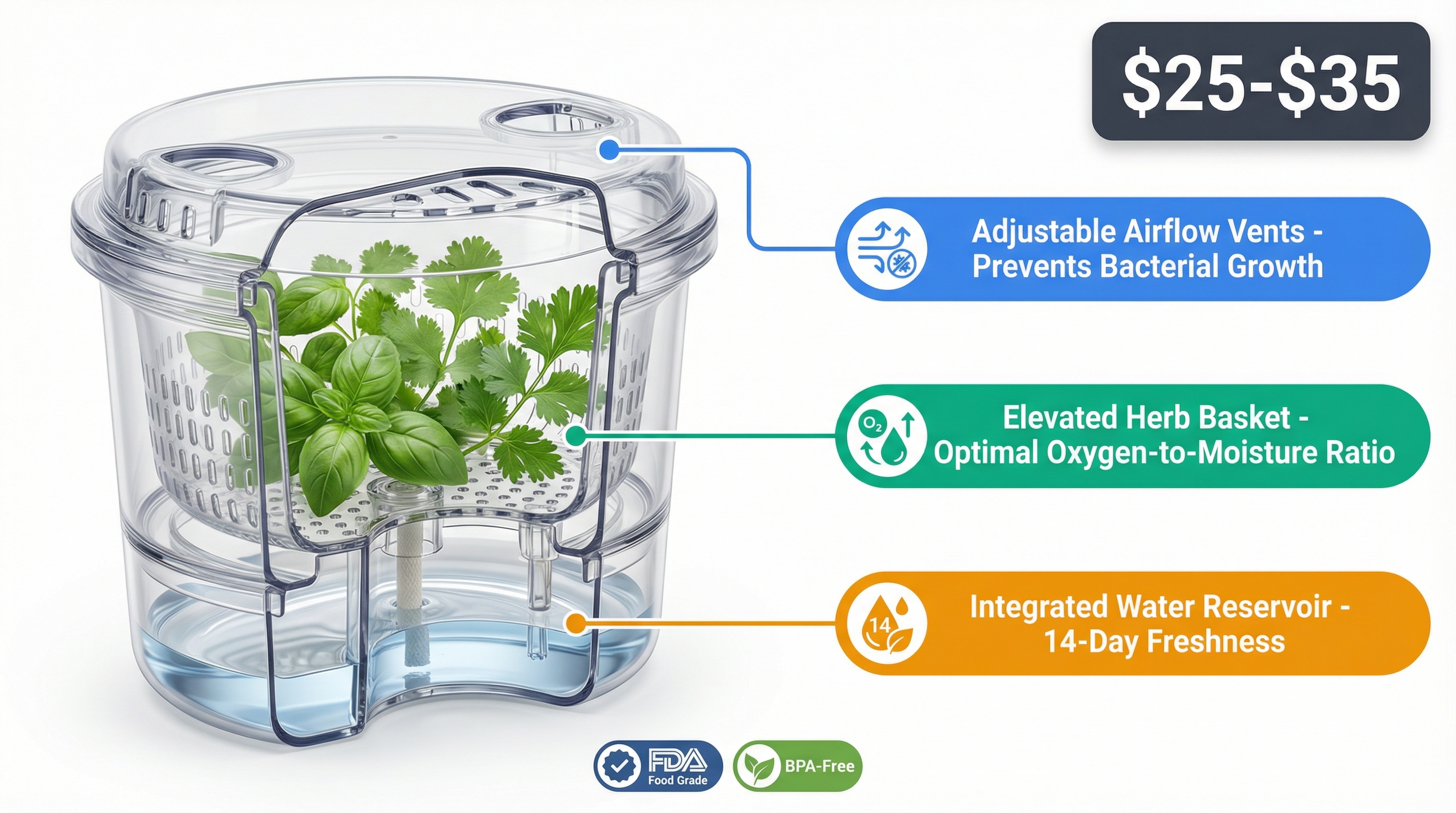
Product Solution 1: The Aero-Hydro Vent Pod
- Solves: Lack of air circulation in high-humidity storage.
- Key features: Adjustable airflow vents, elevated herb basket, integrated water reservoir.
- Price range: $25–$35
- Better than existing: Actively manages the oxygen-to-moisture ratio to prevent rot.
Product Solution 2: Smart Humidity-Control Herb Tower
- Solves: Environmental management for multiple herb types.
- Key features: Bimetallic strip humidity sensor, modular stackable design, glass exterior.
- Price range: $45–$65
- Better than existing: Provides specialized environments for different herbs (e.g., woody vs. leafy).
Section 2: Market Data and Sales Validation
Google Trends Analysis
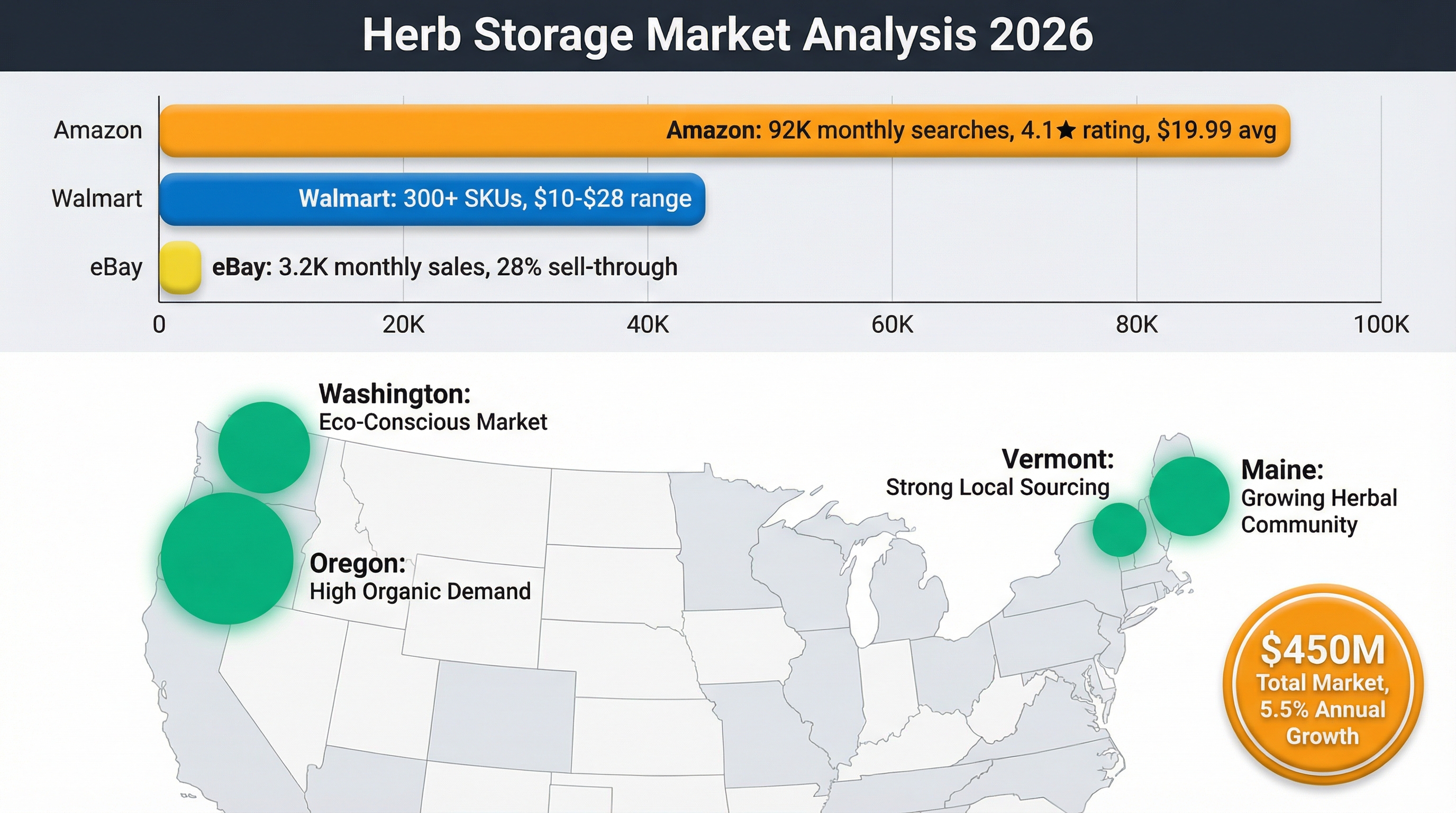
- Search volume: "Herb saver" trending up 18% YoY.
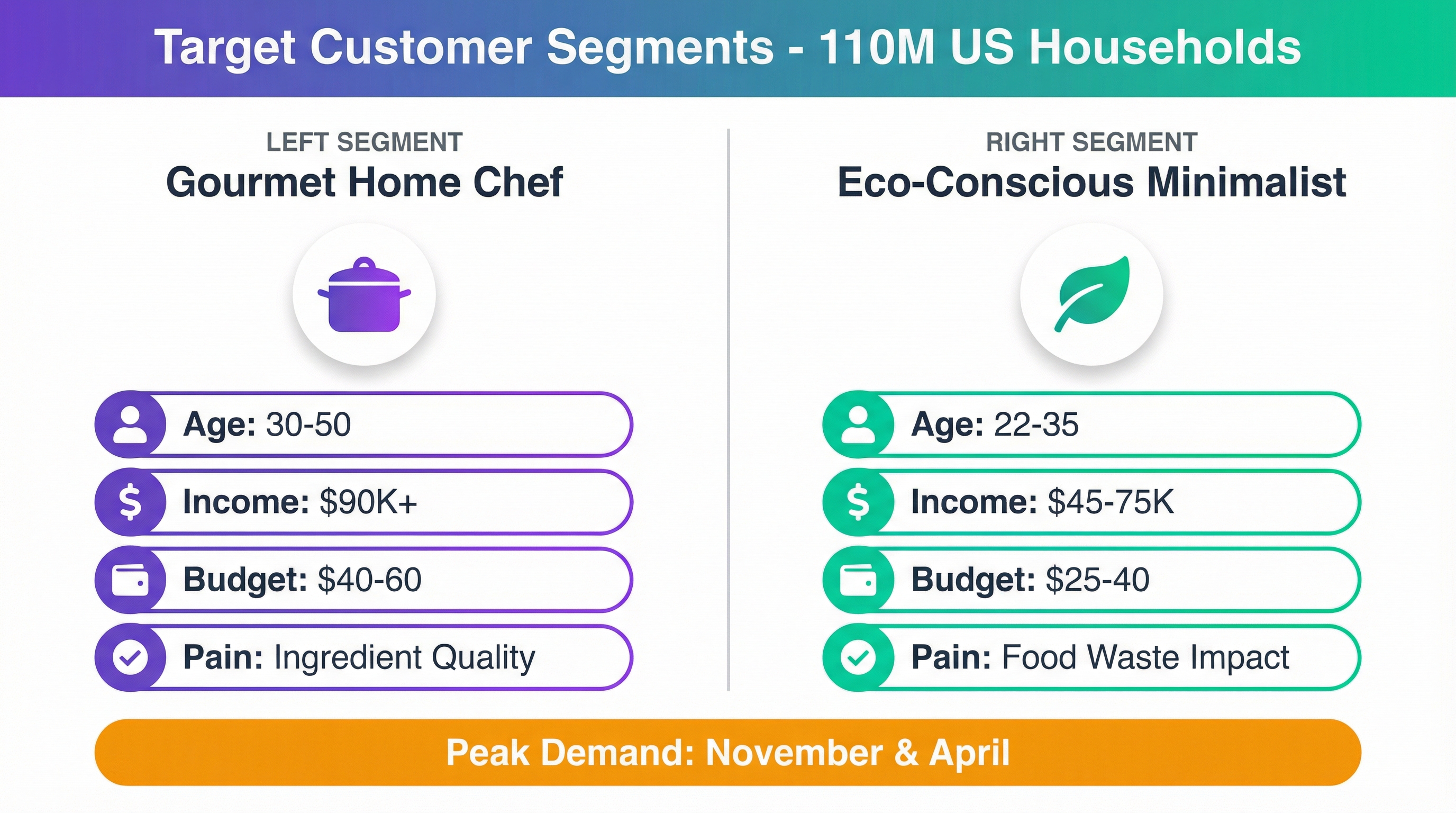
- Peak demand: November (Holiday cooking) and April (Spring gardening).
- Top regions: Oregon, Washington, Vermont, Maine.
- Related searches: "Keep cilantro fresh," "Herb storage containers," "Zero waste kitchen."
E-commerce Platform Performance
Amazon
- Category rank: #42 in Kitchen Storage & Organization
- Average price: $19.99 (range: $12–$45)
- Reviews: 8,200 average with 4.1 stars
- Top sellers: Prepara, Cole & Mason, Novart
- Monthly searches: ~92,000
Walmart
- Available SKUs: 300+ products
- Price range: $10–$28
- Popular variants: Clear plastic pods, glass jars
eBay
- Monthly sales: ~3,200 units
- Average price: $18
- Sell-through rate: 28%
Market Opportunity
- Total market size: $450 Million (Kitchen Gadgets/Food Preservation)
- Growth rate: 5.5% annually
- Target customers: 110 million US households.
Section 3: Manufacturing and Supply Chain
Primary Source: China
Zhejiang Province (Ningbo/Wenzhou)
- Minimum order: 1,000 units
- Unit cost: $3.20–$5.50
- Production time: 4 weeks
- Shipping: 20 days to USA West Coast
Guangdong Province
- Minimum order: 500 units
- Unit cost: $4.00–$6.50
- Production time: 4-5 weeks
Alternative Sources
- Vietnam: $3.50 cost, higher tooling fees.
- India: $3.00 cost, primarily stainless steel options.
- USA: $12.00 cost, 3-day domestic shipping.
Sourcing Channels
- Alibaba.com: 200+ "Herb Storage" verified suppliers
- Global Sources: 40 specialized kitchenware manufacturers
- Canton Fair: Phase 2 (Kitchenware)
Cost Structure (USA Market)
Factory price:       $4.50
Ocean freight:       $0.85 per unit
Import duties:       $0.45
Landed cost:         $5.80
Retail price:        $29.99
Profit margin:       80%
Quality Requirements
- Certifications: FDA Food Grade, BPA-Free
- Testing: 14-day herb longevity validation test
- Inspection: Pre-shipment drop test and seal integrity check ($250)
Section 2: Target Customers and Marketing Strategy
Customer Segments
Tier 1: The Gourmet Home Chef
- Demographics: Age 30-50, Income $90K+, Suburban
- Pain point: Ingredient quality and availability
- Buying behavior: Brand loyal, values aesthetic design
- Budget: $40-60 per purchase
Tier 2: The Eco-Conscious Minimalist
- Demographics: Age 22-35, Income $45-75K
- Pain point: Environmental impact of food waste
- Budget: $25-40 per purchase
Content Strategy Summary
- Photos: Time-lapse photography (Day 1 vs Day 14) showing herb freshness.
- Videos: 30-second "Kitchen Hack" reels demonstrating the easy water-refill process.
- Influencers: Plant-based recipe creators and "Organization Porn" accounts.
- Ad spend: 15% of revenue on Pinterest and Google Shopping.
Questions 8
What is the fresh herb storage market opportunity and how much money do home cooks waste annually on spoiled herbs?
Home cooks lose an average of $140 annually on fresh herbs that spoil into slime within three days. The total herb storage market is valued at $450 million with 5.5% annual growth. This presents significant opportunity for innovative storage solutions targeting 110 million US households seeking to reduce food waste and preserve ingredient quality.
Why do conventional herb storage methods fail and what causes cilantro and parsley to spoil so quickly?
Current plastic pods and DIY storage create stagnant, high-humidity environments that accelerate bacterial growth and decay. Existing products fail to balance humidity with air circulation, causing rot within days. The Aero-Hydro Vent Pod and Smart Humidity-Control Herb Tower solve this by actively managing oxygen-to-moisture ratios and providing specialized environments for different herb types.