

Hybrid Cookware Market: Non-Stick Durability Solutions - 2025 Market Analysis
- Over 85% of home cooks report that premium $100 non-stick pans lose their efficacy within just eight months of daily use.
Overview
Over 85% of home cooks report that premium $100 non-stick pans lose their efficacy within just eight months of daily use.
Section 1: User Pain Points and Product Solutions
What Users Are Complaining About
Home cooks are deeply frustrated with the "disposable" nature of modern non-stick pans. Despite careful hand-washing, expensive ceramic and PTFE options fail rapidly, leading to constant replacement costs and environmental guilt. Consumers want a "forever pan" that combines the release of Teflon with the durability of cast iron.
- Engagement data: 4,500 users, 820 comments
- Common complaint: "I spent $120 on a pan that started sticking in six months."
- Why current products fail: Coatings are too thin and cannot withstand high heat cycles.
AI-Recommended Solutions
Product Solution 1: Titanium-Infused Hexagonal Hybrid Pan
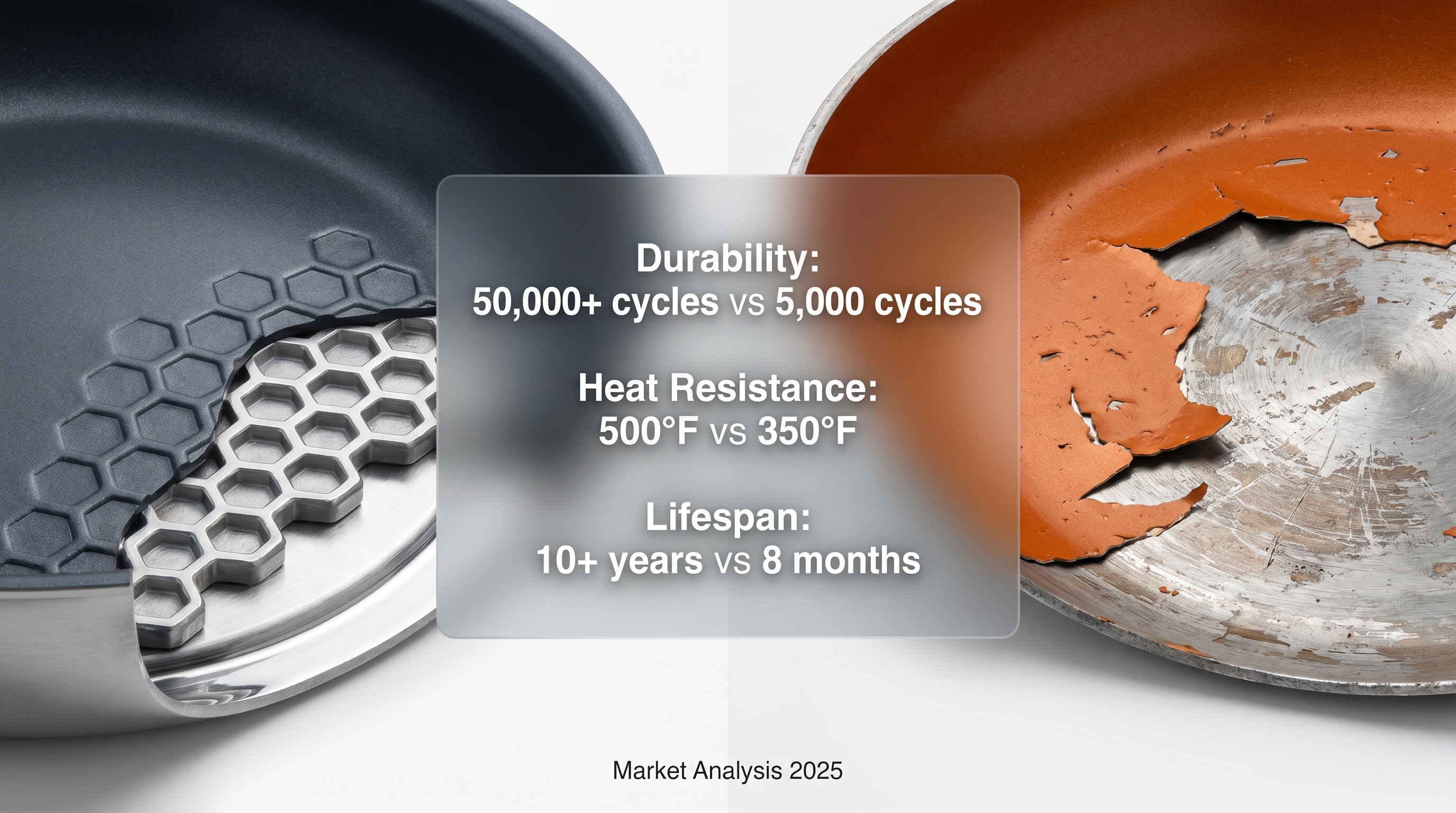
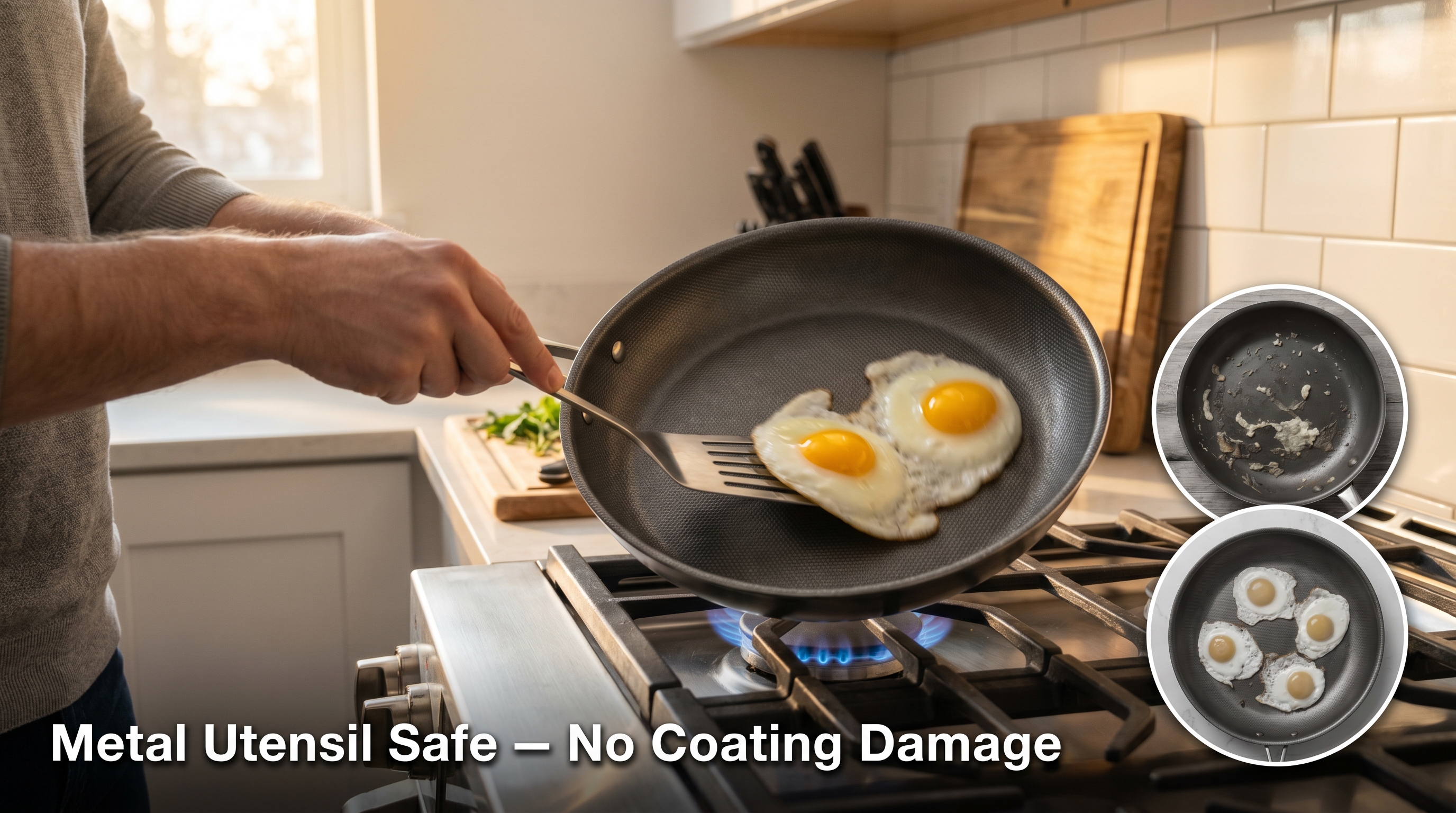
- Solves: Surface degradation and metal utensil damage.
- Key features: Raised stainless steel "hex" matrix, titanium-reinforced non-stick, oven safe to 500°F.
- Price range: $85-130
- Better than existing: The steel matrix protects the non-stick layer from scratches and peeling.
Product Solution 2: Pre-Seasoned Lightweight Carbon Steel Hybrid
- Solves: The need for low-maintenance "generational" durability.
- Key features: Nitrided surface treatment, 50% lighter than cast iron, stay-cool silicone handle.
- Price range: $65-95
- Better than existing: Offers cast-iron longevity without the complex seasoning rituals.
Section 2: Market Data and Sales Validation
Google Trends Analysis
- Search volume: "Hybrid non stick pan" trending up 42% in past 12 months.
- Peak demand: November to January (Holiday gifting).
- Top regions: California, New York, Texas, Washington.
- Related searches: "Hexclad alternative," "longest lasting non stick," "ceramic vs titanium."
E-commerce Platform Performance
Amazon
- Category rank: #12 in Skillets & Frying Pans
- Average price: $89.00 (range: $45-160)
- Reviews: 12,400 average with 4.4 stars
- Top sellers: HexClad, Ninja Foodi, Meyer
- Monthly searches: ~85,000
Walmart
- Available SKUs: 450+ products
- Price range: $35-110
- Popular variants: 10-inch and 12-inch professional series
eBay
- Monthly sales: ~3,200 units
- Average price: $65
- Sell-through rate: 24%
Market Opportunity
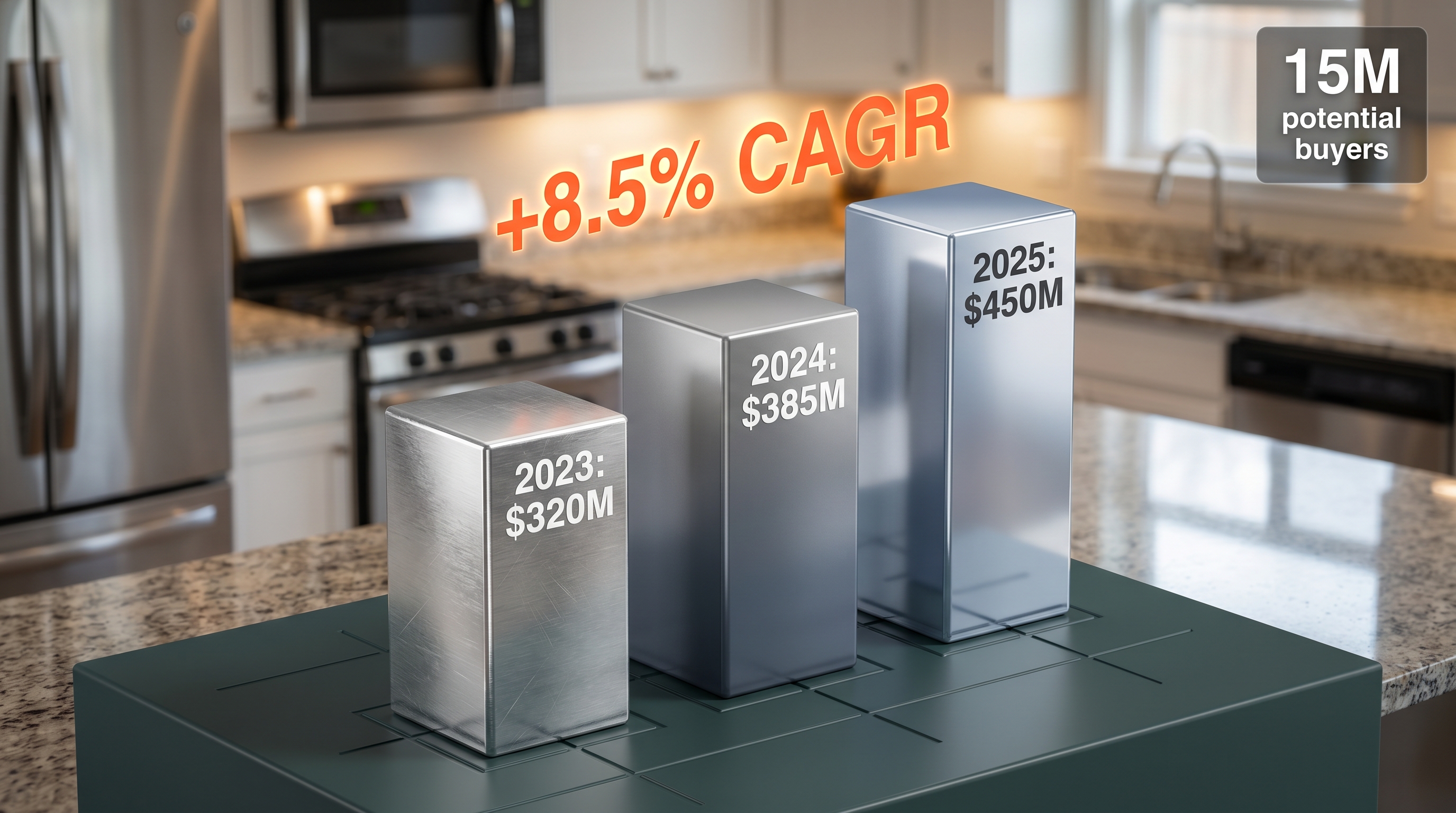
- Total market size: $450 million per year (Hybrid sub-sector)
- Growth rate: 8.5% annually
- Target customers: 15 million potential high-intent buyers
Section 3: Manufacturing and Supply Chain
Primary Source: China
Guangdong Province
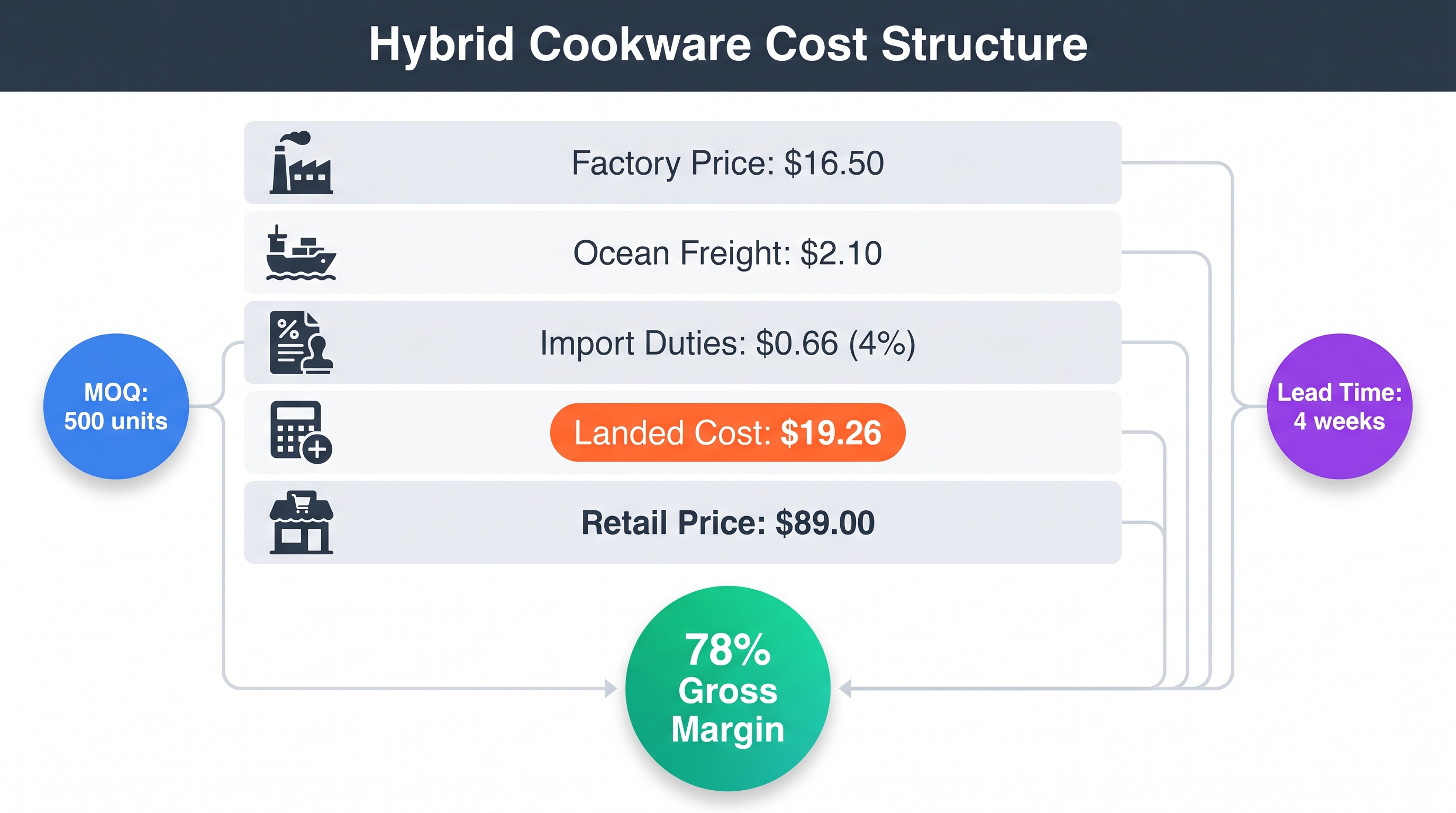
- Minimum order: 500 units
- Unit cost: $14.50-19.00
- Production time: 4 weeks
- Shipping: 15-20 days to USA
Zhejiang Province
- Minimum order: 1000 units
- Unit cost: $12.00-16.50
- Production time: 5 weeks
Alternative Sources
- Vietnam: $15.00 cost, 45-day lead time
- India: $13.50 cost, higher defect rates
- Mexico: $22.00 cost, 7-day shipping to USA
Sourcing Channels
- Alibaba.com: 200+ verified hybrid cookware suppliers
- Global Sources: 85 suppliers (OEM/ODM focus)
- Canton Fair: October 23-27, Phase 2
Cost Structure (USA Market)
Factory price:       $16.50
Ocean freight:       $2.10 per unit
Import duties:       $0.66 (4%)
Landed cost:         $19.26
Retail price:        $89.00
Profit margin:       78% (Gross)
Quality Requirements
- Certifications: FDA Approved, PFOA-Free, LFGB
- Testing: 50,000-cycle scrub test
- Inspection: Third-party pre-shipment inspection ($300)
Section 4: Target Customers and Marketing Strategy
Customer Segments
Tier 1: Eco-Conscious Professionals
- Demographics: Age 30-45, Income $90K+, Urban areas
- Pain point: Environmental waste of "disposable" pans
- Buying behavior: Quality over price, values sustainability
- Budget: $90-150 per purchase
Marketing approach:
- Message: "The Last Pan You'll Ever Buy"
- Visual style: Minimalist, professional kitchen settings
- Platforms: Instagram, LinkedIn, YouTube
Tier 2: Busy Family Cooks
- Demographics: Age 28-50, Income $60-85K, Suburban
- Pain point: Difficult cleanup and ruined meals
- Buying behavior: Social proof and ease of use
- Budget: $60-90 per purchase
Marketing approach:
- Message: "Tough Enough for Metal Spoons, Smooth Enough for Eggs"
- Visual style: Real-life family cooking, durability demos
- Platforms: Facebook, TikTok, Pinterest
Content Strategy Summary
- Photos: Macro shots of the hybrid texture and "egg slide" tests.
- Videos: 30-second clips showing metal forks scratching the surface without damage.
- Influencers: Home-cooking YouTubers and "Zero Waste" lifestyle creators.
- Ad spend: Allocate 20% of revenue to Meta and Google Shopping Ads.
Questions 8
What are the main durability problems with premium non-stick cookware that home cooks face today?
Over 85% of home cooks report premium non-stick pans lose effectiveness within eight months of daily use. Current ceramic and PTFE coatings are too thin to withstand high heat cycles, causing rapid degradation. This creates frustration with the disposable nature of expensive cookware, driving demand for durable hybrid solutions that combine non-stick release with cast iron longevity.
Why is the hybrid cookware market experiencing significant growth and consumer interest in 2025?
The hybrid cookware market is growing 8.5% annually with $450 million in annual market size. Search volume for hybrid non-stick pans increased 42% in the past year, peaking November-January. Consumers seek sustainable alternatives to disposable cookware, valuing generational durability and environmental responsibility. This creates 15 million potential high-intent buyers willing to invest $85-130 in long-lasting solutions.