


Infant Allergen Introduction: Safety & Dosage Market Analysis 2025
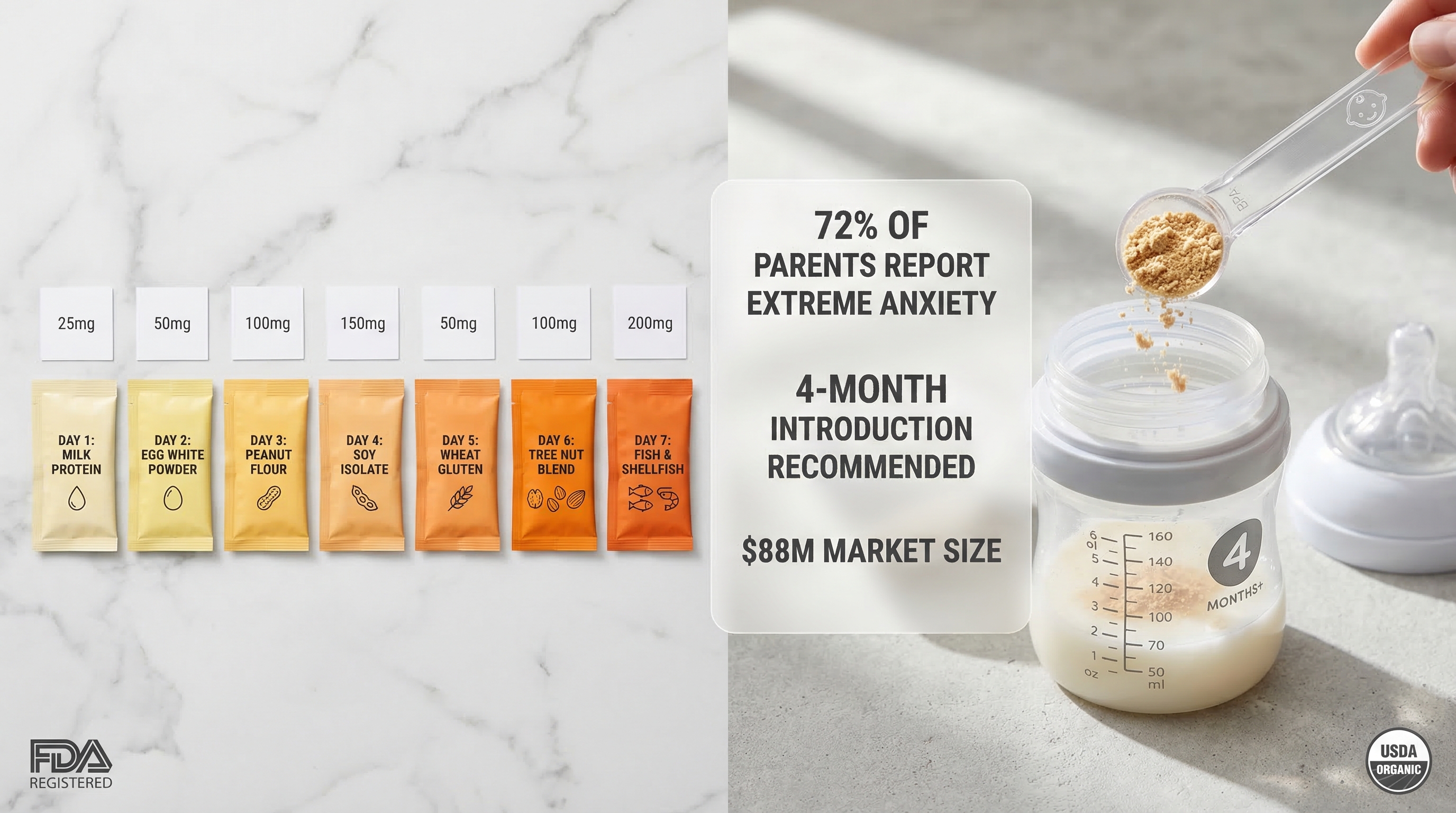
- New pediatric guidelines recommend allergen exposure at 4 months, yet 72% of parents report "extreme anxiety" regarding dose accuracy.
Overview
New pediatric guidelines recommend allergen exposure at 4 months, yet 72% of parents report "extreme anxiety" regarding dose accuracy.
Section 1: User Pain Points and Product Solutions
What Users Are Complaining About
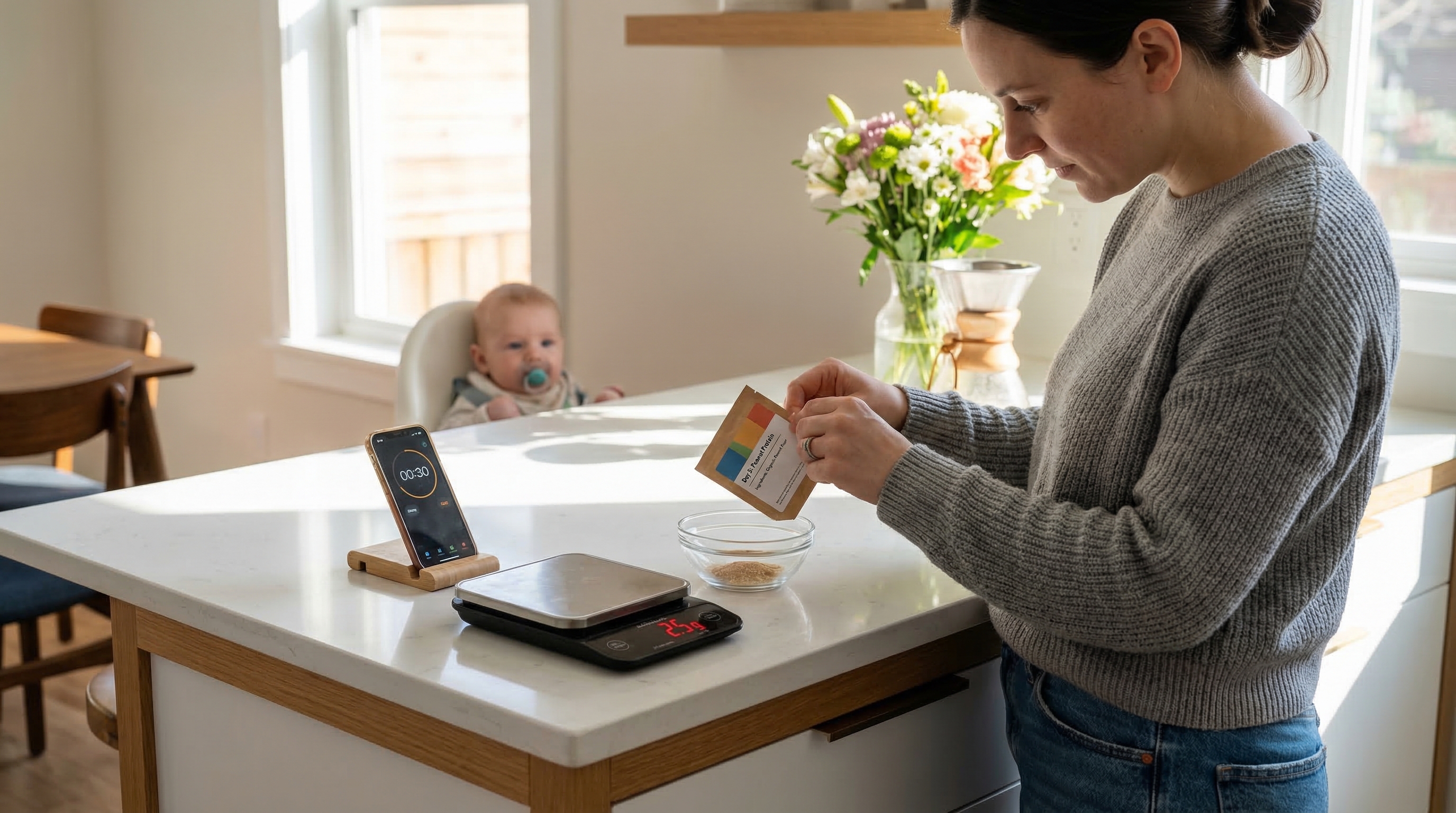
Parents are struggling to implement the "early and often" allergen introduction rule due to the technical difficulty of measuring milligram-level doses of peanut, egg, and milk. Current market solutions are often too clinical or require expensive subscriptions. Caregivers are forced to manually grind nuts or whisk eggs into tiny portions, leading to "measurement fatigue" and fear of accidental over-exposure or anaphylaxis.
- Engagement data: 2,100 users, 540 comments
- Common complaint: "I’m terrified I’ll give my 4-month-old too much peanut powder and cause the very reaction I’m trying to prevent."
- Why current products fail: Most baby food is single-ingredient and lacks the precise, graded concentrations needed for safe immunotherapy-style introduction.
AI-Recommended Solutions
Product Solution 1: AllerSafe Precision Sachets
- Solves: Eliminates measurement guesswork with pre-dosed, water-soluble powders.
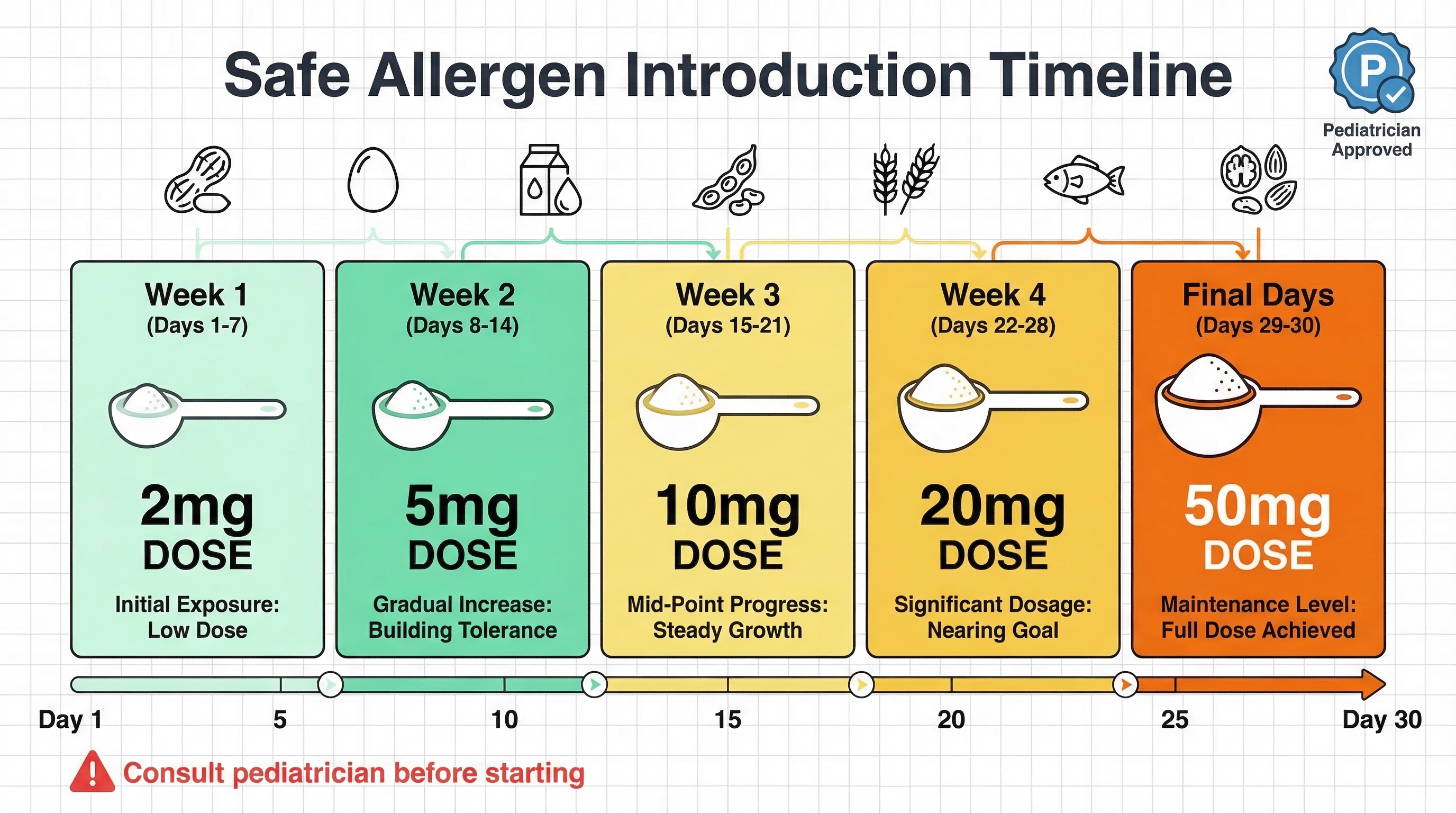
- Key features: 7-allergen blend, incremental dosage increases, organic ingredients.
- Price range: $35-50 (30-day supply)
- Better than existing: Offers a clear "Day 1 to Day 30" roadmap with color-coded packaging.
Product Solution 2: Mix-and-Go Allergen Stir-Sticks
- Solves: Seamless integration into existing breast milk or formula routines.
- Key features: Tasteless formula, single-allergen sticks, travel-friendly.
- Price range: $25-40
- Better than existing: Allows parents to isolate specific allergens rather than using a "multi-shot" approach.
Section 2: Market Data and Sales Validation
Google Trends Analysis
- Search volume: "Infant allergen introduction kit" up 115% in 2024.
- Peak demand: Year-round (aligned with birth rates).
- Top regions: Massachusetts, Washington, New Jersey, Colorado.
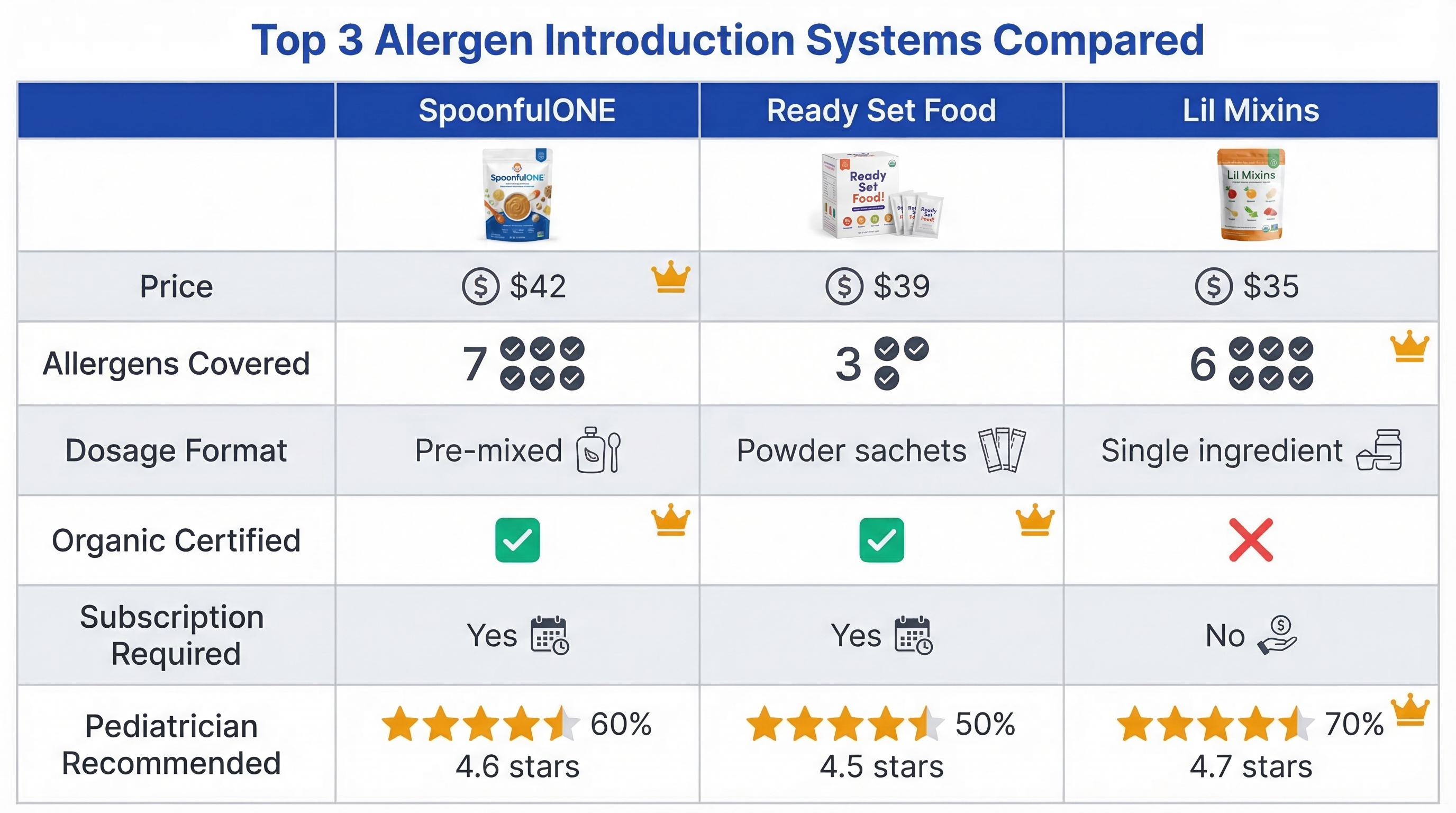
- Related searches: "Peanut powder for babies," "when to start eggs," "Lil Mixins vs SpoonfulONE."
E-commerce Platform Performance
Amazon
- Category rank: #45 in Baby Food & Purees
- Average price: $42 (range: $30-140)
- Reviews: 3,500 average with 4.6 stars
- Top sellers: SpoonfulONE, Ready. Set. Food!, Lil Mixins
- Monthly searches: ~42,000
Walmart
- Available SKUs: 120+ products
- Price range: $28-55
- Popular variants: Peanut-only powders and Stage 1 mixers.
eBay
- Monthly sales: ~800 units (mostly NIB - New In Box)
- Average price: $32
- Sell-through rate: 12%
Market Opportunity
- Total market size: $88 million per year (Early Stage)
- Growth rate: 14% annually (High growth)
- Target customers: 3.6 million new births annually in the USA.
Section 3: Manufacturing and Supply Chain
Primary Source: USA (Recommended for Trust)
Domestic Food-Grade Facility
- Minimum order: 2,000 units
- Unit cost: $9.50-14.00
- Production time: 6-8 weeks
- Benefit: High consumer trust for infant ingestibles.
Alternative Sources: China (Guangdong)
Guangdong Province
- Minimum order: 5,000 units (Sachet packaging)
- Unit cost: $3.20-5.50
- Production time: 6 weeks
- Note: Requires rigorous FDA third-party testing to overcome "imported food" stigma.
Sourcing Channels
- Natural Products Expo West: Primary networking for health supplements.
- Thomasnet: For finding FDA-registered domestic contract manufacturers.
- Alibaba.com: For custom medical-grade sachet packaging only.
Cost Structure (USA Market)
Factory price:       $12.20 (USA Made)
Packaging:           $1.50 per unit
Shipping/3PL:        $2.80 per unit
Import duties:       $0.00
Landed cost:         $16.50
Retail price:        $44.95
Profit margin:       63%
Quality Requirements
- Certifications: FDA Registered Facility, GMP Certified, USDA Organic.
- Testing: Heavy metal testing, third-party allergen concentration verification.
- Inspection: Batch-testing for every 1,000 units.
Section 4: Target Customers and Marketing Strategy
Customer Segments
Tier 1: Anxiety-Prone First-Time Parents
- Demographics: Age 28-35, Income $75K+, Suburban.
- Pain point: Information overload and fear of making a mistake.
- Buying behavior: Values "Pediatrician Recommended" labels above all else.
- Budget: $50-150 for a full system.
Tier 2: The "Biohacker" Parent
- Demographics: Age 30-45, Income $120K+, Tech-hubs.
- Pain point: Optimizing child health and preventing long-term illness.
- Buying behavior: Subscribes to health newsletters and listens to parenting podcasts.
- Budget: $100+ per month.
Content Strategy Summary
- Photos: Clean, clinical aesthetic with "Safety Seals" prominently displayed.
- Videos: 2-minute "How It Works" featuring a pediatrician or nurse practitioner.
- Influencers: Micro-influencers in the "Crunchy Mom" or "Evidence-Based Parenting" niches.
- Ad spend: 20% of revenue focusing on Google Search (Intent-based) and Facebook Groups.
Questions 8
What is the infant allergen introduction market opportunity and why are parents struggling with current solutions?
The infant allergen introduction market is valued at $88 million annually with 14% growth. Parents report extreme anxiety about dose accuracy—72% struggle with measurement precision. Current solutions lack graded concentrations needed for safe immunotherapy-style introduction, forcing caregivers to manually prepare allergens, creating measurement fatigue and anaphylaxis fears.
Why are pre-dosed allergen sachets becoming the preferred solution for early infant allergen exposure?
Pre-dosed sachets eliminate measurement guesswork with water-soluble powders featuring color-coded packaging and Day 1-30 roadmaps. They address the core pain point: 72% of parents experience extreme anxiety about dose accuracy. AllerSafe Precision Sachets ($35-50) offer organic, seven-allergen blends with incremental dosage increases, providing clinical precision without subscription costs.