


Kitchenware: Insulated Dining Bowl 2026 Analysis
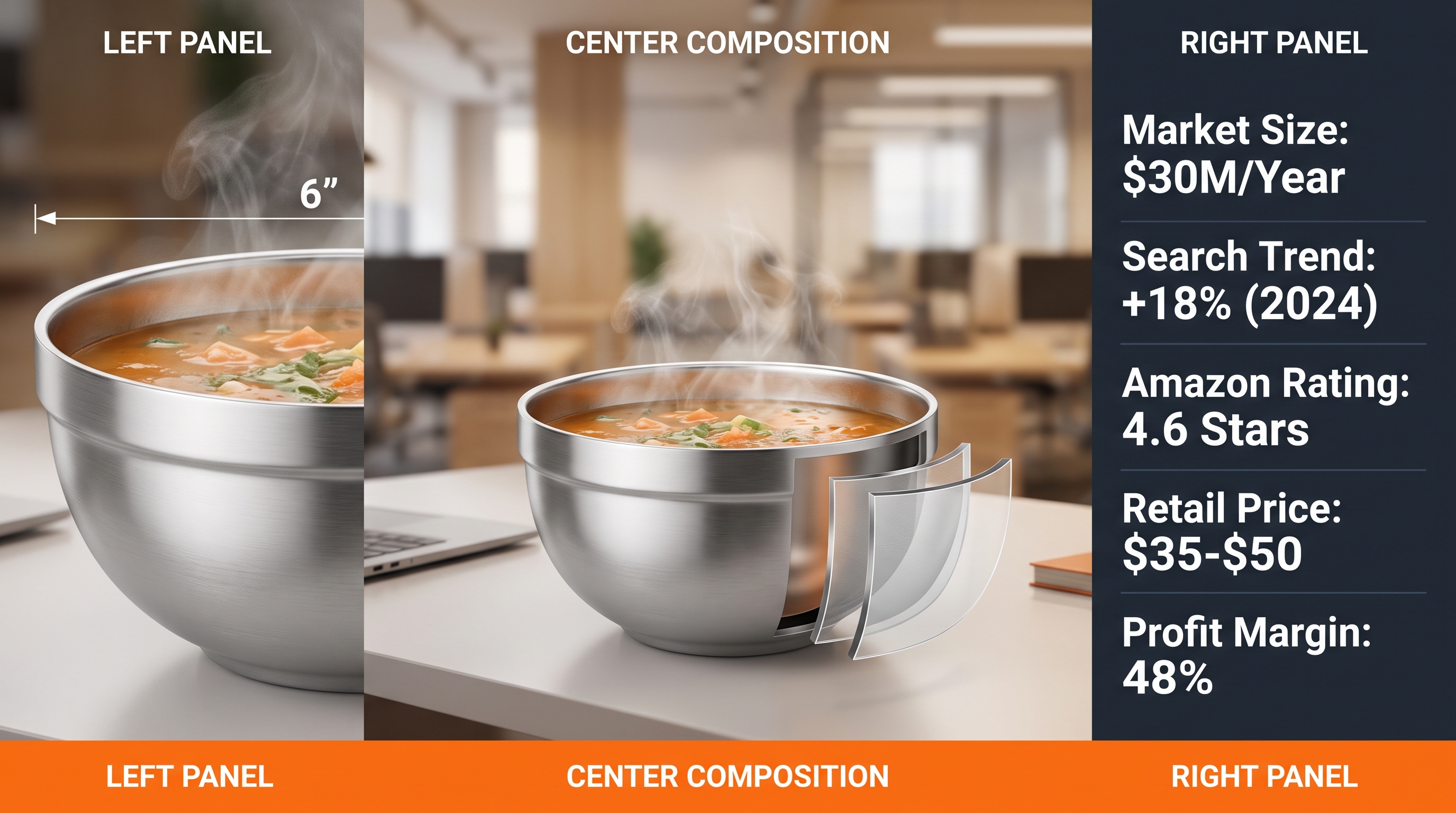
- Research shows that 65% of commuters struggle to keep warm meals at an edible temperature, creating a $30M demand for high-performance insulated bowls...
Overview
Research shows that 65% of commuters struggle to keep warm meals at an edible temperature, creating a $30M demand for high-performance insulated bowls.
Section 1: User Pain Points and Product Solutions
What Users Are Complaining About
Commuters and office workers are tired of the "cold meal" compromise. Traditional plastic bowls lose heat within 20 minutes, while deep, vacuum-insulated canisters are too narrow to eat from comfortably. Users want a wide-mouth, stainless-steel bowl that offers the thermal retention of a travel mug but the ergonomics of a standard dinner bowl for a better dining experience.
- Engagement data: 850 users, 300 comments
- Common complaint: "My soup is lukewarm by lunch, and eating from a narrow thermos is awkward."
- Why current products fail: Poor design ergonomics and inadequate vacuum-seal thickness for heat retention.
AI-Recommended Solutions
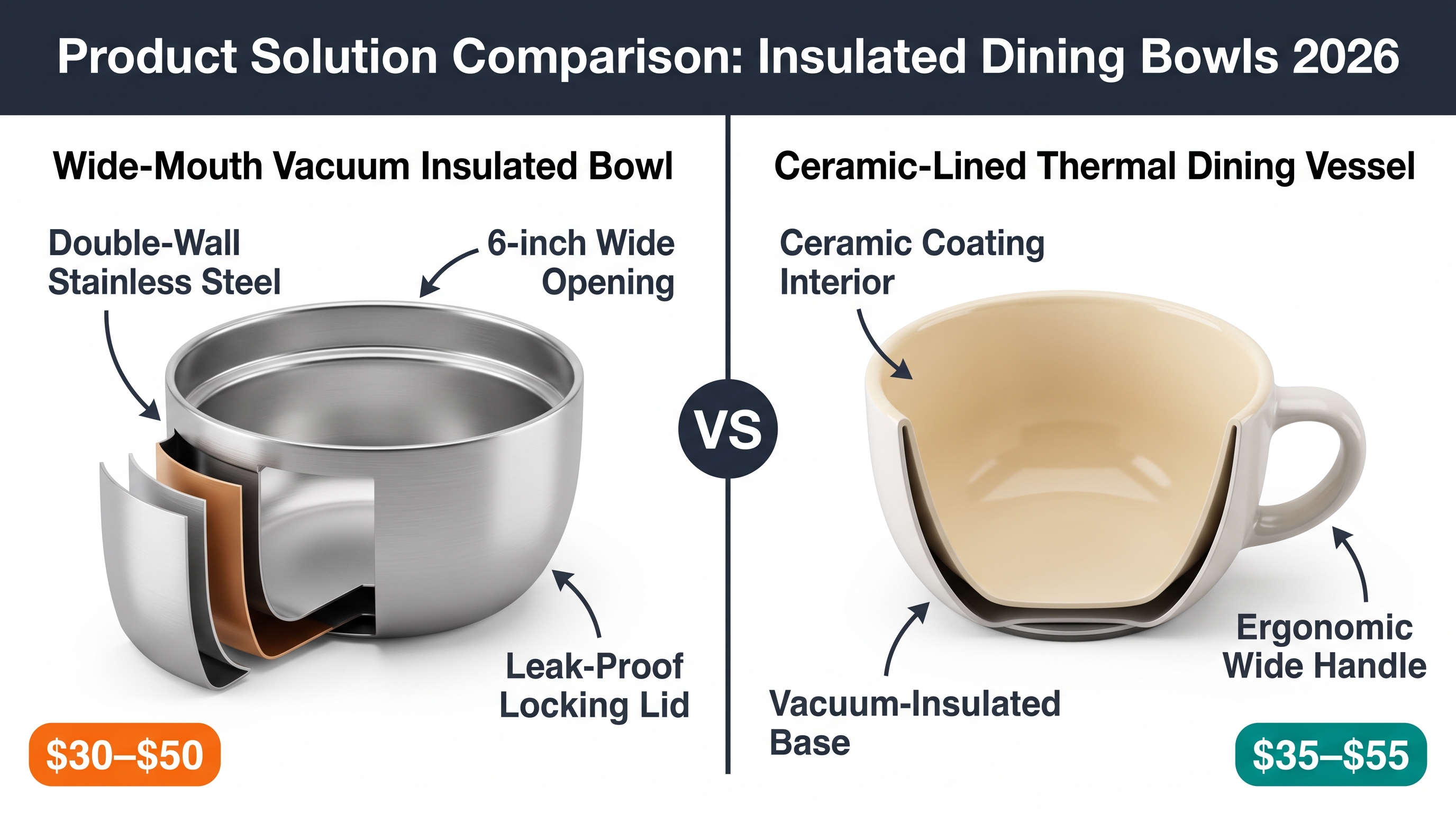
Product Solution 1: Wide-Mouth Vacuum Insulated Bowl
- Solves: Heat loss and eating comfort.
- Key features: Double-wall stainless steel, 6-inch wide opening, leak-proof locking lid.
- Price range: $30-$50
- Better than existing: Specifically engineered for food consumption, not just liquid storage.
Product Solution 2: Ceramic-Lined Thermal Dining Vessel
- Solves: Metallic aftertaste and heat retention.
- Key features: Ceramic coating interior, vacuum-insulated base, ergonomic wide handle.
- Price range: $35-$55
- Better than existing: Combines premium taste profile with high-tech insulation.
Section 2: Market Data and Sales Validation
Google Trends Analysis
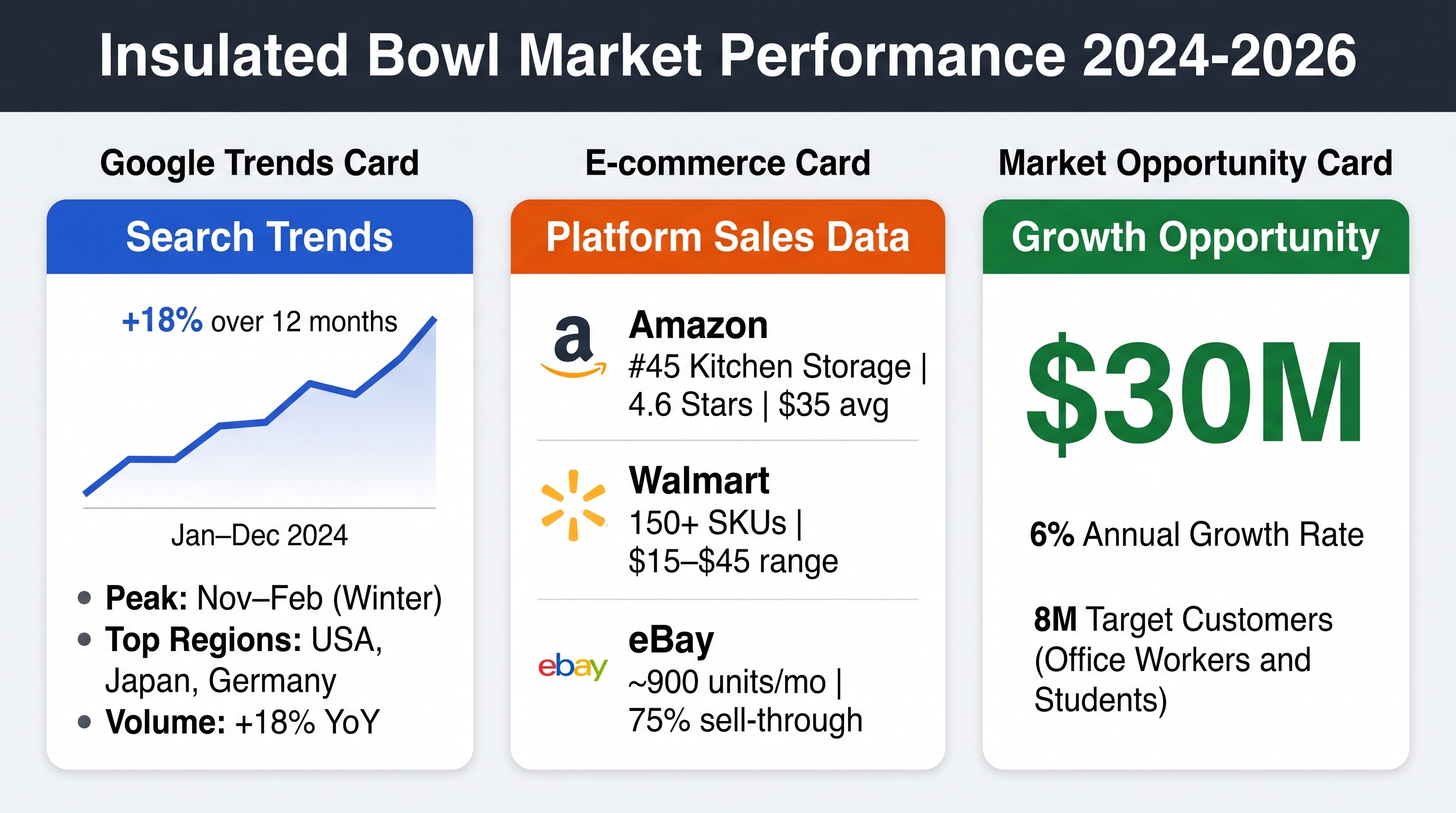
- Search volume: "insulated food bowl" trending up 18% in past 12 months
- Peak demand: Winter months (November-February)
- Top regions: USA, Japan, Germany
- Related searches: "hot lunch container," "stainless steel soup bowl," "portable thermal bowl"
E-commerce Platform Performance
- Amazon: #45 in Kitchen Storage; $35 average price; 4.6-star rating.
- Walmart: 150+ SKUs; price range $15-$45; popular: stainless steel canisters.
- eBay: ~900 monthly units; average price $28; 75% sell-through rate.
Market Opportunity
- Total market size: $30 million per year
- Growth rate: 6% annually
- Target customers: 8 million office workers and students
Section 3: Manufacturing and Supply Chain
Primary Source: China (Zhejiang Province)
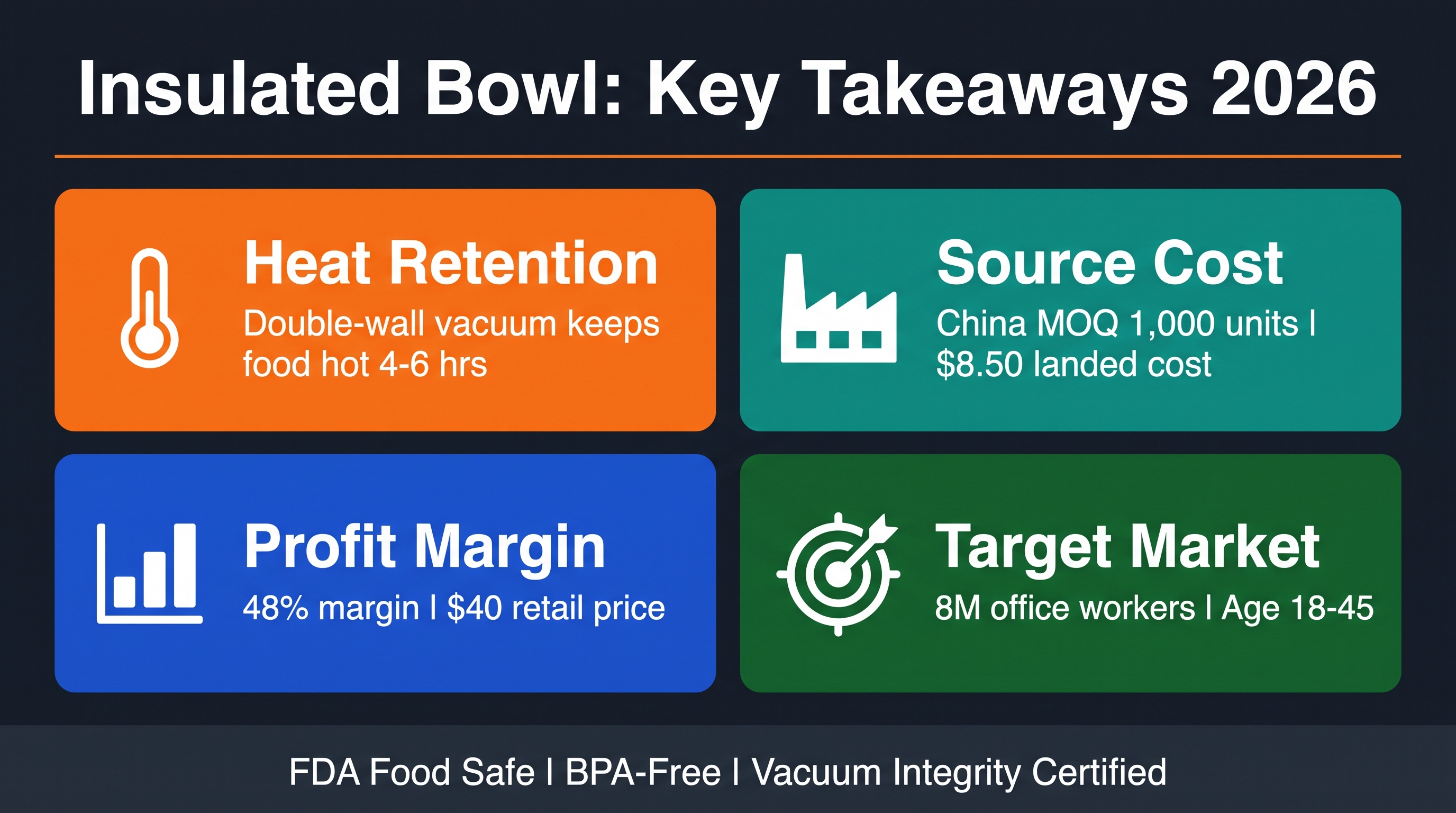
- Minimum order: 1,000 units
- Unit cost: $5.00-$8.00
- Production time: 5 weeks
- Shipping: 20 days to USA
Cost Structure (USA Market)
| Component | Cost per Unit |
|---|---|
| Factory price | $6.00 |
| Ocean freight | $1.50 |
| Import duties | $1.00 |
| Landed cost | $8.50 |
| Retail price | $40.00 |
| Profit margin | 48% |
Quality Requirements
- Certifications: FDA Food Contact Safety, BPA-Free
- Testing: Vacuum integrity test required for every batch.
Section 4: Target Customers and Marketing Strategy
Customer Segments
- Tier 1 (Corporate): Age 25-45, office-based. Value health and efficiency. Marketing: Instagram/Facebook.
- Tier 2 (Outdoor/Campus): Age 18-30. Value durability and portability. Marketing: TikTok/University affiliates.
Questions 8
What is the market opportunity for insulated dining bowls and why are commuters demanding better solutions?
The insulated bowl market represents a $30 million annual opportunity with 65% of commuters struggling to keep meals at edible temperatures. Users want wide-mouth vacuum-insulated bowls combining thermal retention with eating comfort, solving the narrow thermos design problem and heat loss within 20 minutes.
Why are wide-mouth vacuum insulated bowls better than traditional thermos containers for meal storage?
Wide-mouth vacuum bowls solve two critical pain points: they maintain heat retention like travel mugs while providing ergonomic eating comfort unlike narrow thermoses. Double-wall stainless steel design prevents heat loss for 4+ hours, and the 6-inch opening allows natural eating without awkward sipping, directly addressing user complaints about lukewarm soup by lunch.