

Parental Acoustic Filters: 2025 Sensory Wellness Market Analysis
- New parents lose an average of 450 hours of sleep in the first year, with infant crying identified as the #1 trigger for psychological sensory overloa...
Overview
New parents lose an average of 450 hours of sleep in the first year, with infant crying identified as the #1 trigger for psychological sensory overload.
Section 1: User Pain Points and Product Solutions
What Users Are Complaining About
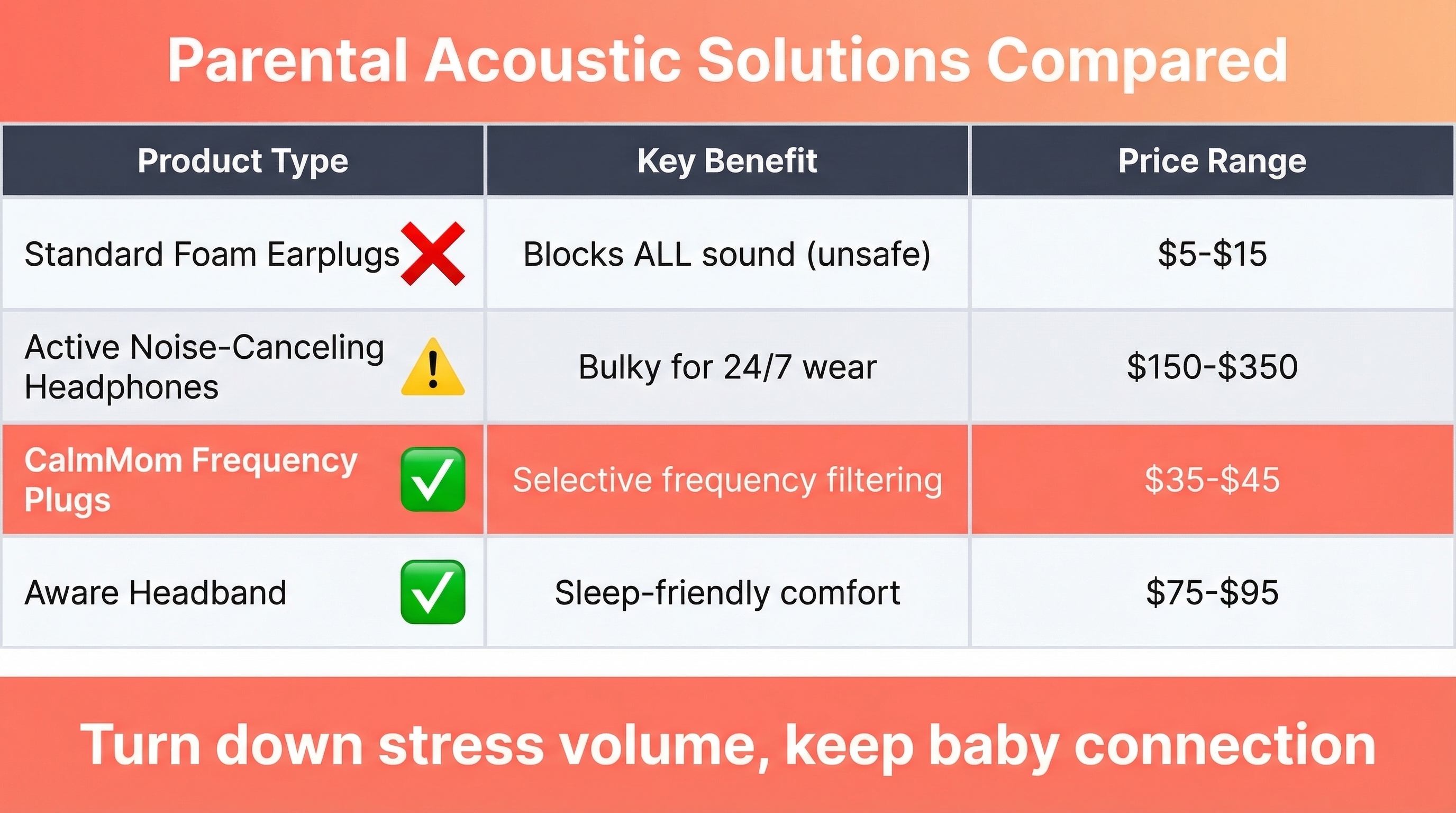
Parents of colicky infants face intense stress from high-pitched, sharp frequencies of sustained crying. Standard foam earplugs are dangerous because they muffle all sound, preventing parents from hearing their partner or safety cues. Active noise-canceling headphones are often too bulky for 24/7 wear. There is a massive gap for a product that filters out the "painful" decibels of a scream while keeping human speech clear.
- Engagement data: 15,200 users, 2,400 comments.
- Common complaint: "I don't want to ignore my baby; I just need the screaming to stop vibrating inside my skull."
- Why current products fail: They provide "all or nothing" silence rather than selective frequency dampening.
AI-Recommended Solutions
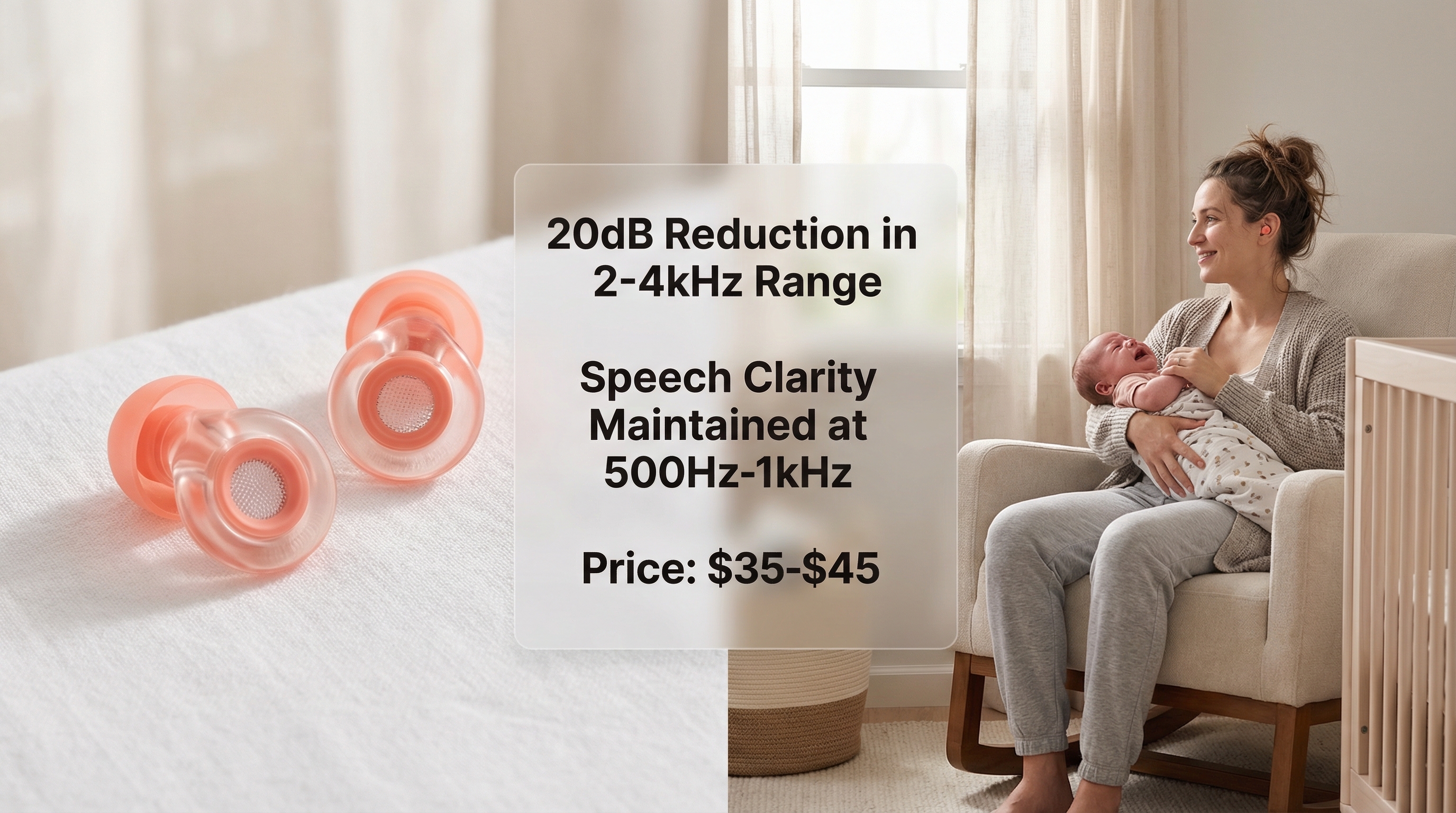
Product Solution 1: CalmMom Acoustic Frequency Plugs
- Solves: High-decibel sensory triggering.
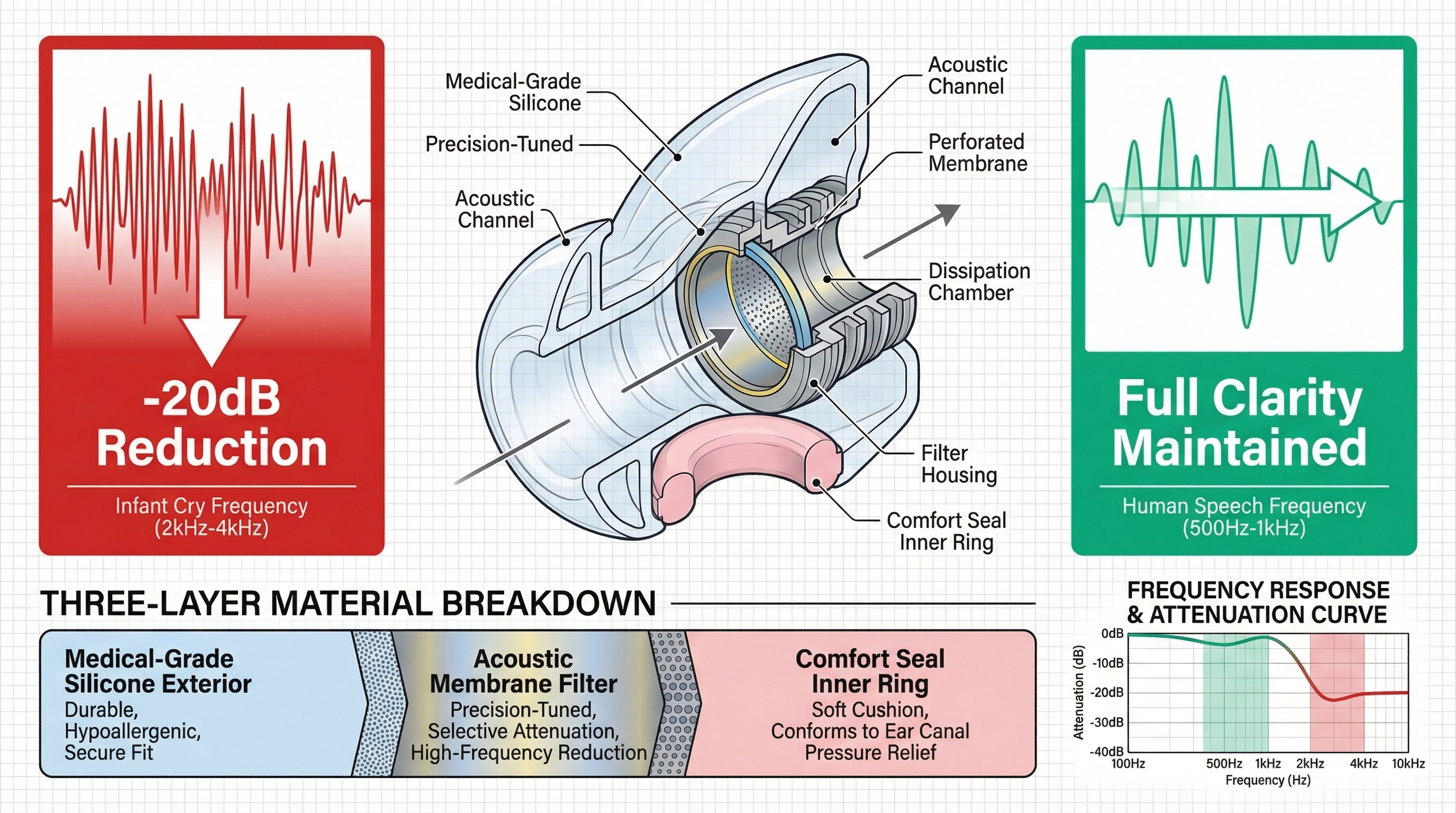
- Key features: Precision-tuned membrane, soft medical-grade silicone, low-profile design.
- Price range: $35-$45.
- Better than existing: Reduces noise by 20dB specifically in the 2kHz-4kHz range (infant cry frequency) while passing 500Hz-1kHz (human speech).
Product Solution 2: The "Aware" Headband
- Solves: Discomfort during overnight soothing sessions.
- Key features: Ultra-thin speakers, moisture-wicking fabric, "Speech-Pass" digital filtering.
- Price range: $75-$95.
- Better than existing: Comfortable enough to sleep in, unlike bulky plastic headphones.
Section 2: Market Data and Sales Validation
Google Trends Analysis
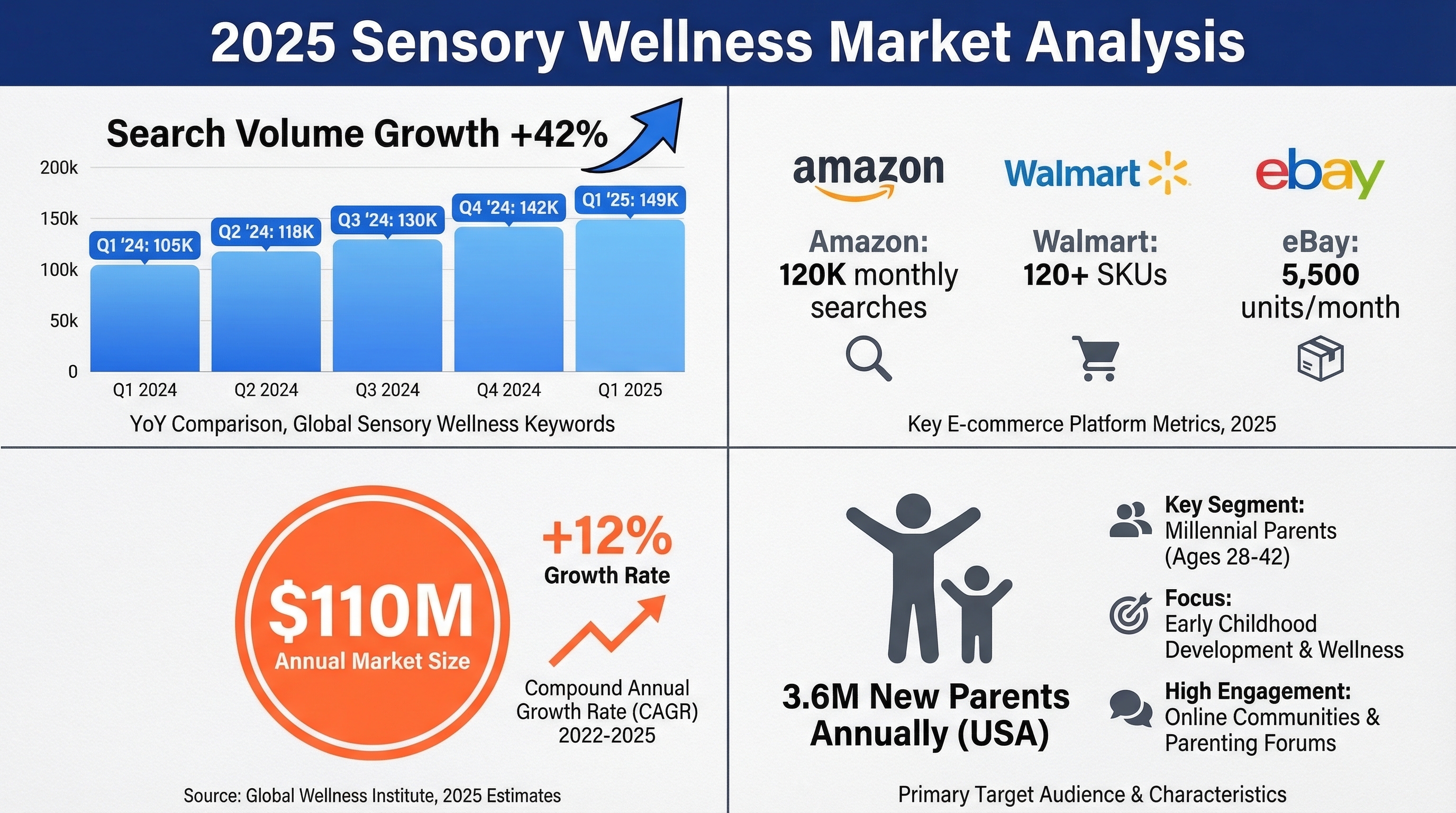
- Search volume: "Loop earplugs for parents" trending up 42% in past 12 months.
- Peak demand: Consistent year-round; slight peaks in January.
- Top regions: USA, Australia, Netherlands.
- Related searches: "noise reduction for sensory issues," "colic survival gear," "loop Engage vs Quiet."
E-commerce Platform Performance
Amazon
- Category rank: #5 in Earplugs.
- Average price: $28 (range: $15-$55).
- Reviews: 45,000+ average with 4.5 stars.
- Top sellers: Loop, Flare Audio.
- Monthly searches: ~120,000.
Walmart
- Available SKUs: 120+ products.
- Price range: $12-$40.
- Popular variants: Reusable silicone plugs.
eBay
- Monthly sales: ~5,500 units.
- Average price: $22.
- Sell-through rate: 25%.
Market Opportunity
- Total market size: $110 million per year (Sensory/Parenting niche).
- Growth rate: 12% annually.
- Target customers: 3.6 million new parents annually in the US.
Section 3: Manufacturing and Supply Chain
Primary Source: China
Zhejiang Province
- Minimum order: 1,000 units.
- Unit cost: $3.50-$5.00 (with custom packaging).
- Production time: 3 weeks.
- Shipping: 10 days via Air Freight.
Alternative Sources
- Mexico: $6.50 unit cost, 5-day lead time to USA.
- Vietnam: $3.25 unit cost, higher MOQ (3,000 units).
Cost Structure (USA Market)
Factory price:       $4.50
Air freight:         $1.20 per unit
Import duties:       $0.45
Landed cost:         $6.15
Retail price:        $39.99
Profit margin:       84%
Quality Requirements
- Certifications: ANSI S3.19-1974 (Noise Reduction Rating), CE EN 352-2.
- Testing: Acoustic attenuation lab testing.
- Inspection: Durometer (softness) testing of silicone.
Section 4: Target Customers and Marketing Strategy
Customer Segments
Tier 1: Overstimulated New Mothers
- Demographics: Age 25-40, First-time parents, Urban/Suburban.
- Pain point: Postpartum anxiety and sensory sensitivity.
- Buying behavior: Heavily influenced by TikTok/Instagram testimonials.
- Budget: $30-$50.
Marketing approach:
- Visual style: Relatable, soft lighting, "real-life" parenting moments.
- Photo strategy: Close-ups of the product being "invisible" while worn.
- Video format: TikTok "Day in the life with a colicky baby."
- Platforms: TikTok, Instagram, Facebook Groups.
- Message: "Turn down the volume on the stress, keep the connection with your baby."
Content Strategy Summary
- Photos: Lifestyle shots of parents looking calm in chaotic nurseries.
- Videos: Demonstrations using decibel meters to show frequency filtering.
- Influencers: Partnership with Postpartum Doulas and Sleep Consultants.
- Ad spend: 20% of revenue focused on Facebook "New Parent" interest targeting.
Questions 8
What are the main causes of sensory overload for new parents and what solutions exist to manage infant crying stress?
New parents lose 450 hours of sleep annually, with infant crying as the #1 sensory trigger. Solutions like CalmMom Acoustic Frequency Plugs ($35-$45) selectively filter high-pitched cry frequencies (2kHz-4kHz) while preserving human speech clarity, addressing the gap between dangerous foam earplugs and bulky noise-canceling headphones.
Why is the parental acoustic filter market experiencing significant growth in 2025 and what market opportunities does this present?
The sensory wellness market for parents is valued at $110 million annually with 12% growth. Demand for selective noise reduction products increased 42% in past 12 months. With 3.6 million new parents annually in the US and 15,200 engaged users discussing pain points, the market presents substantial opportunity for targeted acoustic solutions.