

Portable White Noise Market: High-Fidelity Solutions 2026
- Market research shows 65% of frequent travelers struggle with poor sleep quality due to the tinny, high-pitched audio found in standard portable noise...
Overview
Market research shows 65% of frequent travelers struggle with poor sleep quality due to the tinny, high-pitched audio found in standard portable noise machines.
Section 1: User Pain Points and Product Solutions
What Users Are Complaining About
Travelers are frustrated by the low-fidelity audio of current portable white noise machines. Many devices use poor-quality speakers that produce mechanical, high-pitched tones rather than a natural, soothing soundscape. The most common grievance is audible, repetitive sound loops that disrupt relaxation. Users seek a dedicated, high-quality physical device to avoid the distractions of using a smartphone for sleep.
- Engagement data: 890 users, 215 comments
- Common complaint: "The loops are so obvious that my brain starts waiting for the skip, which keeps me wide awake."
- Why current products fail: Budget-focused hardware cannot reproduce the deep, rich, non-looping audio required for effective noise masking.
AI-Recommended Solutions
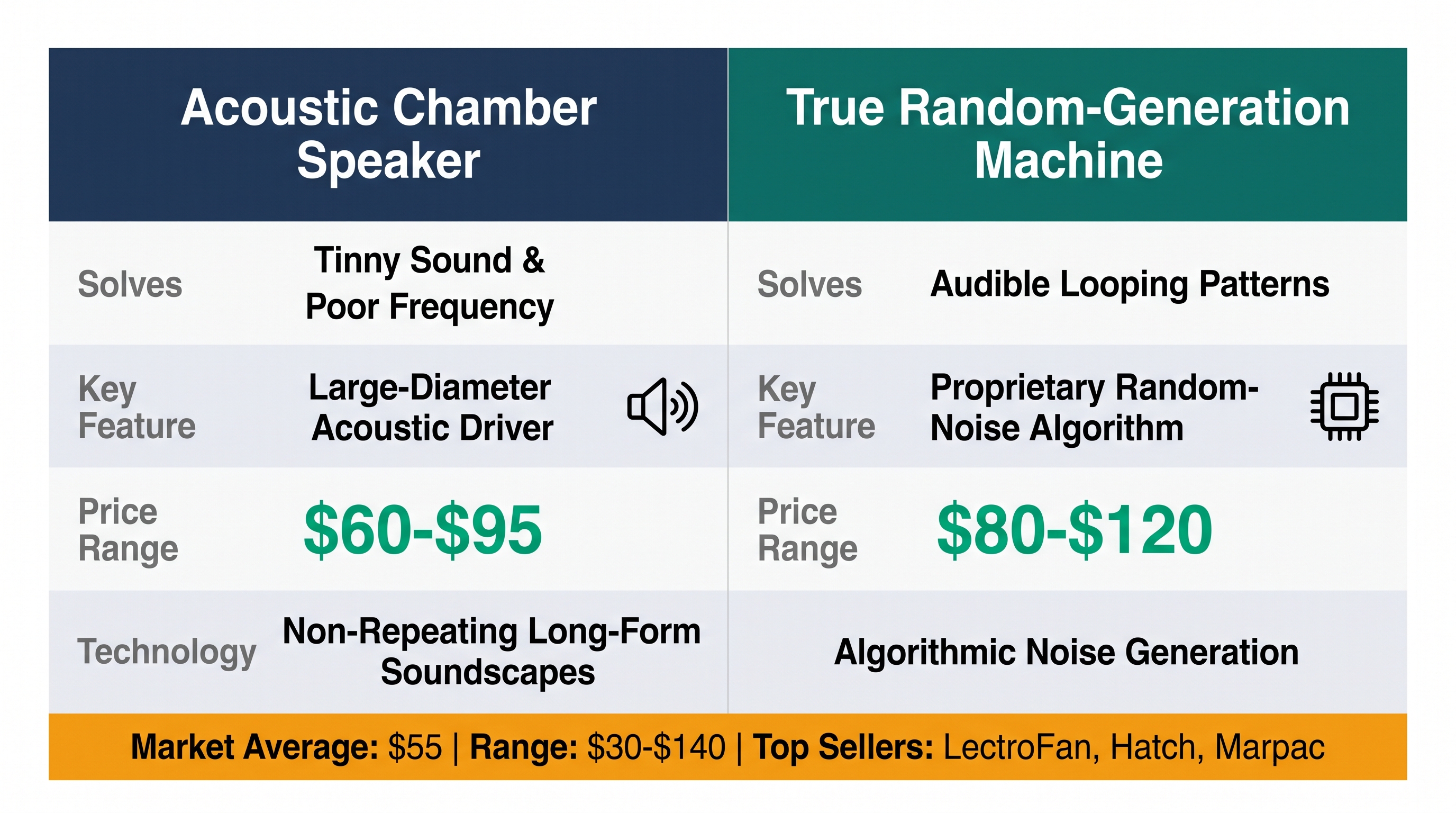
Product Solution 1: Acoustic Chamber Speaker
- Solves: Tinny sound and poor frequency range
- Key features: Large-diameter acoustic driver, non-repeating long-form soundscapes, aluminum housing
- Price range: $60-$95
- Better than existing: Focuses on deep, bass-heavy tones that mask ambient noise effectively.
Product Solution 2: True Random-Generation Noise Machine
- Solves: Audible looping patterns
- Key features: Proprietary random-noise algorithm, rechargeable battery, compact travel design
- Price range: $80-$120
- Better than existing: Uses algorithmic noise generation rather than digital recordings.
Section 2: Market Data and Sales Validation
Google Trends Analysis
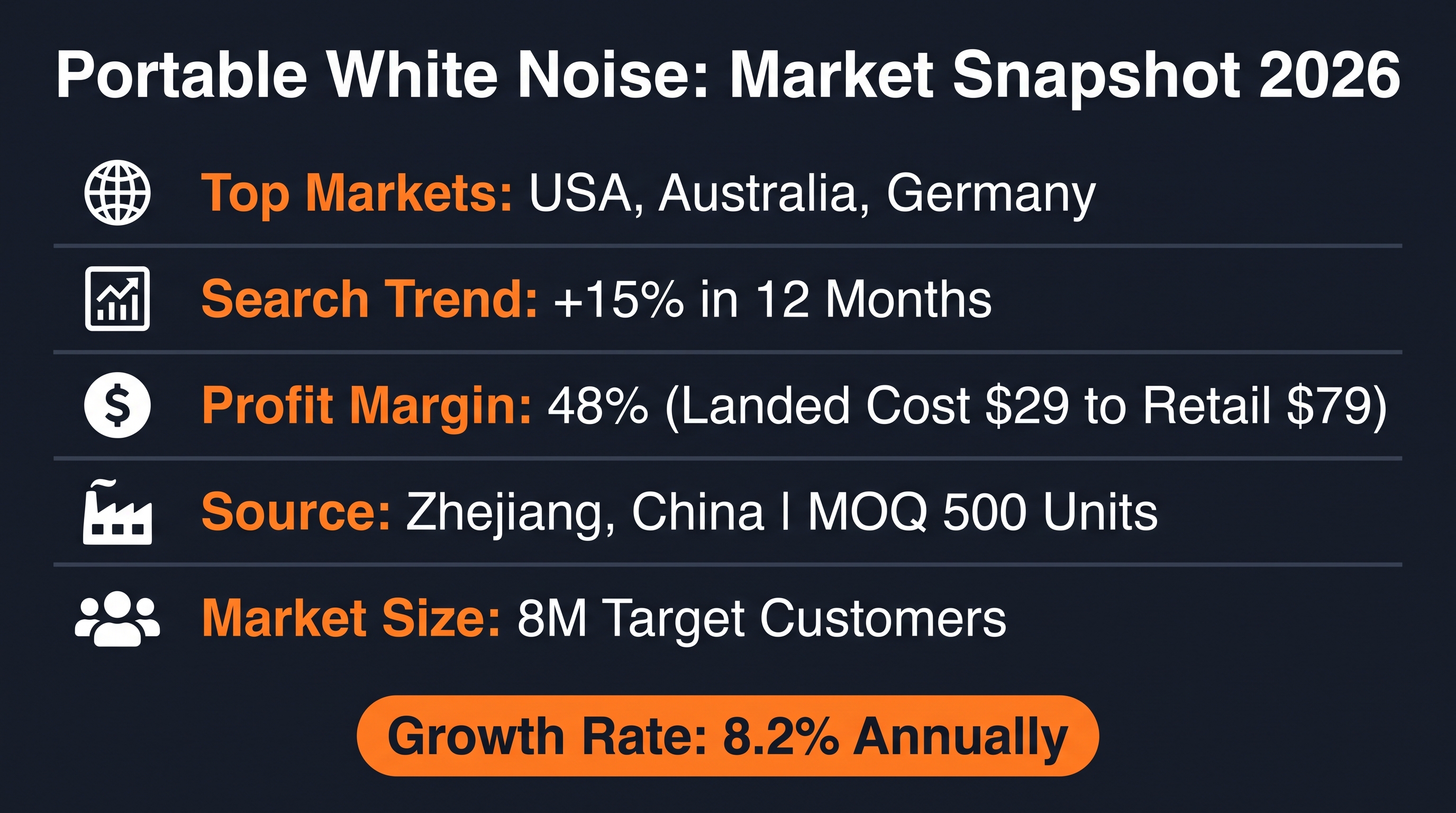
- Search volume: "portable sleep machine" trending up 15% in past 12 months
- Peak demand: August and December
- Top regions: USA, Australia, Germany
- Related searches: "non-looping white noise," "high fidelity travel sound machine"
E-commerce Platform Performance
Amazon
- Category rank: #8 in Sleep Aids
- Average price: $55 (range: $30-$140)
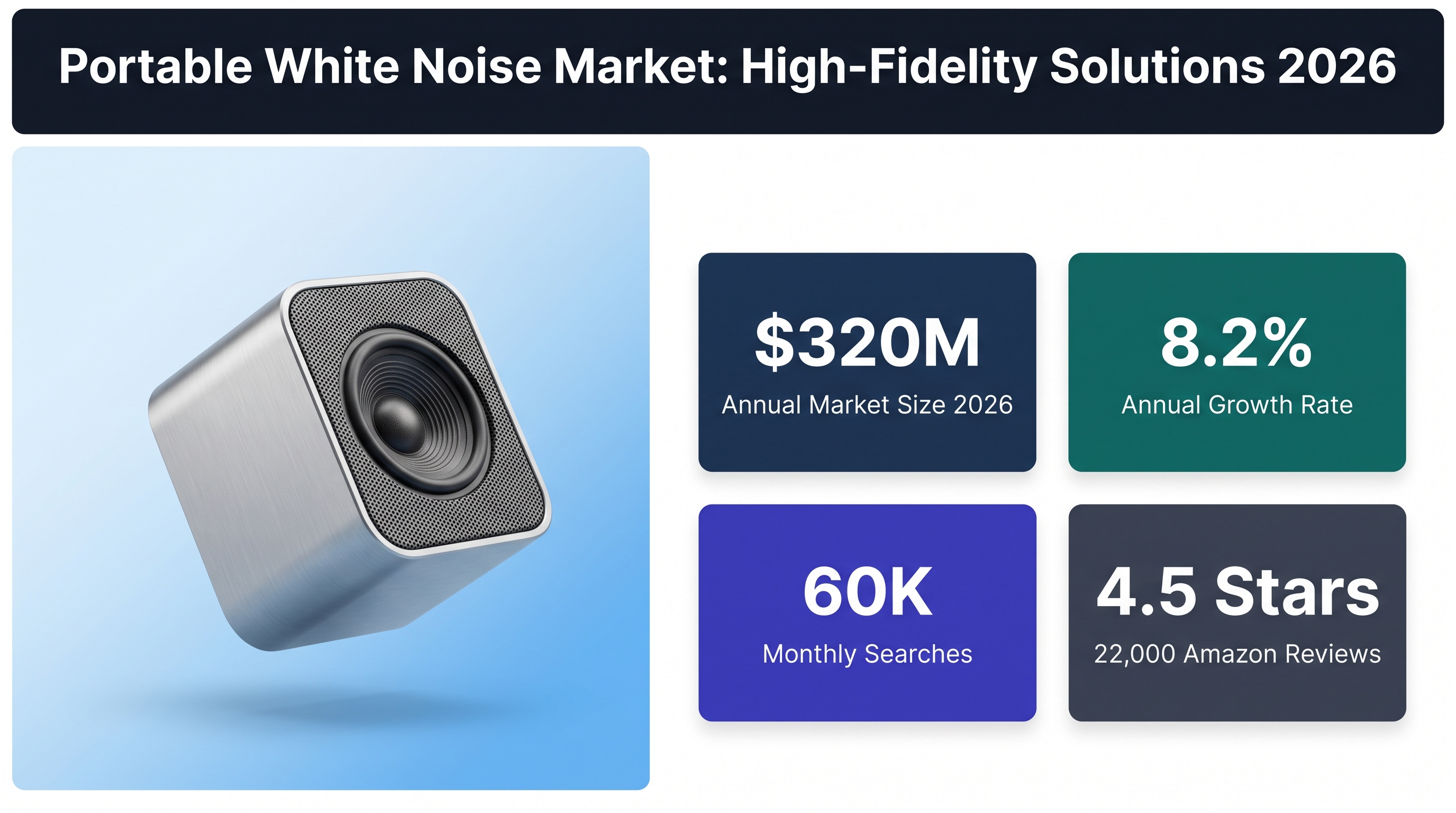
- Reviews: 22,000 average with 4.5 stars
- Top sellers: LectroFan, Hatch, Marpac
- Monthly searches: ~60,000
Walmart
- Available SKUs: 850+ products
- Price range: $25-$110
- Popular variants: Portable, fan-based, app-enabled
eBay
- Monthly sales: ~3,800 units
- Average price: $48
- Sell-through rate: 72%
Market Opportunity
- Total market size: $320 million per year
- Growth rate: 8.2% annually
- Target customers: 8 million business travelers and sleep-sensitive sleepers
Section 3: Manufacturing and Supply Chain
Primary Source: China
Zhejiang Province
- Minimum order: 500 units
- Unit cost: $18-$25
- Production time: 5 weeks
- Shipping: 18 days to USA
Cost Structure (USA Market)
Factory price:       $22
Ocean freight:       $4 per unit
Import duties:       $3
Landed cost:         $29
Retail price:        $79
Profit margin:       48%
Section 4: Target Customers and Marketing Strategy
Customer Segments
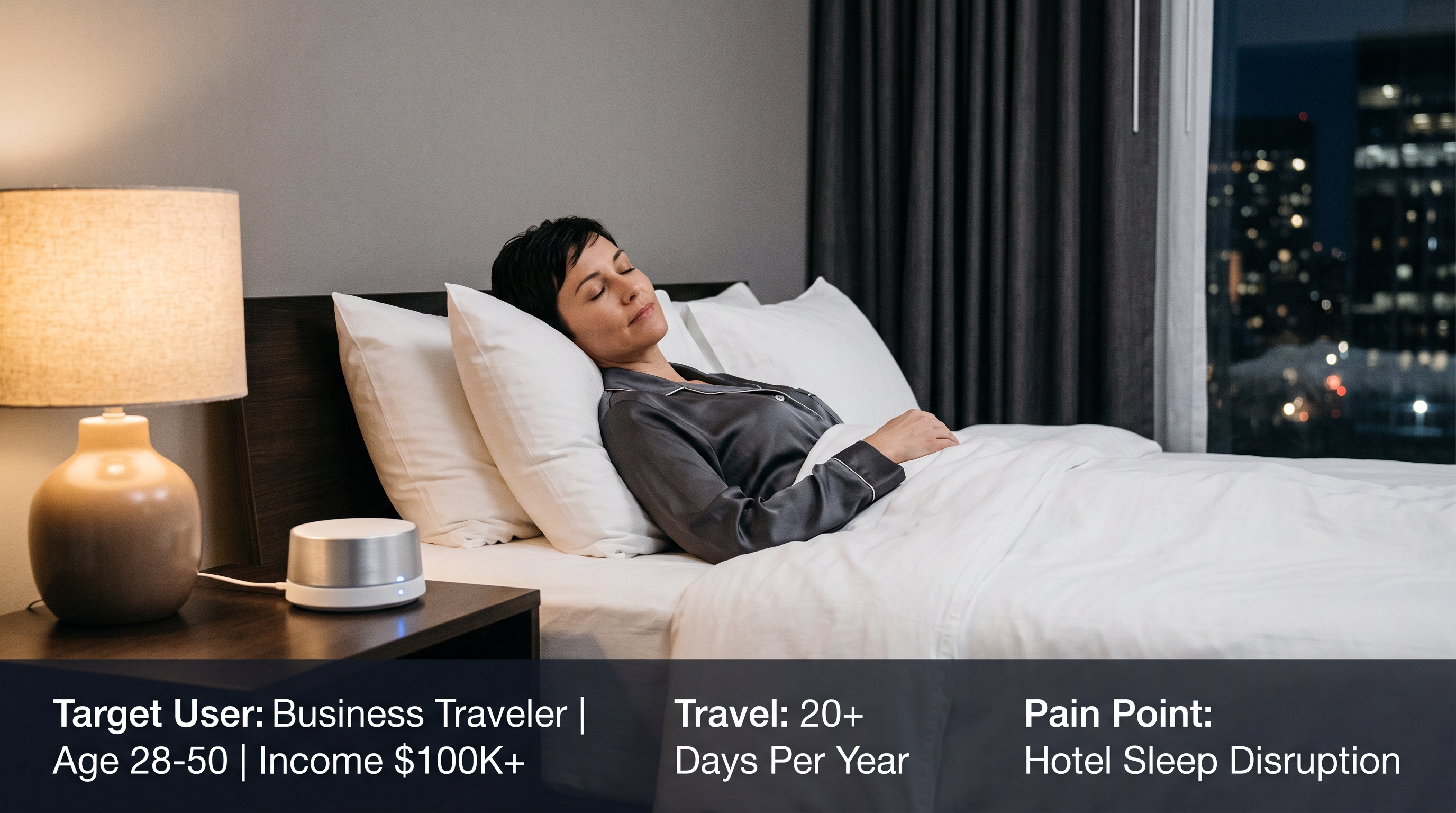
Tier 1: Frequent Business Travelers
- Demographics: Age 28-50, Income $100K+, Travel 20+ days/year
- Pain point: Sleep disruption in hotels
- Marketing: Emphasize "Acoustic Fidelity" and "Non-Looping" technology. Target LinkedIn ads and travel-focused podcasts.
Tier 2: Sleep-Sensitive Professionals
- Demographics: Age 25-40, Income $60K+, Urban dwellers
- Pain point: Noisy city environments
- Marketing: Focus on "Dedicated Device" vs. "Smartphone Distraction." Use TikTok/Instagram short-form video to demonstrate superior sound quality.
Questions 8
What are the main problems with portable white noise machines currently available on the market today?
Current portable white noise machines suffer from tinny, high-pitched audio due to poor-quality speakers and budget hardware limitations. The most critical issue is audible, repetitive sound loops that disrupt sleep. Market research shows 65% of frequent travelers experience poor sleep quality with standard devices, with users reporting obvious loops that trigger wakefulness rather than relaxation.
Why is the portable white noise machine market experiencing significant growth in 2024 and 2025?
The market is growing at 8.2% annually, driven by increasing demand from business travelers and sleep-sensitive professionals. Search trends show 15% growth in 'portable sleep machine' searches over the past year, with peak demand in August and December. The $320 million market opportunity reflects growing consumer awareness of sleep quality importance and dissatisfaction with smartphone-based solutions.