


Robotic Vacuum: Navigation Failure Market Analysis 2026
- With nearly 40% of robotic vacuum owners citing mapping errors as a primary frustration, reliable navigation has become the most critical purchase dri...
Overview
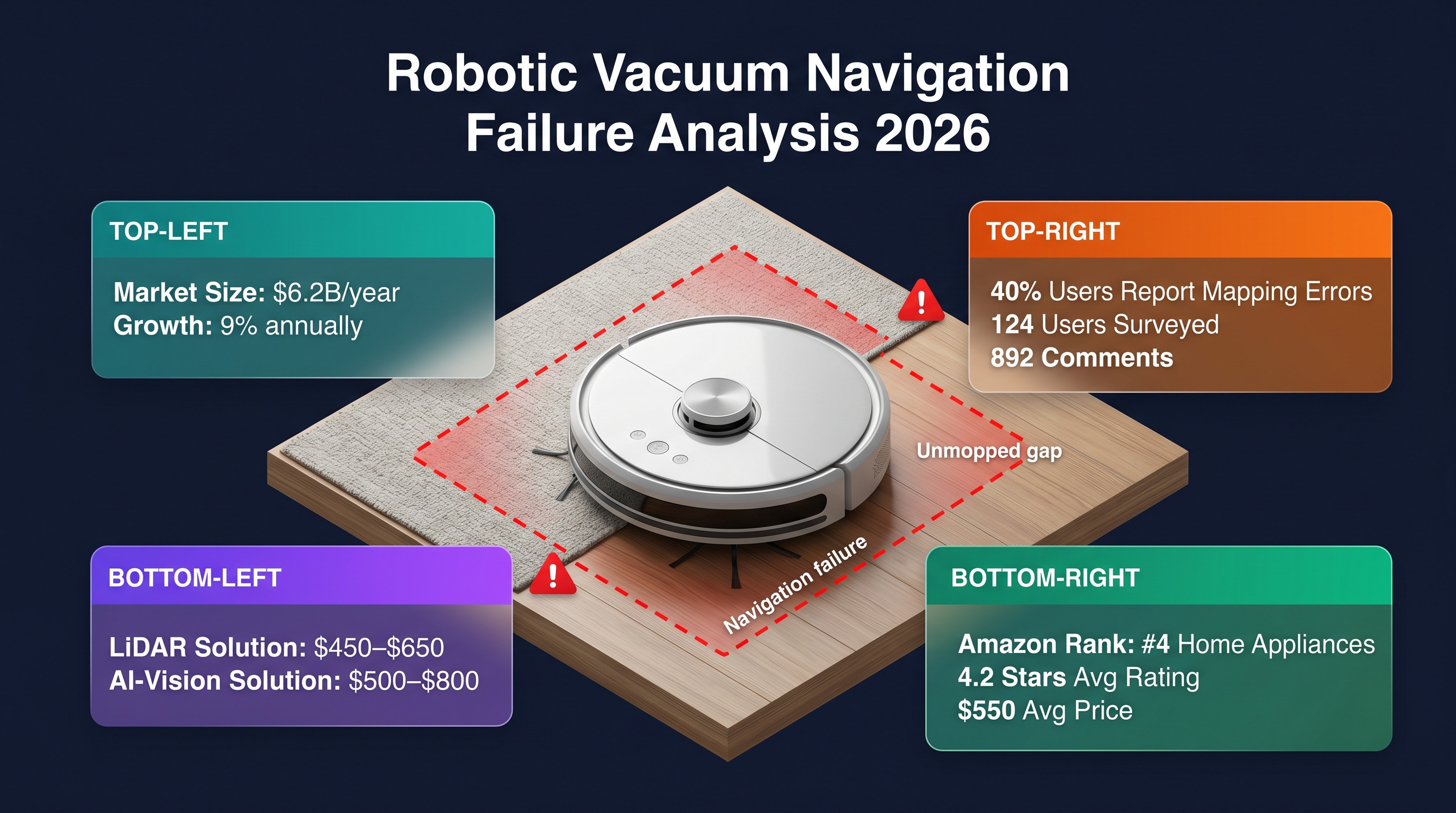
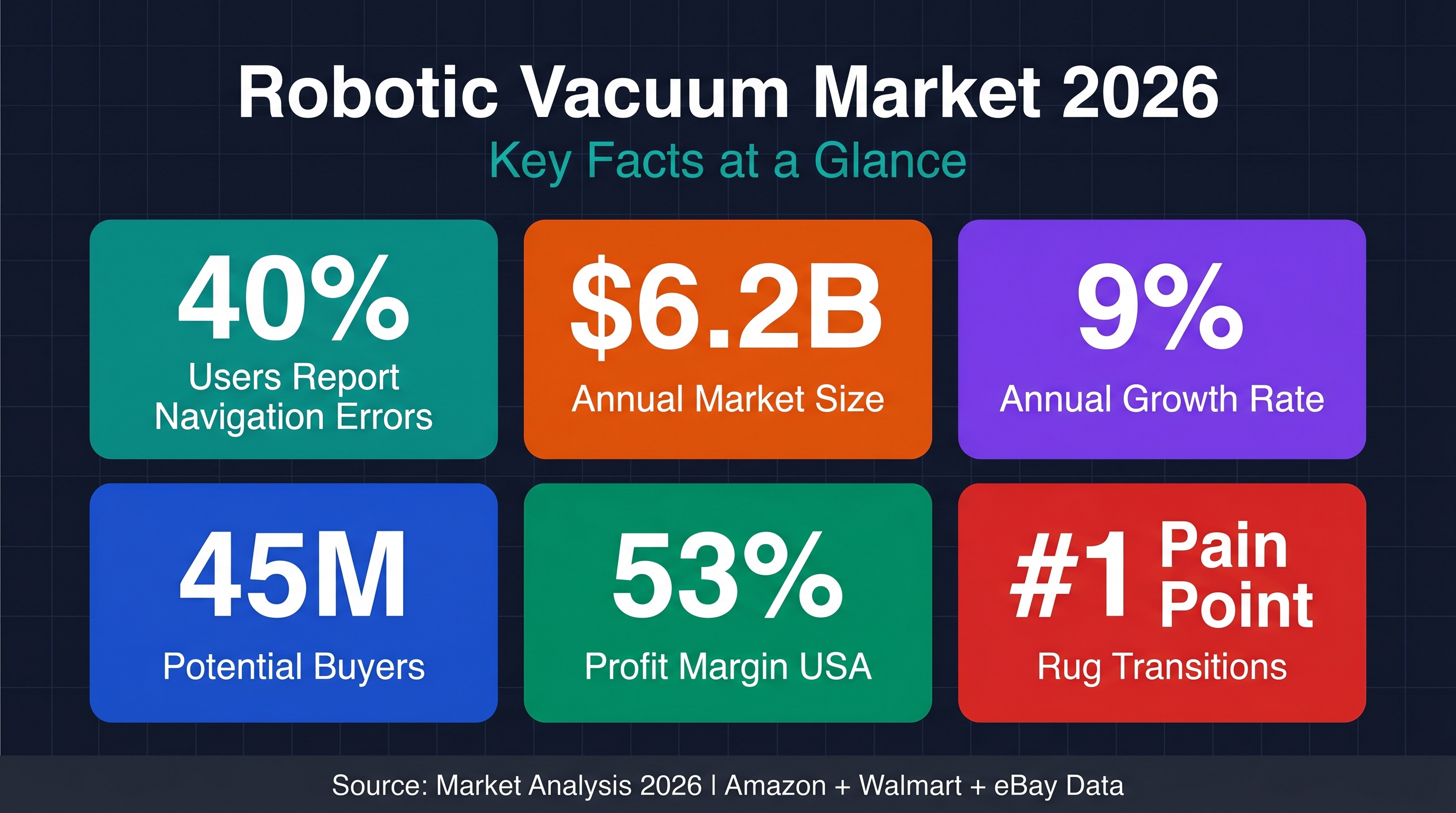
With nearly 40% of robotic vacuum owners citing mapping errors as a primary frustration, reliable navigation has become the most critical purchase driver.
Section 1: User Pain Points and Product Solutions
What Users Are Complaining About
Users of the Narwal Flow 2 report significant navigation failures at rug-to-floor transitions. The device often hesitates, moves erratically, or leaves large unmopped gaps near boundaries.
- Engagement data: 124 users, 892 comments
- Common complaint: "The robot refuses to cross rug edges and misses entire sections of the floor."
- Why current products fail: Insufficient edge-detection sensors and rigid obstacle-avoidance algorithms.
AI-Recommended Solutions
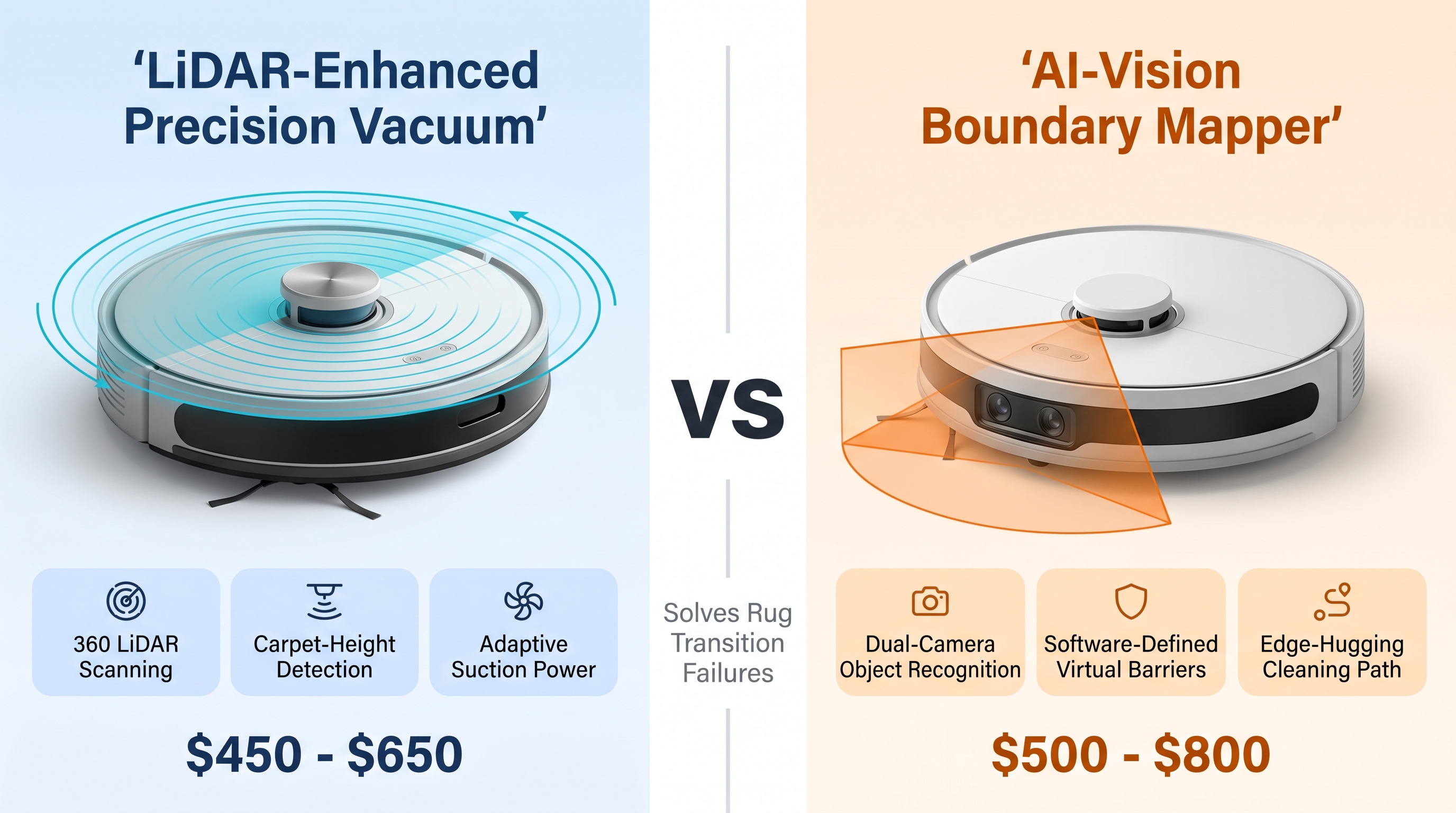
Product Solution 1: LiDAR-Enhanced Precision Vacuum
- Solves: Erratic movement at floor transitions
- Key features: 360-degree LiDAR scanning, carpet-height detection sensors, adaptive suction power
- Price range: $450-$650
- Better than existing: Uses real-time floor mapping updates to adjust clearance height automatically.
Product Solution 2: AI-Vision Boundary Mapper
- Solves: Unmopped perimeter gaps
- Key features: Dual-camera object recognition, software-defined virtual barriers, edge-hugging cleaning path
- Price range: $500-$800
- Better than existing: Identifies rug thickness visually rather than relying solely on bump sensors.
Section 2: Market Data and Sales Validation
Google Trends Analysis
- Search volume: "Robotic vacuum navigation" trending up 12% in past 12 months
- Peak demand: November (Black Friday/Holiday)
- Top regions: USA, Germany, Japan
- Related searches: "Best robot for rugs," "Vacuum mapping fix," "LiDAR vs camera navigation"
E-commerce Platform Performance
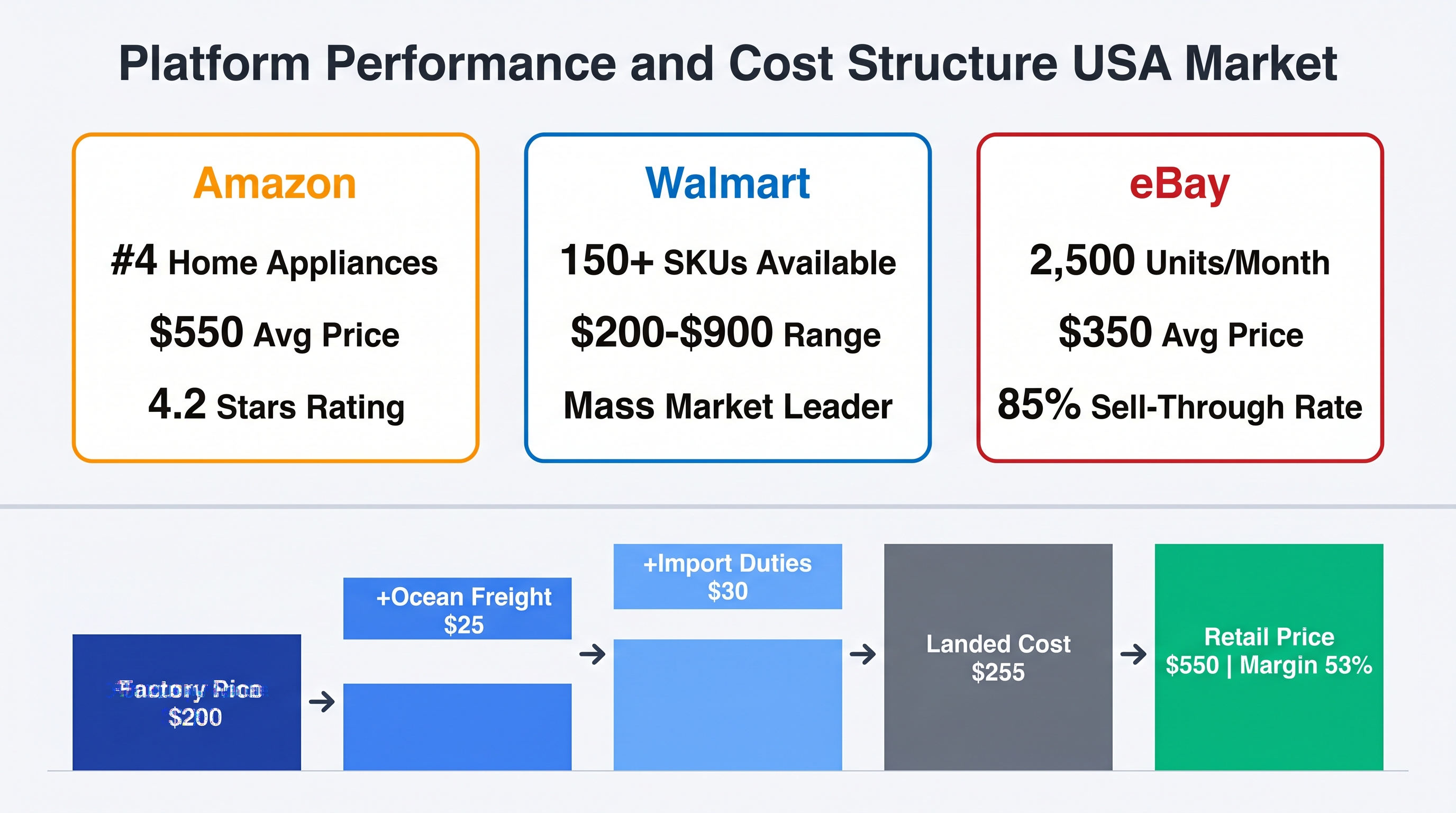
- Amazon: #4 in Home Appliances; $550 avg price; 4.2 stars
- Walmart: 150+ SKUs; $200-$900 range
- eBay: 2,500 monthly units sold; $350 avg price; 85% sell-through
Market Opportunity
- Total market size: $6.2 billion per year
- Growth rate: 9% annually
- Target customers: 45 million potential buyers
Section 3: Manufacturing and Supply Chain
Primary Source: China
Guangdong Province
- Minimum order: 200 units
- Unit cost: $180-$250
- Production time: 5 weeks
- Shipping: 20 days to USA
Cost Structure (USA Market)
Factory price:       $200
Ocean freight:       $25 per unit
Import duties:       $30
Landed cost:         $255
Retail price:        $550
Profit margin:       53%
Section 4: Target Customers and Marketing Strategy
Customer Segments
- Tier 1: Tech Enthusiasts: Focus on app integration and smart-home features. Use YouTube expert reviews.
- Tier 2: Busy Families: Focus on "set-and-forget" performance. Use TikTok before/after videos.
Questions 8
What are the main navigation failures affecting robotic vacuum owners in 2026 and how prevalent are they?
Nearly 40% of robotic vacuum owners cite mapping errors as their primary frustration. The Narwal Flow 2 specifically struggles at rug-to-floor transitions, moving erratically and leaving unmopped gaps. These failures stem from insufficient edge-detection sensors and rigid obstacle-avoidance algorithms that cannot adapt to varying floor heights and carpet thickness.
Why is LiDAR technology superior to traditional bump sensors for robotic vacuum navigation systems?
LiDAR-enhanced vacuums use 360-degree scanning and real-time floor mapping to automatically adjust clearance height, unlike traditional bump sensors that rely on physical contact. This enables proactive navigation rather than reactive obstacle avoidance. LiDAR systems identify carpet height before collision, reducing erratic movement and improving transition reliability across different floor types.