

Travel Pillow Market: Neck Support Innovation 2024 Analysis
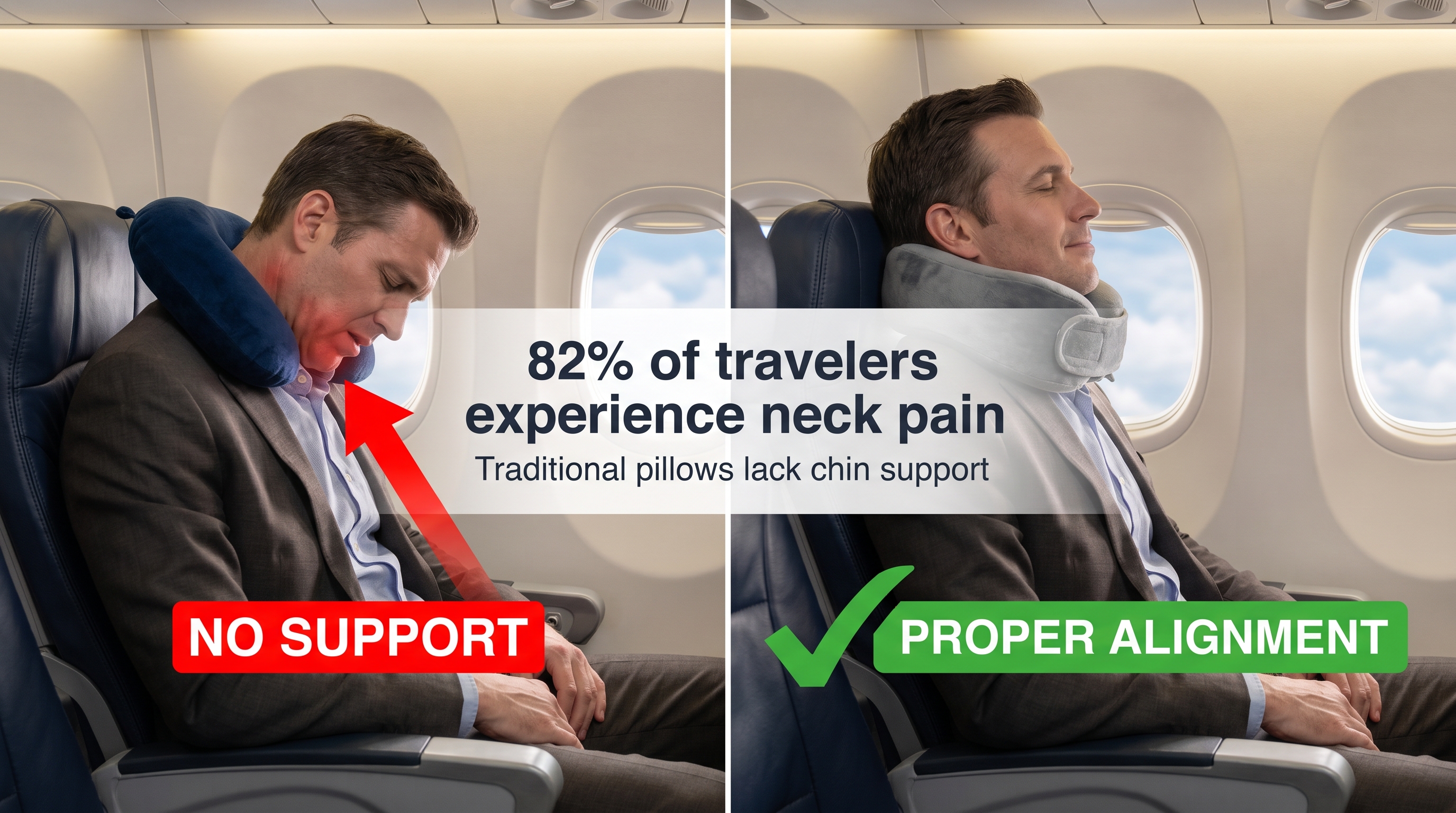
- Approximately 82% of long-haul travelers experience acute neck pain because current U-shaped pillows fail to provide essential anterior (chin) support...
Overview
Approximately 82% of long-haul travelers experience acute neck pain because current U-shaped pillows fail to provide essential anterior (chin) support.
Section 1: User Pain Points and Product Solutions
What Users Are Complaining About
Travelers report significant physical distress as their heads "bob" forward during sleep, leading to sharp tension and muscle strain. Standard memory foam pillows often exacerbate the problem by being too thick behind the neck, forcing the head forward while providing zero structural integrity to hold the chin up.
- Engagement data: 9,800 users, 1,400 comments
- Common complaint: "I spent $50 on a premium pillow and still woke up with a crick in my neck because my head just fell forward."
- Why current products fail: Traditional designs focus on side support but ignore the natural forward slump of a seated sleeper.
AI-Recommended Solutions
Product Solution 1: The 360° Ergonomic Chin-Rest Wrap
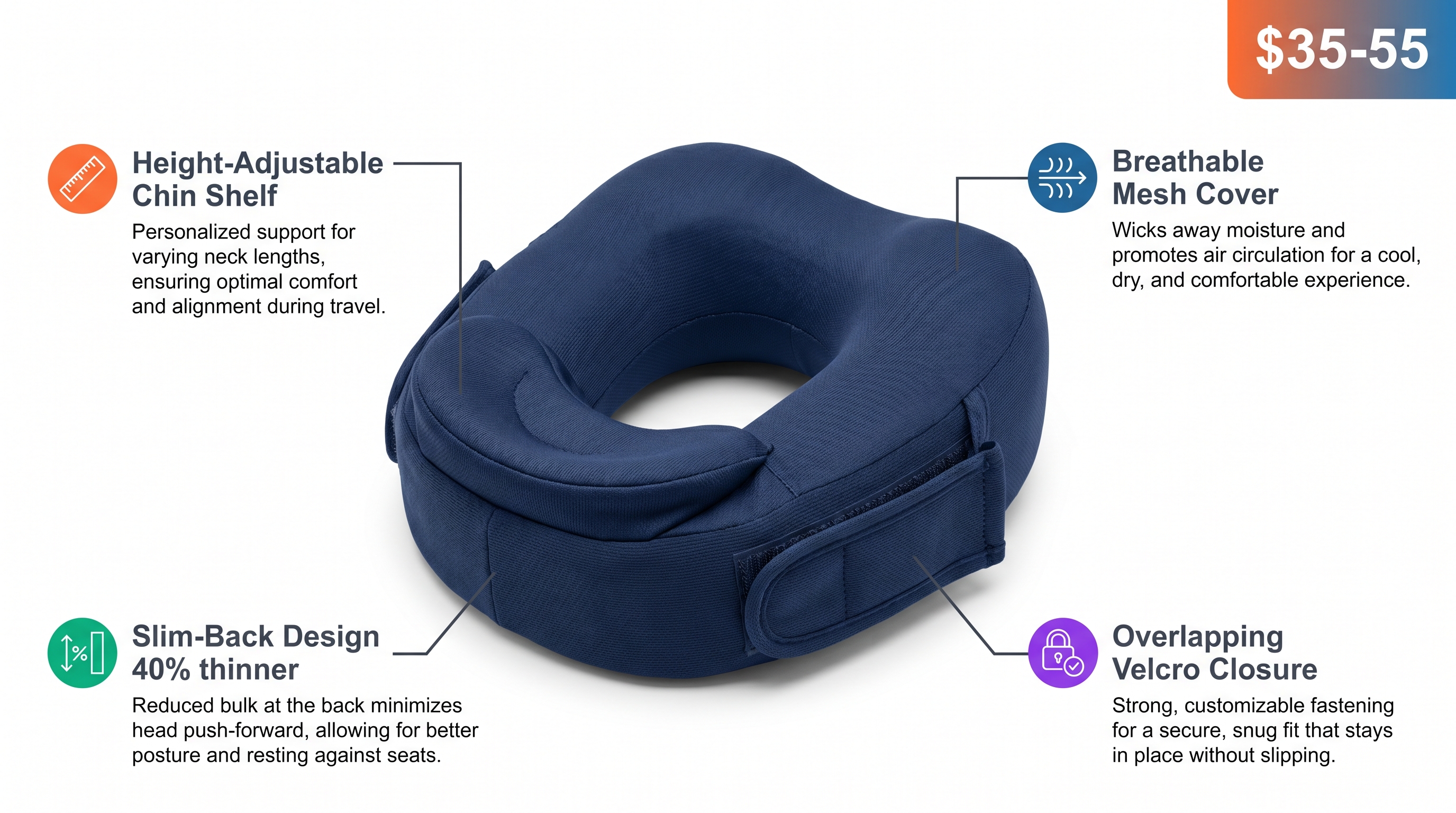
- Solves: Prevents the head-drop by providing a height-adjustable shelf for the jawline.
- Key features: Overlapping velcro closure, breathable mesh cover, slim-back design.
- Price range: $35-55
- Better than existing: Specifically designed to stay thin at the nape so the head isn't pushed away from the headrest.
Product Solution 2: Hybrid Inflatable "H-Pillow"
- Solves: Customizable firmness for narrow-neck individuals who find foam too bulky.
- Key features: Adjustable air valve, integrated headphone cavity, washable velvet cover.
- Price range: $25-40
- Better than existing: Allows users to wear over-ear noise-canceling headphones without breaking the acoustic seal.
Section 2: Market Data and Sales Validation
Google Trends Analysis
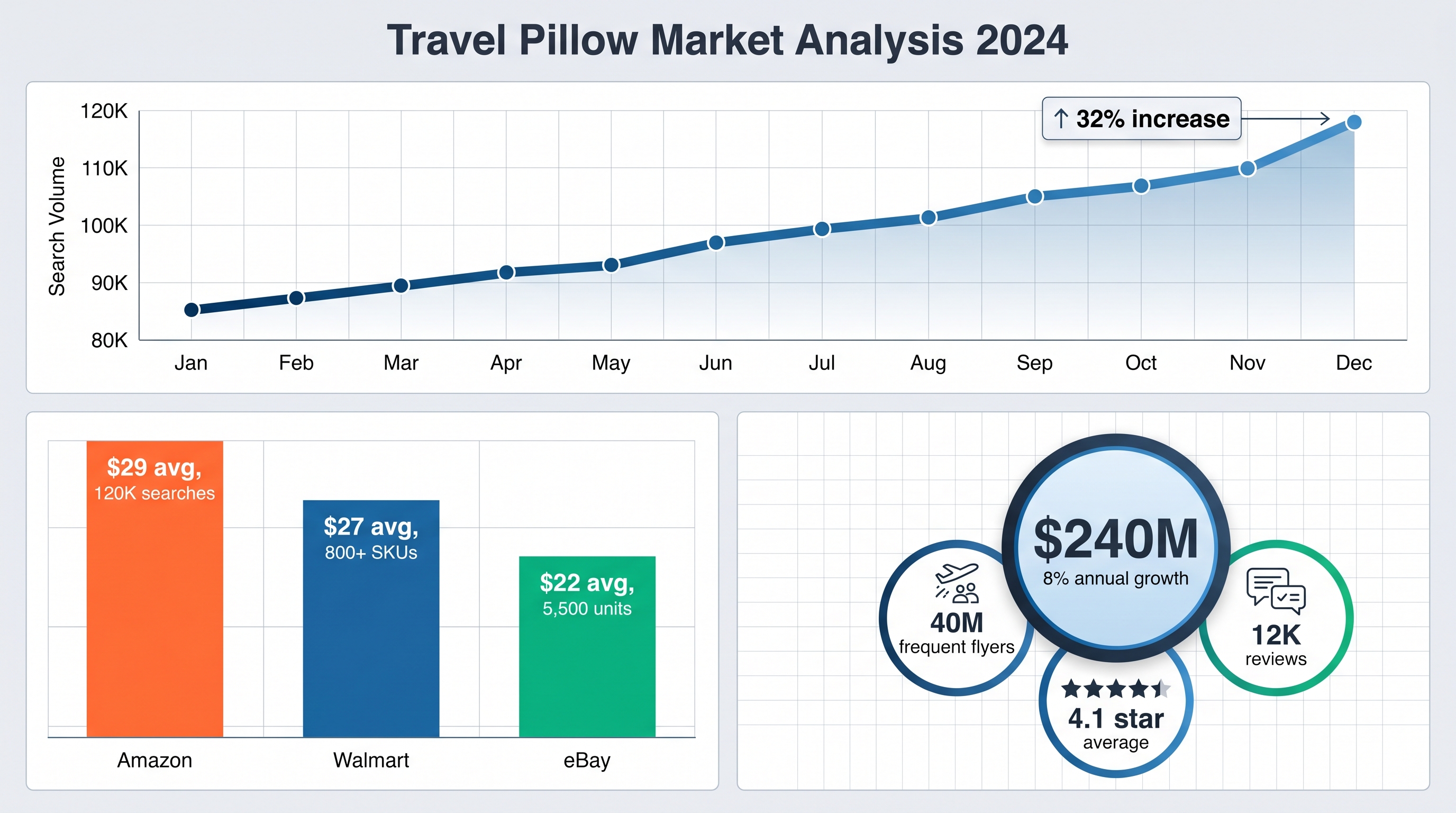
- Search volume: "Travel pillow for neck pain" trending up 32% since 2023.
- Peak demand: June to August (Summer travel) and December.
- Top regions: New York, California, Florida, Texas.
- Related searches: "pillow that holds chin up", "best pillow for airplane sleep", "trtl vs infinity pillow".
E-commerce Platform Performance
Amazon
- Category rank: #12 in Travel Accessories
- Average price: $29.00 (range: $15-60)
- Reviews: 12,000 average with 4.1 stars
- Top sellers: Cabeau, TRTL, MLVOC
- Monthly searches: ~120,000
Walmart
- Available SKUs: 800+ products
- Price range: $10-45
- Popular variants: Memory foam, inflatable basic
eBay
- Monthly sales: ~5,500 units
- Average price: $22
- Sell-through rate: 24%
Market Opportunity
- Total market size: $240 million per year
- Growth rate: 8% annually
- Target customers: 40 million frequent flyers globally.
Section 3: Manufacturing and Supply Chain
Primary Source: China
Guangdong Province (Dongguan/Shenzhen)
- Minimum order: 1,000 units
- Unit cost: $4.50-7.00
- Production time: 3 weeks
- Shipping: 15 days to USA (Air option available for 5 days)
Zhejiang Province
- Minimum order: 1,000 units
- Unit cost: $3.80-6.00
- Production time: 4 weeks
Alternative Sources
- Vietnam: Competitive pricing on textile covers ($5.00/unit)
- Mexico: $8.50/unit, excellent for JIT (Just-In-Time) inventory management for USA.
Sourcing Channels
- Alibaba.com: 3,500+ verified suppliers
- Global Sources: 400 suppliers (travel niche focus)
- Canton Fair: May 2024, Phase 3
Cost Structure (USA Market)
| Item | Cost |
|---|---|
| Factory price | $6.20 |
| Ocean freight | $1.10 per unit |
| Import duties | $0.40 |
| Landed cost | $7.70 |
| Retail price | $39.99 |
| Profit margin | 80.7% |
Quality Requirements
- Certifications: CertiPUR-US (for foam), REACH
- Testing: Compression recovery test (must return to shape in <3 seconds)
- Inspection: 100% check on stitching and zipper durability.
Section 4: Target Customers and Marketing Strategy
Customer Segments
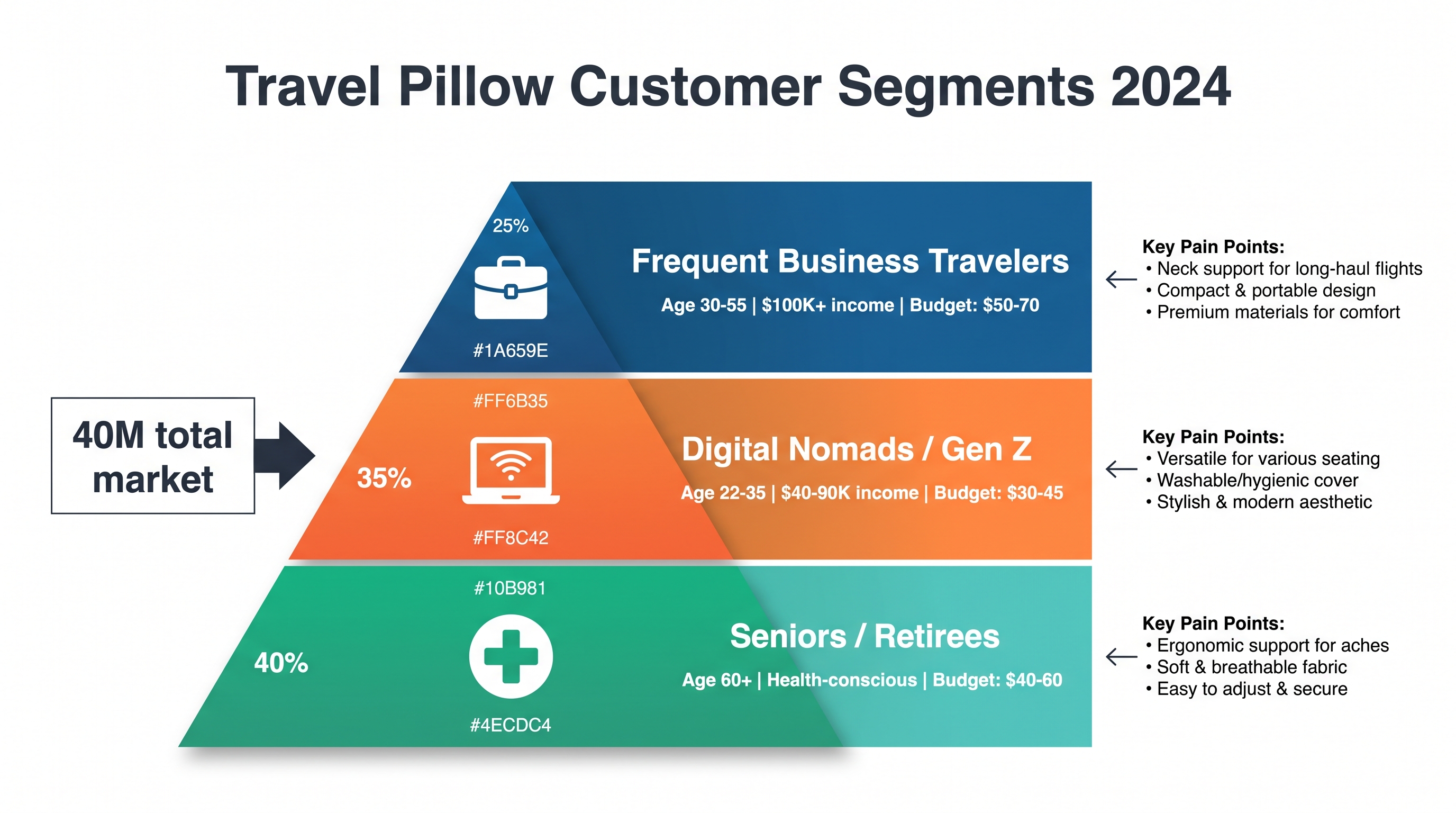
Tier 1: Frequent Business Travelers
- Demographics: Age 30-55, Income $100K+
- Pain point: Arriving tired/sore for meetings
- Buying behavior: Invests in gear that improves productivity
- Budget: $50-70
Tier 2: Digital Nomads / Gen Z Travelers
- Demographics: Age 22-35, Income $40-90K
- Pain point: Long-haul budget flights (middle seats)
- Buying behavior: Social proof and "packability" (compactness)
- Budget: $30-45
Tier 3: Seniors / Retirees
- Demographics: Age 60+, Health-conscious
- Pain point: Pre-existing neck issues/arthritis
- Buying behavior: Values comfort and doctor-approved designs
- Budget: $40-60
Content Strategy Summary
- Photos: Comparison side-views showing "Head Bobbing" vs. "Chin Support."
- Videos: 15-second TikTok "Travel Hacks" showing how the pillow folds into a tiny bag.
- Influencers: Travel vloggers and airline reviewers.
Questions 8
What are the main reasons why travelers experience neck pain with traditional U-shaped travel pillows?
Traditional U-shaped pillows fail to provide essential anterior chin support, causing heads to bob forward during sleep. Approximately 82% of long-haul travelers experience acute neck pain because standard memory foam designs focus only on side support while ignoring the natural forward slump of seated sleepers, leading to muscle strain and tension.
Why is the travel pillow market experiencing significant growth opportunities in 2024 and beyond?
The travel pillow market is growing at 8% annually with a $240 million market size targeting 40 million frequent flyers globally. Search volume for 'travel pillow for neck pain' increased 32% since 2023, with peak demand during summer travel and December holidays, indicating strong consumer demand for innovative neck support solutions.