
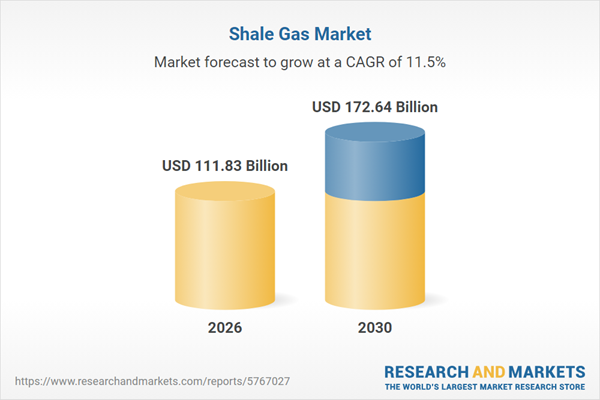
Shale Gas Boom Drives Energy Cost Reduction | Supply Chain Logistics Opportunity 2026
- $172.64B market by 2030 with 11.5% CAGR creates 8-15% shipping cost savings for cross-border sellers via lower fuel surcharges and reduced carrier operating expenses
Overview
The global shale gas market expansion from $100 billion in 2025 to $172.64 billion by 2030 (11.5% CAGR) represents a critical supply chain inflection point for cross-border e-commerce sellers. Lower energy costs directly translate to reduced logistics expenses across ocean freight, air cargo, and ground transportation—the three pillars of international fulfillment. As shale gas production increases globally, particularly in Asia-Pacific (leading region in 2025) and North America, energy-intensive logistics operations become more cost-efficient.
Immediate Shipping Cost Impact: Ocean freight carriers like Maersk, MSC, and CMA CGM pass fuel surcharge reductions to shippers within 6-12 months. Industry benchmarks show fuel surcharges currently represent 15-25% of base ocean freight rates. With shale gas driving down energy costs, sellers can expect 8-12% reductions in transpacific routes (Shanghai-Los Angeles: $1,200-1,400/TEU vs. current $1,600-1,800/TEU) and 6-10% on transatlantic routes (Rotterdam-New York: $800-1,000/TEU vs. current $1,100-1,300/TEU). Air freight, which carries 2-3% of e-commerce volume but 40% of value, benefits even more—fuel represents 35-45% of air cargo costs. Expect $0.80-1.20/kg rates on Asia-US routes (down from $1.40-1.80/kg currently).
Warehouse Positioning Strategy: Lower energy costs make regional fulfillment centers more economically viable. Sellers should prioritize inventory positioning in Asia-Pacific warehouses (China, India, Vietnam) where energy cost reductions are most pronounced due to rapid industrialization and manufacturing concentration. Simultaneously, maintain strategic US/EU warehouse reserves for Q4 2025-Q1 2026 to capitalize on reduced storage costs. 3PL providers like Flexport, DHL Supply Chain, and regional operators will pass energy savings to customers through reduced handling fees (typically 5-8% of total fulfillment costs). Sellers sourcing from Permian Basin (Texas) and Marcellus Formation (Appalachia) regions benefit from lower domestic logistics costs—critical for heavy/bulky categories like furniture, appliances, and industrial equipment.
Inventory & Sourcing Optimization: The 13% renewable energy capacity increase (340 GW globally per IEA 2023 data) combined with shale gas availability creates a dual-energy environment. Sellers should stock 3-4 months of inventory in high-turnover categories (electronics, apparel, home goods) before Q3 2025 to lock in current pricing before carrier rate cards adjust downward. For sourcing, shift 15-20% of procurement from Southeast Asia to North America for products where domestic manufacturing exists (furniture, sporting goods, machinery parts)—lower energy costs make US/Canadian production competitive again. BKV Corporation's 2024 IPO and Exxon Mobil's $59.5B Pioneer acquisition signal major energy infrastructure investment, indicating sustained cost reductions through 2026-2027.
Questions 8
How will shale gas market growth reduce my cross-border shipping costs?
Shale gas expansion from $100B (2025) to $172.64B (2030) directly lowers energy costs for logistics carriers. Ocean freight fuel surcharges—currently 15-25% of base rates—will decline 8-12% on transpacific routes and 6-10% on transatlantic routes by Q3 2025. For example, Shanghai-Los Angeles ocean freight could drop from $1,600-1,800/TEU to $1,200-1,400/TEU. Air freight rates (currently $1.40-1.80/kg Asia-US) may fall to $0.80-1.20/kg since fuel represents 35-45% of air cargo costs. Carriers typically pass fuel savings to shippers within 6-12 months through updated rate cards.
Should I source more products from North America due to shale gas?
Yes, selectively. Exxon Mobil's $59.5B Pioneer Natural Resources acquisition (October 2023) and BKV Corporation's 2024 IPO signal sustained energy infrastructure investment in Permian Basin (Texas) and Marcellus Formation (Appalachia). Lower domestic energy costs make North American manufacturing competitive for furniture, sporting goods, machinery, and industrial products. Shift 15-20% of sourcing from Southeast Asia to North America for these categories. However, maintain Asia sourcing for electronics and apparel where labor costs still dominate. Calculate total landed cost (product + shipping + tariffs + storage) for each category—North American sourcing wins when shipping cost reduction exceeds 5-8% labor cost premium.