


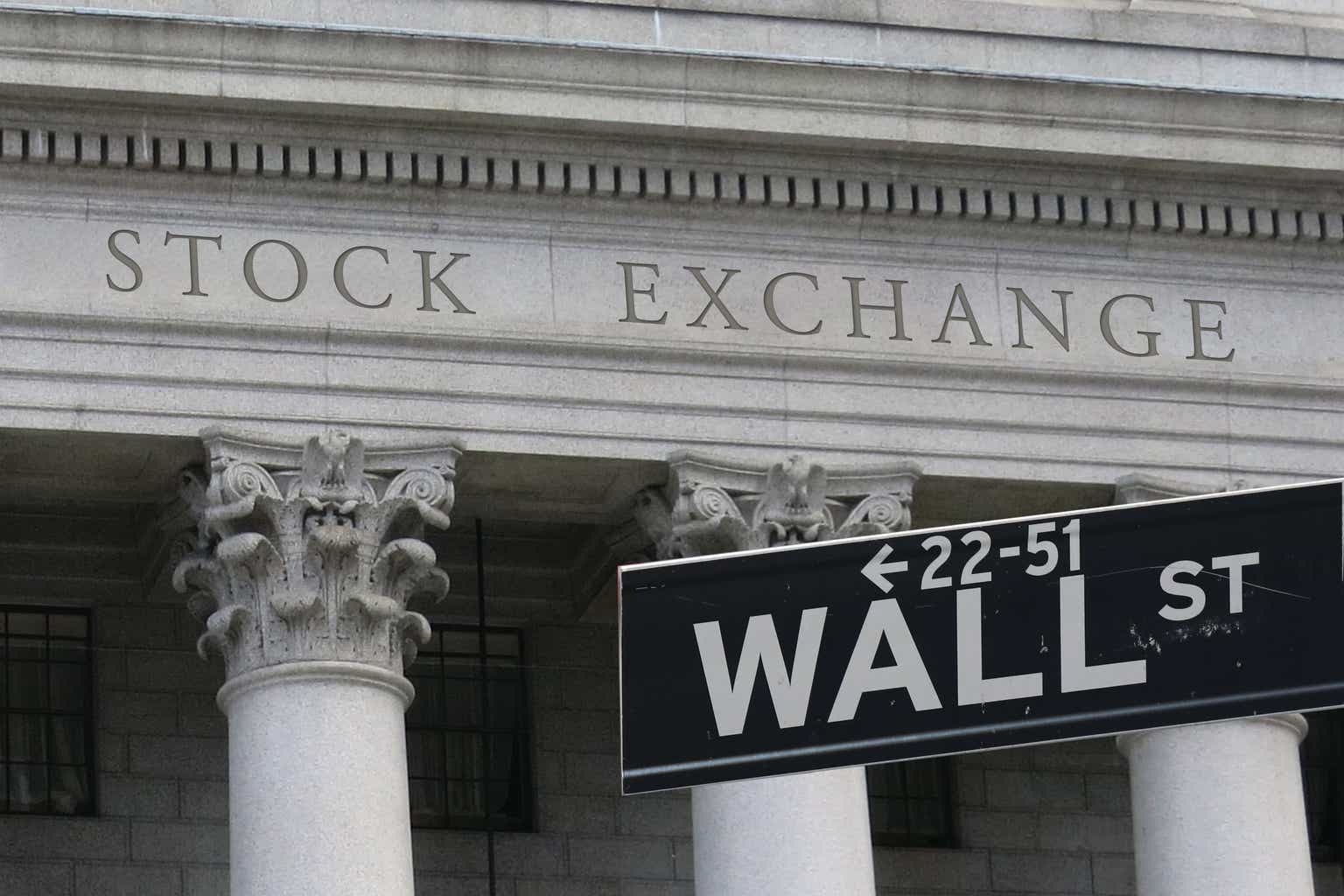


Trump Tariffs and Market Resilience Reveal Complex Economic Dynamics for 2026
- Navigating Uncertain Economic Terrain Amid Policy Uncertainties and Market Predictions





Overview
The speculative landscape of economic forecasting emerges with intriguing complexity as Wall Street anticipates potential market expansion despite presidential trade policies. While the news source provides limited concrete details, the headline suggesting a potential stock market surge in 2026 despite Trump's tariffs hints at a nuanced economic narrative that demands deeper analytical exploration.
Economic Resilience in Policy Uncertainty becomes the central theme. The projection of market growth despite trade barriers suggests a fundamental economic adaptability that transcends immediate policy constraints. This indicates that underlying market fundamentals may be more robust than surface-level trade tensions would suggest. The 2026 timeframe is particularly significant, implying that current policy frictions might be temporary disruptions rather than structural impediments to economic expansion.
Strategic Implications for Investors and Policymakers emerge from this speculative forecast. The prediction implies that market mechanisms can potentially absorb and navigate trade policy challenges, creating opportunities for strategic positioning. Investors and business leaders should interpret this not as a simple linear projection, but as a complex interplay between policy interventions and market dynamics. The ability of the economy to potentially "soar" despite tariff implementations suggests sophisticated adaptive capabilities within the economic ecosystem.
The broader context reveals a critical insight: economic trajectories are not solely determined by singular policy instruments like tariffs, but by complex interactions of multiple systemic factors. This nuanced perspective challenges simplistic cause-and-effect narratives about trade policies and economic performance, highlighting the need for sophisticated, multi-dimensional analytical approaches.
Ultimately, this forecast underscores the importance of maintaining strategic flexibility and avoiding knee-jerk reactions to policy announcements. For stakeholders across various sectors, the key takeaway is maintaining a long-term, holistic view of economic potential that looks beyond immediate policy turbulence.
Questions 3
Should investors be concerned about trade policy uncertainties?
Investors should maintain a nuanced perspective. While trade policies create short-term volatility, the forecast suggests that strategic, long-term positioning can transcend immediate policy challenges. Diversification and flexible investment strategies remain key to navigating uncertain economic terrains.
How might Trump's tariffs impact long-term economic growth?
Despite potential short-term disruptions, the forecast suggests that underlying economic fundamentals can adapt and potentially thrive. Tariffs may create temporary friction, but sophisticated market mechanisms can absorb and navigate these challenges, potentially maintaining growth trajectories.