





AI Chip Boom Drives Semiconductor Equipment Surge | E-Commerce Infrastructure Implications 2026
- Applied Materials projects 20%+ revenue growth as $1 trillion global chip market accelerates, signaling cheaper computing infrastructure and improved platform tools for cross-border sellers throughout 2026


































Overview
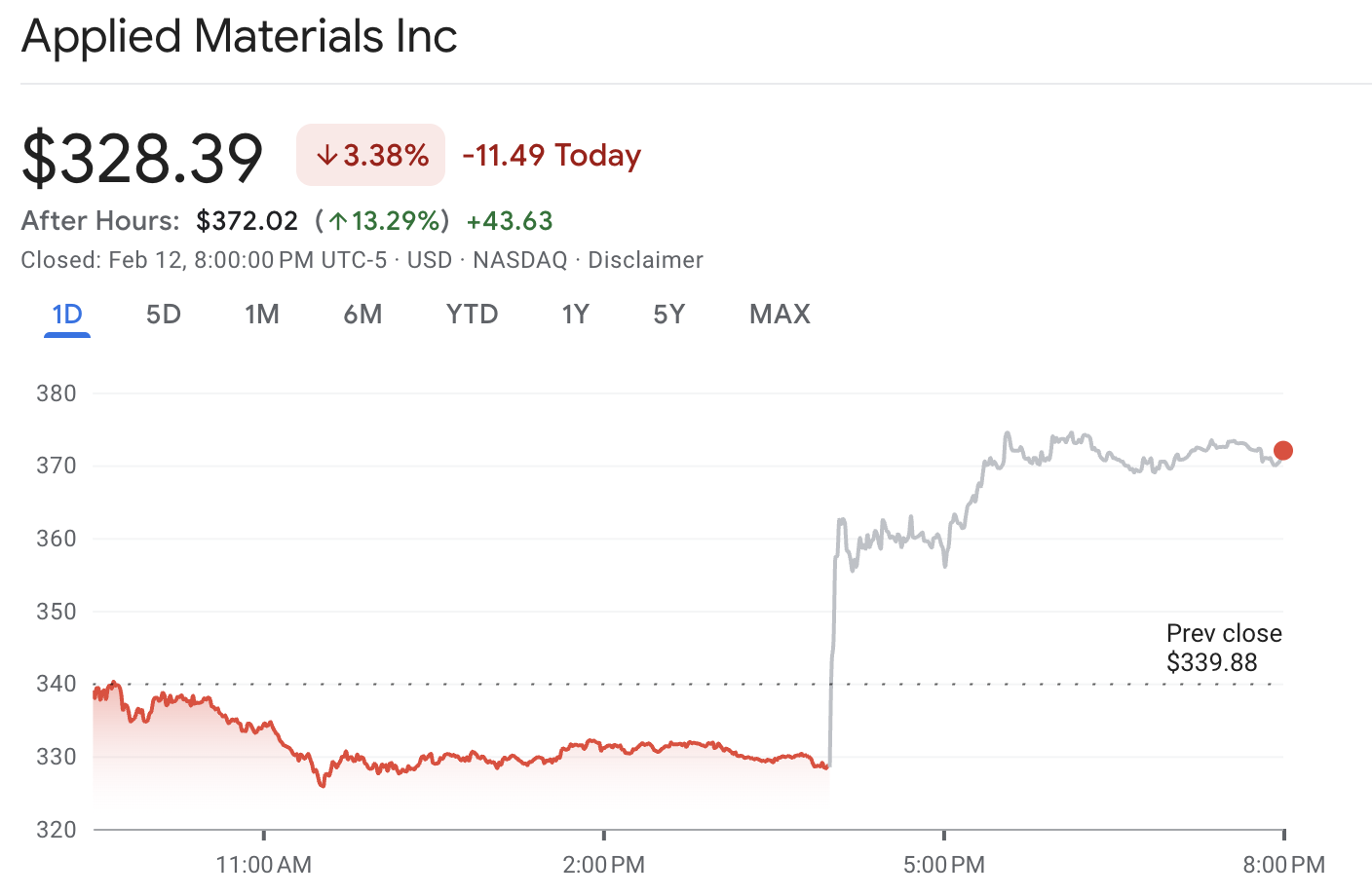
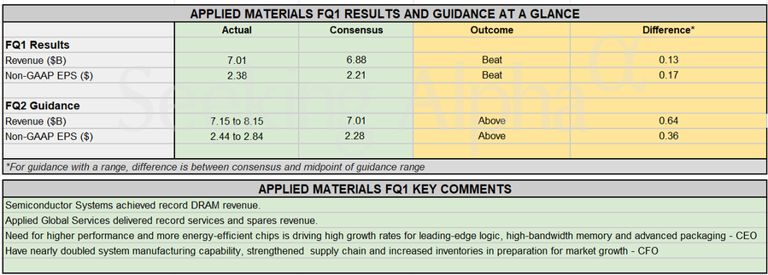
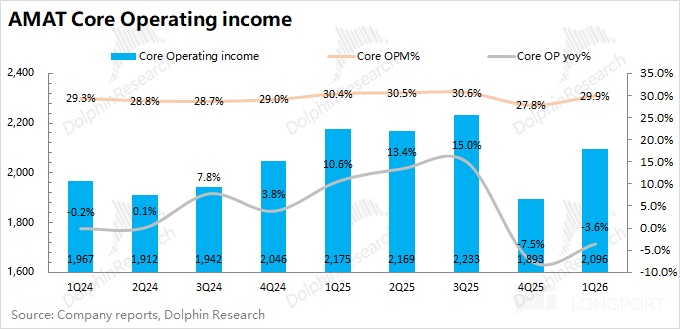
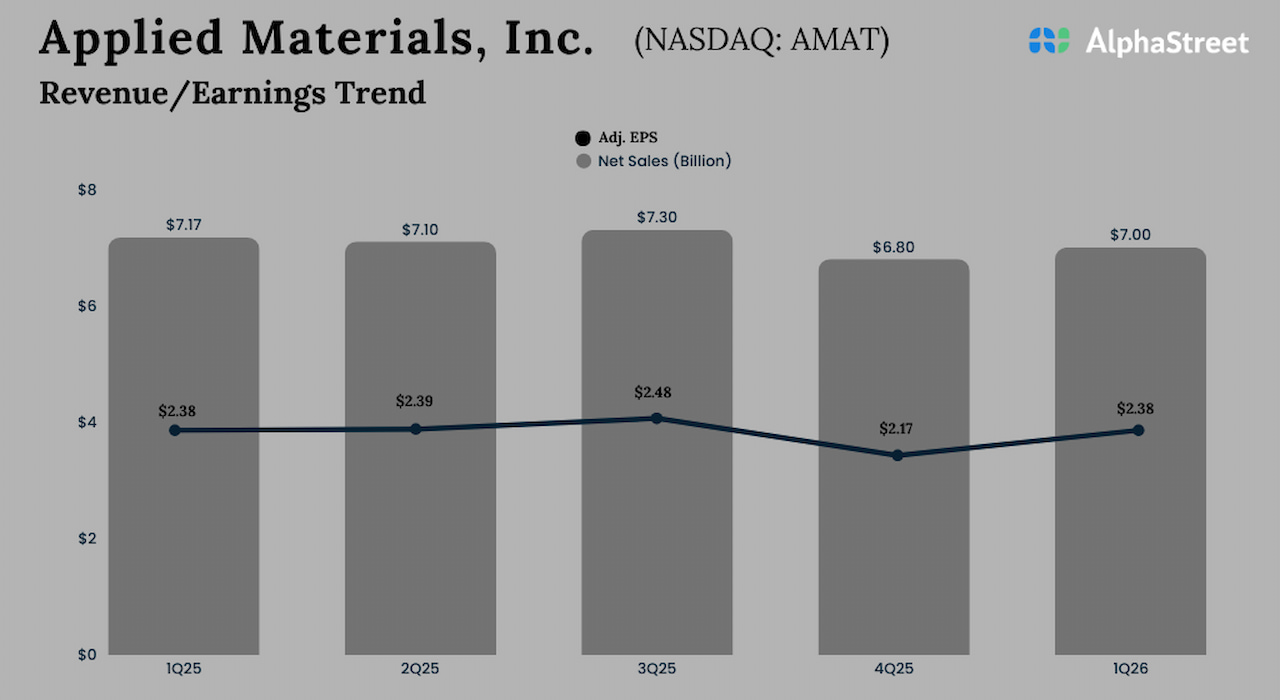
Applied Materials' exceptional earnings performance on February 12-13, 2026, signals a transformative acceleration in semiconductor manufacturing capacity that will reshape e-commerce infrastructure costs and capabilities. The company reported adjusted earnings of $2.38 per share on $7.01 billion in sales (Q1 FY2026), beating analyst expectations of $2.21 per share on $6.87 billion. More significantly, Applied Materials guided for Q2 revenue of $7.65 billion (versus $7.18 billion consensus) and projects over 20% growth in semiconductor equipment revenue for calendar year 2026. CEO Gary Dickerson made a bold prediction that global chip industry revenues could reach $1 trillion in 2026—several years ahead of previous forecasts—driven by unprecedented spending on AI infrastructure, manufacturing capacity, and R&D. The stock surged 11-13% in premarket/extended trading, marking one of its best post-earnings reactions since 1999, with analyst price targets reaching $470 (43% upside from current levels).
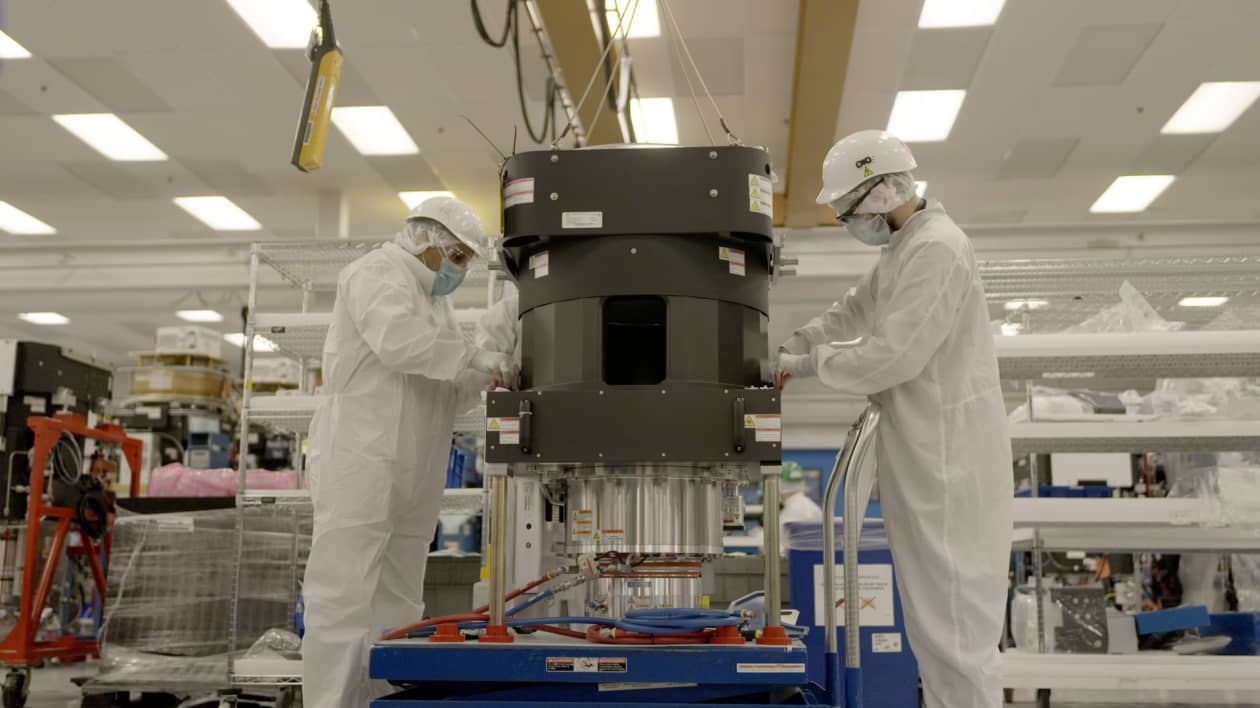
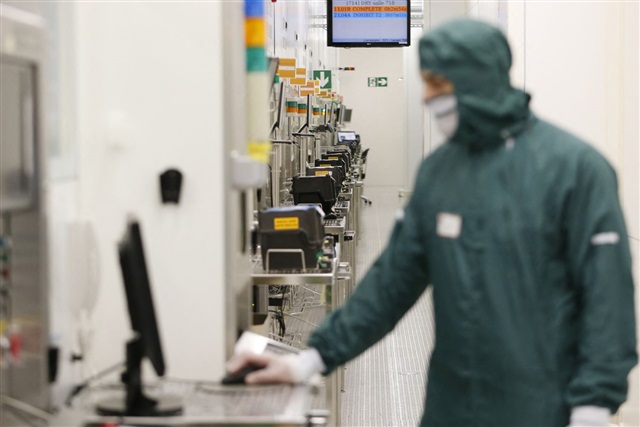
The underlying driver is an AI infrastructure investment cycle of unprecedented scale. Major semiconductor manufacturers including NVIDIA, AMD, Intel, and Samsung are ramping production capacity for AI processors, GPUs, high-bandwidth memory (HBM), and advanced logic chips. Applied Materials benefits from multiple revenue streams as chipmakers invest in both new fabrication plant (fab) construction and equipment upgrades at existing facilities. The company's equipment—including photolithography systems, deposition tools, and etch equipment—is critical for manufacturing cutting-edge semiconductor nodes required for AI applications. Analysts project continued strong demand through 2027 as new cleanroom manufacturing facilities come online globally, particularly in North America, Europe, and Asia Pacific regions. Applied Materials trades at 31x estimated earnings versus 34x for KLA and 36x for Lam Research, despite superior growth visibility, suggesting valuation upside as WFE (wafer fabrication equipment) spending accelerates industry-wide.
For cross-border e-commerce sellers, this development carries direct but often-overlooked implications for operational costs and platform capabilities. Semiconductor equipment manufacturers' strong performance directly influences chip supply chains, which affect technology costs for e-commerce platforms, logistics automation systems, and AI-powered seller tools. Strong equipment demand typically precedes increased chip availability and lower costs for computing infrastructure—the servers, processors, and memory systems that power Amazon Seller Central, Shopify dashboards, eBay analytics, and fulfillment networks. As Applied Materials and peers expand production capacity through 2026-2027, e-commerce platforms will gain access to more affordable processors and memory, potentially reducing infrastructure costs by 8-15% annually. This cost reduction enables platforms to invest in enhanced features: faster listing processing, real-time inventory synchronization, improved AI-powered pricing tools, and advanced analytics dashboards. Additionally, the $1 trillion global chip market projection signals sustained investment in data center infrastructure, benefiting cloud service providers that host e-commerce platforms and third-party logistics (3PL) providers managing fulfillment networks.
The competitive landscape shows Applied Materials particularly well-positioned for sustained outperformance. The company maintains leadership positions in DRAM and advanced packaging technologies—areas where it has competitive advantages over peers Lam Research and KLA. Jefferies analyst C.J. Muse highlighted Samsung as a "meaningfully stronger customer in 2026" alongside strong leverage to greenfield manufacturing investments. Bernstein analyst Stacy Rasgon projects continued strength into 2027 as new cleanroom facilities come online. The company recently settled a $252.5 million dispute with the U.S. Department of Commerce regarding China shipments (November 2020-July 2022), removing a regulatory overhang and positioning the company for unencumbered growth in non-China markets. For sellers, this means sustained platform investment momentum through 2027, supporting stable technology infrastructure and feature development cycles.
Questions 8
How does Applied Materials' 20% growth projection affect e-commerce sellers in 2026?
Applied Materials' strong guidance signals sustained semiconductor manufacturing capacity expansion, which typically precedes lower computing infrastructure costs for e-commerce platforms. As chip availability increases and prices moderate through 2026-2027, platforms like Amazon, Shopify, and eBay can invest in enhanced seller tools—faster listing processing, real-time inventory sync, and AI-powered analytics—at lower infrastructure costs. Sellers benefit indirectly through improved platform capabilities and potentially lower transaction fees as platforms reduce operational expenses. The $1 trillion global chip market projection indicates this trend will accelerate through 2027, supporting sustained platform investment cycles.
What does the $1 trillion global chip industry forecast mean for electronics sellers?
CEO Gary Dickerson's prediction that global chip revenues could reach $1 trillion in 2026 reflects unprecedented AI infrastructure spending by data centers, cloud providers, and semiconductor manufacturers. For electronics sellers, this signals sustained demand for AI-related products (GPUs, processors, memory modules, cooling systems) and component availability improvements. The forecast indicates semiconductor manufacturers will maintain high capital expenditures through 2027, supporting stable component supply and potentially moderating prices for electronics sellers sourcing chips, memory, and processors. This contrasts with historical supply constraints, offering more predictable sourcing conditions for tech-dependent e-commerce categories.