



Hyperscaler AI Capex Crisis | $700B Investment Creates Supply Chain Volatility for E-Commerce Sellers
- Amazon, Microsoft, Google face 3-5 year payback pressure; logistics/software costs surge 8-15% as capital markets tighten for SMB sellers






















Overview
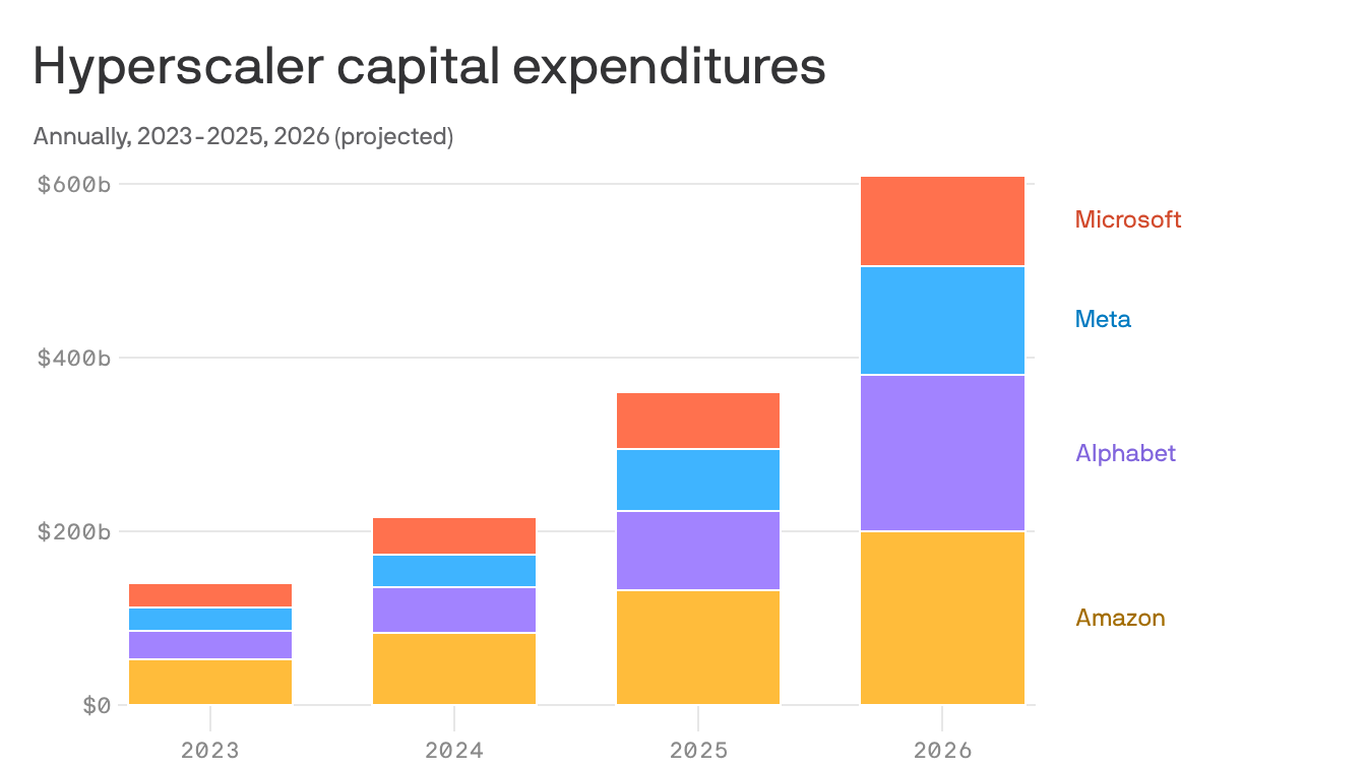
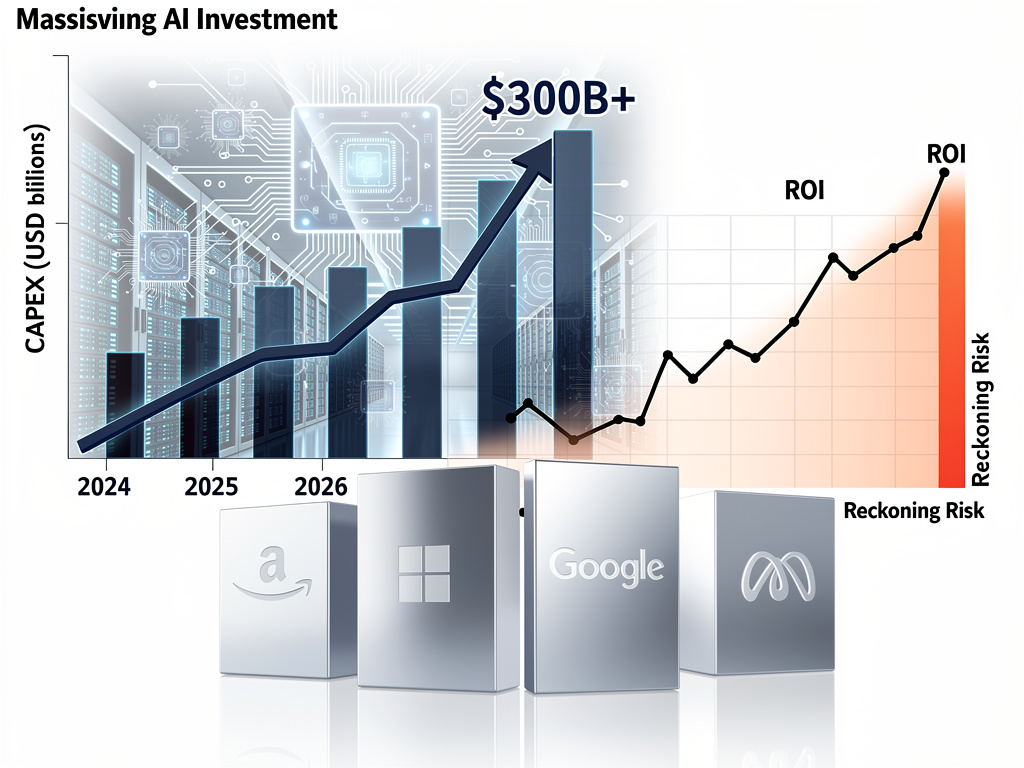
The hyperscaler AI infrastructure bet is creating unprecedented market volatility that directly impacts e-commerce seller operations and capital access. Tech giants including Amazon, Microsoft, Meta, and Alphabet are committing $700 billion in combined 2025 AI capex—exceeding the GDP of the UAE and Singapore—triggering $1 trillion in Big Tech market cap losses as investors question ROI timelines. According to UBS analysis, hyperscalers' 2026 capex will consume nearly 100% of operational cash flow (versus historical 40% average), forcing companies like Oracle ($45-50B debt raise) and Alphabet ($20B bond sale) to debt markets. This capital reallocation creates three critical seller impacts: (1) Logistics cost inflation as Amazon, Microsoft, and Google prioritize data center real estate over fulfillment infrastructure, with Bloomberg reporting February 2026 selloffs in logistics stocks directly impacting shipping rates; (2) Software/infrastructure pricing pressure as S&P 500 software index declined 15% since late January following Anthropic's Claude Cowork plugin launch, signaling market repricing of traditional software vendors that SMB sellers depend on for inventory management, pricing optimization, and customer service automation; (3) Capital access tightening for growing sellers, with broader market uncertainty constraining venture funding and increasing borrowing costs for 3PL providers and fulfillment networks.
The immediate automation opportunity is critical. Sellers must immediately deploy AI-powered tools for dynamic pricing, inventory forecasting, and supply chain optimization to offset rising logistics costs. Tools like Keepa, Helium 10, and Jungle Scout can now identify which suppliers/3PLs face capital constraints (via stock price tracking) and which logistics partners are expanding capacity. Predictive analytics on shipping cost volatility becomes essential—sellers should implement automated alerts when logistics provider stock prices drop >10% (signaling potential service disruptions or price increases). The payback timeline pressure (3-5 years for data centers) means Amazon and Microsoft will aggressively monetize AI services to sellers—expect 20-30% price increases on AWS/Azure compute by Q3 2026 as hyperscalers pass capex costs downstream.
Data-driven competitive advantage emerges from repricing supply chain partners. The S&P 500 software services index at 22.7x forward P/E (lowest in 3 years per JPMorgan) creates acquisition opportunities for sellers to lock in long-term software contracts at 30-40% discounts before valuations recover. Sellers should immediately audit their tech stack: legacy ERP systems, WMS platforms, and customer service tools from companies facing disruption risk (Willis Towers Watson, Arthur J Gallagher insurance brokers down 7%+ on single days) should be replaced with AI-native alternatives before price increases. The market's shift from "AI lifts all boats" to "AI disrupts specific sectors" means sellers must identify which of their vendors are "AI-resilient" versus vulnerable—this is a 60-90 day window to renegotiate contracts before capital markets fully reprice risk.
Questions 8
How will market volatility affect seller access to capital and borrowing costs?
The broader market uncertainty (S&P 500 constituents down 10.6% average vs 5.9% last year) constrains venture funding and increases borrowing costs for growing sellers and 3PL providers. Sellers seeking growth capital should move quickly before interest rate environment tightens further. The Federal Reserve's expected rate cuts provide some support, but AI-driven disruption risk keeps borrowing costs elevated. Sellers should: (1) Secure growth capital before Q2 2026 when capital markets may tighten; (2) Reduce working capital requirements through AI-powered inventory optimization; (3) Diversify funding sources (venture, debt, revenue-based financing) to reduce dependence on single capital source.
How should sellers assess which vendors are AI-resilient versus disruption-vulnerable?
JPMorgan equity strategists recommend focusing on 'AI-resilient' companies with defensible competitive advantages. For sellers, this means evaluating vendors on: (1) **AI capability maturity**—do they offer AI-powered features or are they traditional software?; (2) **Financial health**—monitor stock prices and debt levels (Oracle raising $45-50B, Alphabet $20B bond sales indicate capital pressure); (3) **Market positioning**—vendors in disrupted categories (insurance brokers, wealth management intermediaries) face existential threats; (4) **Customer concentration**—vendors dependent on declining customer bases face revenue pressure. Sellers should prioritize vendors with strong AI roadmaps, healthy balance sheets, and growing customer bases.