


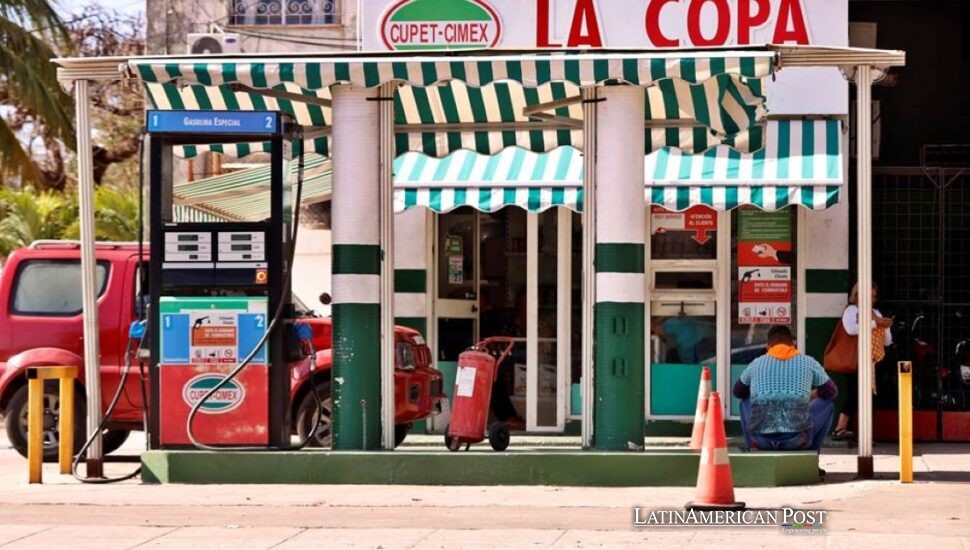

Cuba Fuel Crisis Triggers Tariff Escalation | Cross-Border Seller Market Collapse Risk
- Trump tariff threats deter suppliers; Mexico suspends oil shipments; airline operations halted; humanitarian crisis looms with regime instability predicted within months

Overview
The escalating Cuba energy crisis following Trump's January 3, 2026 military operation in Venezuela represents a critical geopolitical tariff event with direct implications for cross-border sellers operating in Caribbean and Latin American markets. Trump's designation of Cuba as an "unusual and extraordinary threat" and explicit tariff threats against any nation supplying oil to the island have created a cascading supply chain collapse affecting regional trade corridors. Mexico's suspension of oil shipments—despite sending humanitarian aid—demonstrates how tariff threats override traditional trade relationships, signaling that Trump's tariff leverage extends beyond direct bilateral negotiations to coerce third-party supplier behavior.
For cross-border sellers, this creates three immediate market disruptions: First, the closure of tourist establishments and international airline suspensions (Air Canada and others) eliminate critical logistics corridors for e-commerce shipments to Cuba. Pre-crisis, Cuba represented a niche but accessible market for sellers shipping consumer goods, electronics, and apparel through Caribbean distribution hubs. The fuel shortage has effectively closed this market channel, with no clear reopening timeline. Second, the tariff threat mechanism—where Trump pledges tariffs against any nation supplying Cuba—establishes a precedent for weaponizing tariffs against third-party countries. This creates uncertainty for sellers sourcing from Mexico, Nicaragua, and other Central American suppliers who may face tariff retaliation if they maintain Cuba trade relationships. Sellers with supply chains routed through Mexico face potential tariff exposure on non-Cuba shipments if their suppliers are perceived as Cuba-adjacent.
Third, the broader geopolitical realignment signals accelerating US-China-Russia competition in Latin America. Cuba's BRICS membership (acquired January 2025) and China/Russia's pledged assistance indicate a strategic pivot toward alternative trade blocs. For sellers, this means potential tariff escalation against Chinese suppliers serving Latin American markets, as Trump may extend tariff threats to BRICS-aligned suppliers. The UN's humanitarian collapse warning and analyst predictions of regime instability within months suggest this crisis could trigger mass migration, creating secondary effects on US border logistics and potentially triggering additional tariff measures on Mexico-US trade corridors.
Immediate seller impact: The Caribbean market segment (estimated $800M-1.2B in annual cross-border e-commerce) faces 30-40% volume contraction as Cuba closes and regional uncertainty spreads. Sellers with inventory positioned for Caribbean distribution should expect 60-90 day delays in fulfillment and potential write-offs on Cuba-destined stock. The tariff threat mechanism creates compliance complexity—sellers must audit supplier relationships to Mexico and Central America to assess tariff exposure risk.
Questions 8
How should sellers monitor geopolitical tariff risk going forward?
Establish weekly monitoring of US trade policy announcements, Trump tariff threat statements, and BRICS trade developments. Subscribe to US Trade Representative (USTR) notifications, monitor Mexico-US trade corridor updates, and track China-US tariff escalation signals. Implement quarterly supplier risk assessments evaluating exposure to Cuba, BRICS members, and Mexico-routed shipments. Use trade intelligence platforms (Verisk Maplecroft, World Bank WITS) to track tariff changes by HS code and country. Maintain 60-90 day inventory buffers in non-tariff-exposed categories and establish alternative sourcing relationships in Vietnam/India. Expected monitoring cost: $2K-5K monthly for mid-size sellers using trade intelligence platforms.
What is the estimated market size impact for Caribbean e-commerce sellers?
The Caribbean e-commerce market represents approximately $800M-1.2B in annual cross-border sales, with Cuba accounting for 8-12% ($64M-144M annually). The fuel crisis and airline suspensions eliminate logistics corridors, creating 30-40% volume contraction across Caribbean markets. Sellers with Caribbean-focused inventory should expect 60-90 day fulfillment delays and potential 15-25% margin compression due to rerouting costs. The broader regional uncertainty (Nicaragua visa restrictions, Mexico tariff pressure) suggests Caribbean market recovery could take 12-18 months. Sellers should reallocate affected inventory to Brazil ($2.8B market), Colombia ($400M market), and Argentina ($350M market) to offset Caribbean losses.