


Vatican Reinforces Gender Barriers in Religious Leadership
- Theological Commission Blocks Women from Diaconate Amid Growing Institutional Tensions


































Overview
The Vatican's recent theological commission has delivered a pivotal decision that crystallizes the ongoing gender dynamics within religious leadership, revealing deep-rooted institutional resistance to transformative change. By categorically rejecting women's potential service as deacons, the commission has not just maintained a traditional stance but actively reinforced structural gender exclusion in ecclesiastical roles.
Institutional Resistance and Theological Reasoning emerge as the core narrative. The commission's findings, emphasizing the "masculinity of Christ" as integral to sacramental identity, represent a deliberate preservation of patriarchal theological interpretations. Notably, only 8 of 10 commission members voted, and critically, no female perspectives were included in this consequential decision—a methodological approach that itself demonstrates the systemic exclusion being debated.
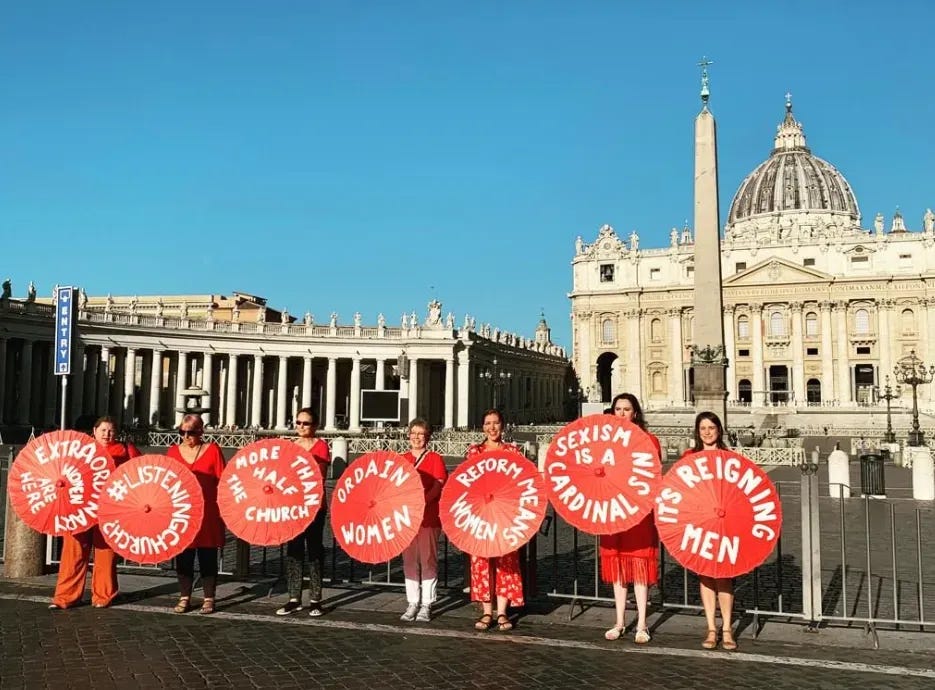
Historical Context and Contemporary Tension add complexity to this decision. While historians acknowledge that women historically served diaconal roles in the early Church, the current Vatican stance completely forecloses such possibilities. Cardinal Giuseppe Petrocchi's cautious language about "future investigations" suggests an awareness of mounting pressure, yet provides no immediate pathway for change. The Women's Ordination Conference's sharp criticism underscores the growing disconnect between institutional theology and contemporary expectations of gender equality.
The decision represents more than a theological ruling—it is a strategic maintenance of hierarchical power structures within the Catholic Church. By explicitly excluding women from sacramental roles, the Vatican is signaling a conservative retrenchment in an era demanding institutional transformation. The methodology—a closed commission with limited voting and no female representation—itself becomes a powerful statement about who gets to define religious legitimacy.
Strategic implications are profound: this ruling will likely accelerate discussions about institutional reform, potentially driving more progressive Catholics to seek alternative spiritual communities or challenge existing power structures from within. The Vatican has not just made a theological determination, but has inadvertently catalyzed a broader conversation about institutional accountability and gender representation.
Questions 3
Why did the Vatican reject women serving as deacons?
The theological commission argued that the 'masculinity of Christ' and traditional sacramental identity preclude women from diaconal roles. They based this on historical and scriptural interpretations that emphasize male-only ordination, despite historical evidence of women serving in early church diaconal positions.
What are the potential long-term implications of this decision?
This ruling may accelerate internal tensions within the Catholic Church, potentially driving more progressive members to challenge institutional structures or seek alternative spiritual communities. It also sets the stage for continued debate about gender equality and representation in religious leadership.