
AI Grows Up: The Strategic Transformation of Enterprise Intelligence
- Marking the pivotal moment when AI transitions from experimental technology to mission-critical business tool
Overview
In 2025, artificial intelligence emerged as a transformative force, decisively moving beyond experimental status to become a strategic business imperative. The year represented a critical inflection point where AI adoption transitioned from theoretical potential to practical implementation, with large organizations experiencing tangible productivity gains that fundamentally reshape operational landscapes.
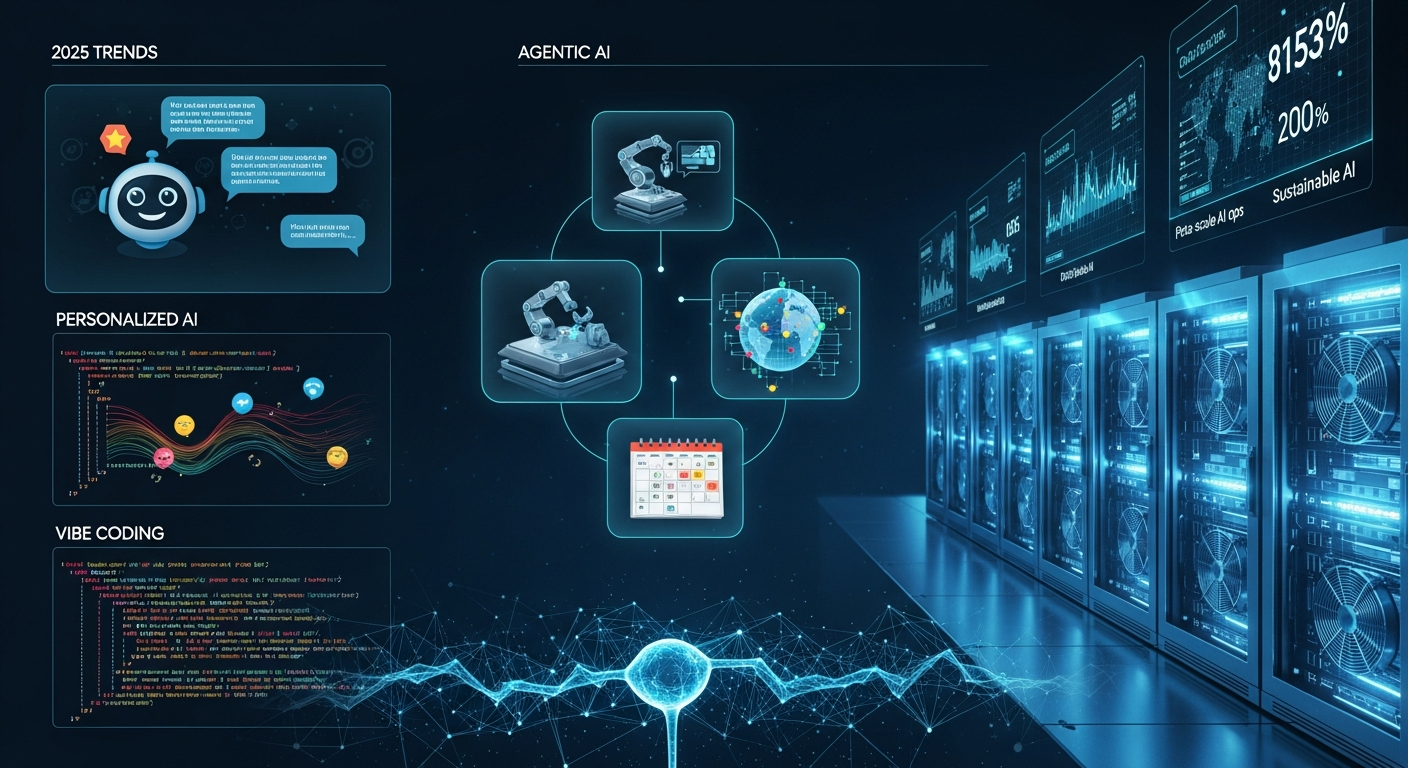
Key strategic developments underscore this maturation. Notably, 70% of organizations reported measurable returns from AI investments, with 63% experiencing significant improvements in customer experience. The rise of autonomous AI agents marks a particularly profound shift, with 42% of companies now deploying systems capable of handling complex multi-step workflows across critical business functions like inventory management, claim processing, and meeting coordination.
The competitive landscape is also rapidly evolving. Anthropic's Claude emerged as a breakthrough platform, overtaking OpenAI with a 52% preference rate among Y Combinator founders—signaling a new era of AI tool selection driven by superior coding and reasoning capabilities. For e-commerce and technology sectors, this represents more than a technological upgrade; it's a fundamental reimagining of operational efficiency.
Looking toward 2026, the AI technology ecosystem is poised for further specialization. The emerging paradigm emphasizes localized models, enhanced data privacy, and edge computing capabilities. This signals a maturation beyond raw technological potential toward trusted, verified, and precisely targeted intelligent systems. The key differentiator is no longer technological complexity, but practical application and demonstrable business value.
For forward-thinking organizations, the message is clear: AI is no longer an optional enhancement, but a critical strategic imperative. Those who can effectively integrate these intelligent systems will gain substantial competitive advantages in efficiency, customer experience, and operational agility.
Questions 3
How are AI technologies transforming business operations in 2025?
AI is moving beyond experimental stages to become a strategic tool, with 70% of organizations reporting real returns. Autonomous AI agents are now handling complex workflows like inventory management and claim processing, fundamentally reshaping operational efficiency across multiple business functions.
What makes Anthropic's Claude stand out in the AI landscape?
Claude has overtaken OpenAI with a 52% preference rate among Y Combinator founders, driven by superior coding and reasoning capabilities. This signals a shift towards AI tools that offer more sophisticated, practical problem-solving abilities rather than just raw computational power.