
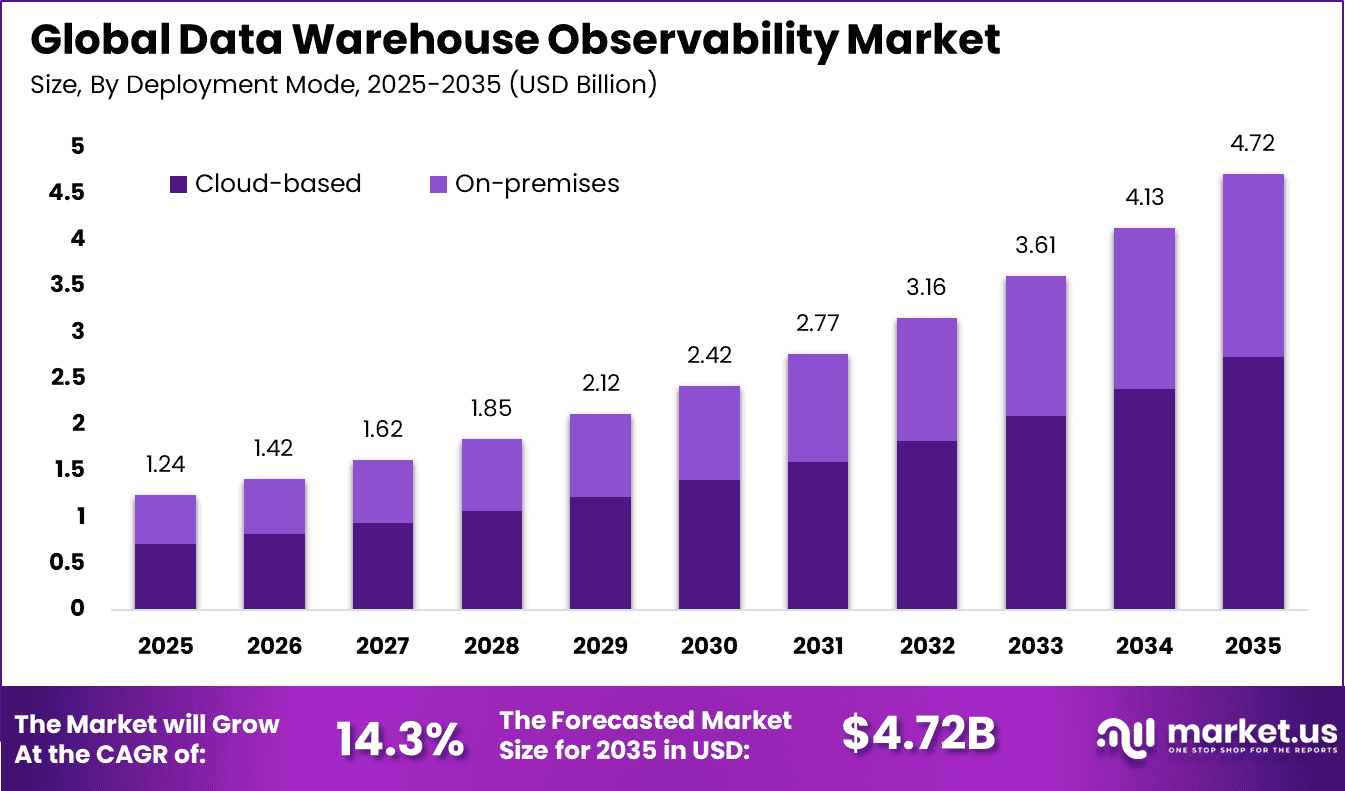
Data Warehouse Observability Market Grows 14.3% CAGR | Seller Analytics Opportunity
- 14.3% annual growth in data monitoring tools creates $500M+ market opportunity for sellers managing multi-channel inventory and customer analytics across global platforms
Overview
The Data Warehouse Observability Market is experiencing robust expansion at a 14.3% compound annual growth rate (CAGR), driven by enterprises' increasing reliance on real-time data visibility and performance monitoring. This market segment encompasses monitoring and management systems that track data warehouse infrastructure health, reliability, and operational performance—critical infrastructure for organizations managing complex, distributed data ecosystems.
For cross-border e-commerce sellers, this market expansion signals a critical inflection point in operational intelligence capabilities. Sellers managing inventory across Amazon FBA, eBay, Shopify, and regional marketplaces increasingly require sophisticated data warehouse solutions to track real-time inventory levels, customer behavior patterns, and supply chain performance across multiple currencies, tax jurisdictions, and fulfillment networks. The 14.3% CAGR reflects growing adoption of cloud-based data warehouses (AWS Redshift, Google BigQuery, Snowflake) and the rising demand for data quality assurance and regulatory compliance monitoring—all directly applicable to sellers managing cross-border operations.
The operational impact for sellers is substantial. Mid-to-large sellers (those processing 1,000+ orders monthly across multiple channels) face increasing complexity in data management: tracking inventory across 5-10 sales channels, reconciling currency conversions, monitoring VAT/tax compliance across EU/UK/US jurisdictions, and analyzing customer acquisition costs by geographic region. Observability tools help optimize supply chain visibility by providing real-time alerts on inventory discrepancies, slow-moving SKUs, and fulfillment bottlenecks. For sellers utilizing business intelligence platforms (Tableau, Looker, Power BI), enhanced data warehouse observability enables faster query performance, reducing the time to identify profitable product categories or underperforming listings from hours to minutes.
The market growth reflects broader digital transformation affecting seller profitability. As sellers expand internationally and manage increasingly complex data ecosystems spanning multiple platforms, currencies, and regulatory jurisdictions, robust data warehouse monitoring becomes essential for operational efficiency and compliance. Sellers investing in observability solutions can reduce data integrity issues (which cost 8-12% in margin loss through inventory mismatches), accelerate decision-making cycles, and ensure accurate financial reporting across regions. However, implementation costs for enterprise-grade observability platforms range from $5,000-$50,000 annually depending on data volume and complexity—a significant investment primarily accessible to sellers with $2M+ annual revenue.
Questions 8
What are the typical implementation costs for seller-focused observability solutions?
Implementation costs vary by seller scale: **Enterprise platforms** (Snowflake, BigQuery with custom monitoring) cost $15,000-$50,000 annually plus $10,000-$30,000 setup fees; **Mid-market solutions** (AWS Redshift with observability tools) range $5,000-$15,000 annually; **SaaS alternatives** (Shopify analytics, Amazon Seller Central reporting) are included in platform fees or cost $500-$2,000 monthly. For sellers generating $2M-$5M annual revenue, mid-market solutions typically deliver 3-4x ROI within 12 months through improved inventory management and reduced operational costs. Smaller sellers should start with native platform analytics before upgrading to dedicated observability tools.
How does data warehouse observability support cross-border compliance?
Observability tools automate compliance monitoring across multiple jurisdictions by tracking VAT obligations, tax reporting requirements, and regulatory changes in real-time. For EU-based sellers, observability platforms monitor GDPR compliance in customer data handling and flag potential violations. For sellers managing US/Canada/Mexico operations, tools track tariff code accuracy and customs documentation requirements. Real-time alerts prevent costly compliance violations (EU VAT penalties: 10-20% of unpaid tax; US customs penalties: $1,000-$10,000 per violation). Sellers using observability solutions report 95%+ compliance accuracy compared to 85-90% with manual processes.