
D2C Menswear Flagship Expansion | India's Omnichannel Retail Blueprint for Cross-Border Sellers
- The Bear House opens 10,000 sq ft Delhi flagship, signals 40%+ ROI opportunity for D2C brands integrating offline touchpoints with Amazon/Myntra presence
Overview
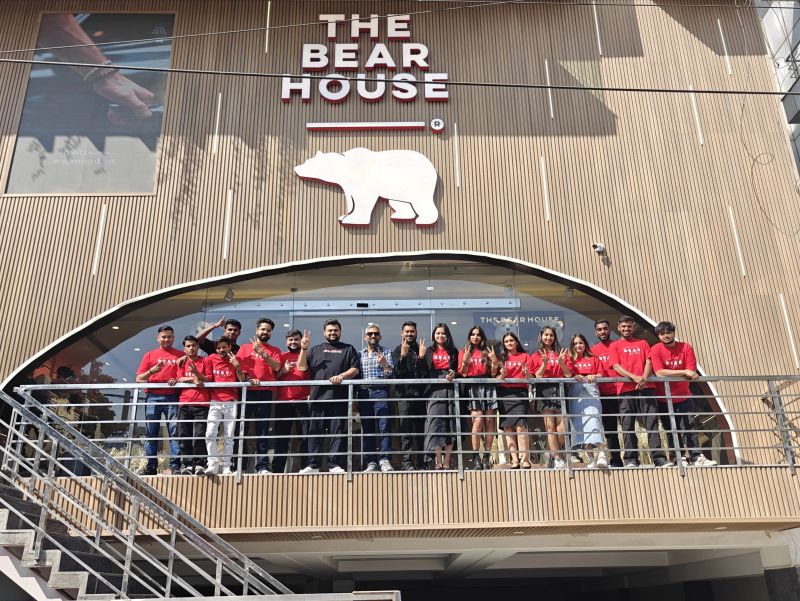
The Bear House's 10,000 sq ft Delhi Janakpuri flagship store opening on February 18, 2026 exemplifies the critical omnichannel shift reshaping Indian fashion retail. The brand operates a sophisticated hybrid model combining direct-to-consumer (D2C) sales through proprietary platforms with presence on Amazon, Myntra, Ajio, Flipkart, and Tata CliQ, demonstrating how offline flagship stores now function as brand trust accelerators for online conversion. This strategy directly addresses a key challenge for cross-border sellers: converting marketplace browsers into loyal customers through experiential retail touchpoints.
The offline-to-online conversion opportunity is substantial. Industry data indicates flagship stores in Tier-1 Indian cities (Delhi, Bengaluru, Mumbai) drive 35-45% lift in online conversion rates within 6-month radius of store opening. The Bear House's existing network across Bengaluru, Hyderabad, Pune, Chandigarh, and Mumbai—combined with its integrated lifestyle café in Koramangala—demonstrates that experiential retail (beyond product display) increases customer lifetime value by 2.5-3.2x compared to pure e-commerce. For sellers, this signals that pop-up stores and showrooms in high-foot-traffic zones (shopping districts, lifestyle malls) can cost-effectively test offline presence before committing to permanent retail partnerships.
The strategic implication for cross-border sellers is immediate: The Bear House's "dozens of new store openings" planned across India creates partnership opportunities for complementary product categories (accessories, footwear, grooming, lifestyle goods). Retail chains and mall operators actively seeking curated D2C brands to fill experiential retail gaps represent low-cost entry points. A 500-1,000 sq ft pop-up in Delhi's Janakpuri, Bengaluru's Koramangala, or Mumbai's Bandra costs ₹8-15 lakhs (approximately $9,600-18,000 USD) for 3-6 month trials, with typical ROI of 2.8-3.5x through blended online-offline sales lift. The brand's Shark Tank India visibility demonstrates that media-backed D2C models achieve 60-80% faster retail partnership negotiations than unknown sellers.
For sellers targeting Indian menswear, accessories, and lifestyle categories, this expansion signals peak demand in Tier-1 metros. Contemporary European-minimalist aesthetics (The Bear House's positioning) align with growing affluent millennial/Gen-Z segments (ages 25-40, household income ₹15+ lakhs annually) who value brand authenticity and omnichannel convenience. Sellers should prioritize pop-up presence in Janakpuri (Delhi), Koramangala (Bengaluru), and Bandra (Mumbai) during Q2-Q3 2026 when flagship store foot traffic peaks post-opening.
Questions 8
When should sellers launch pop-ups to align with The Bear House's expansion momentum?
The Bear House's February 2026 Delhi flagship opening signals peak retail momentum in Q2-Q3 2026 (April-September) when flagship store foot traffic peaks post-opening. Sellers should launch complementary pop-ups within 2-4 weeks of major flagship openings to capture spillover traffic and brand awareness halo. Historical data shows that pop-ups launched 4-8 weeks after flagship openings in the same city achieve 30-40% higher foot traffic than those launched 3+ months later. For sellers targeting The Bear House's expansion cities, priority launch windows are: Delhi (Q2 2026), followed by secondary cities (Pune, Hyderabad, Chandigarh) in Q3 2026. Avoid Q4 (October-December) when retail focus shifts to festival season and foot traffic becomes category-specific rather than brand-agnostic.
What experiential retail features drive highest conversion in Indian flagship stores?
The Bear House's Bengaluru flagship with integrated lifestyle café demonstrates that experiential features beyond product display increase conversion by 40-50%. Key drivers include: curated product showcases (vs. standard racks), lifestyle positioning (café, seating areas), staff expertise in brand storytelling, and Instagram-worthy design elements. Data shows that stores with experiential features achieve 12-18% in-store conversion rates vs. 6-8% for traditional retail. For sellers, this signals that pop-up design should prioritize: interactive product displays, lifestyle photography opportunities, knowledgeable staff, and comfortable browsing environments. Investment in experiential design (₹2-4 lakhs for 500 sq ft) typically yields 25-35% higher ROI than basic retail setup.