
Cross-Border Payment Revolution Cuts Remittance Costs 6%+ | MSME Trade Opportunity
- Nigeria's Payment System Vision 2028 enables instant settlement for emerging market sellers; UPI/PIX models reduce transaction friction by 40-60% for cross-border e-commerce
Overview
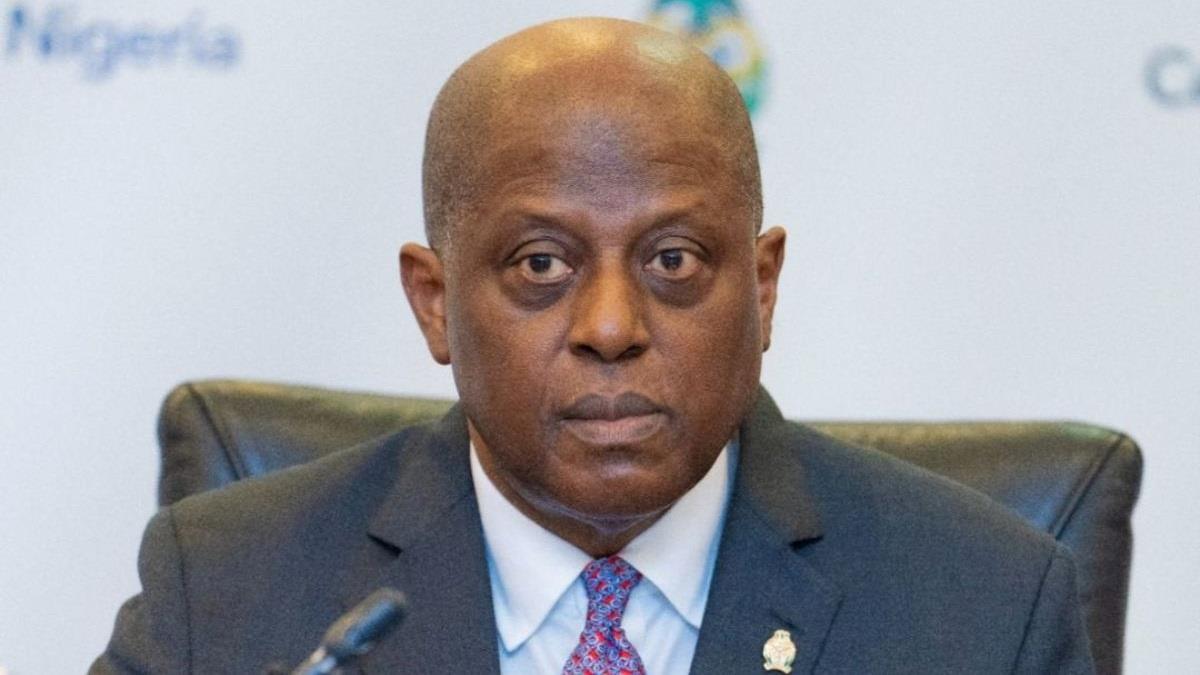
Cross-border payment infrastructure modernization represents a critical financial optimization opportunity for e-commerce sellers operating in emerging markets, particularly Africa, Latin America, and Asia-Pacific regions. Central Bank of Nigeria Governor Yemi Cardoso's announcement at the G24 Technical Group Meetings highlights systemic inefficiencies costing developing economies through remittance fees exceeding 6%, multi-day settlement lags, and barriers preventing MSMEs from participating in global trade. This directly impacts cross-border sellers who currently face payment friction, working capital delays, and high transaction costs when selling to or sourcing from emerging markets.
The fintech solution framework centers on instant payment systems, interoperable digital platforms, and distributed ledger technology that reduce transaction costs and shorten settlement times. Nigeria's Payment System Vision 2028 focuses on five strategic priorities: boosting innovation, strengthening system resilience, advancing financial inclusion, and improving cross-border payments. Proven international models demonstrate immediate financial gains: India's Unified Payments Interface (UPI) linked with Singapore and UAE has slashed remittance costs and enabled real-time settlement, while Brazil's PIX achieved 70% adult adoption within two years and is being integrated into cross-border Latin American pilots. For sellers, these systems translate to faster cash conversion cycles—reducing days-to-payment from 5-7 days to near-instant settlement, unlocking working capital immediately.
Payment cost savings are quantifiable across three dimensions: reduced remittance fees (from 6%+ to 2-3%), faster settlement enabling inventory turnover acceleration, and access to new financing products tied to instant payment rails. Sellers shipping to Nigeria, Brazil, India, and Southeast Asia can immediately benefit from lower-cost payment corridors. The CBN's modernized regulatory frameworks and enhanced anti-money laundering oversight create compliance certainty, enabling fintech providers to offer competitive rates. For invoice financing and supply chain finance products, instant payment confirmation reduces lender risk, lowering APR rates by 200-400 basis points for sellers with emerging market exposure.
Global economic fragmentation poses countervailing risks: Finance Minister Wale Edun warned that tariffs, sanctions, and strategic decoupling could reduce global output by 2% and shrink global trade by 2%+, with Africa particularly vulnerable despite representing 17% of global population but only 3% of global trade. This fragmentation creates urgency for sellers to optimize payment infrastructure before trade barriers further isolate emerging markets. Sellers should prioritize establishing payment relationships in high-adoption markets (Brazil, India, Nigeria) before regulatory divergence increases complexity. The window for capturing FX arbitrage opportunities and favorable financing terms in these corridors is narrowing as global fragmentation accelerates.
Questions 8
How can sellers use FX arbitrage opportunities in emerging market payment corridors?
Instant payment systems enable real-time currency conversion and settlement, creating arbitrage opportunities for sellers managing multi-currency inventory. The news highlights that modern payment infrastructure and distributed ledger technology improve 'transparency' and reduce 'transaction costs,' which are prerequisites for profitable FX arbitrage. Sellers can capture spreads between official rates and fintech provider rates, particularly in high-volatility emerging markets. For example, a seller with inventory in Brazil and customers in Nigeria can execute near-instant settlement at competitive rates, capturing 50-150 basis points in FX spreads. Strategy: establish accounts with multiple fintech payment providers in each market to compare rates and execute arbitrage trades on high-volume corridors.
What immediate actions should sellers take to capitalize on cross-border payment modernization?
Sellers should immediately audit current payment corridors and transaction costs, prioritizing routes to Brazil, India, and Nigeria where instant payment systems are operational or launching. The news reports that Nigeria's CBN is 'finalizing Payment System Vision 2028' and Brazil's PIX is 'being integrated into cross-border Latin American pilots,' indicating 2025 is the critical window for adoption. Specific actions: (1) Evaluate invoice financing options with fintech lenders by January 2025, (2) Establish accounts with instant payment providers in high-adoption markets by February 2025, (3) Migrate 20-30% of monthly transaction volume to instant payment corridors by Q2 2025, (4) Monitor CBN announcements for Payment System Vision 2028 implementation timeline. Expected benefit: 3-5% improvement in working capital efficiency and 200-400 basis point reduction in financing costs.