
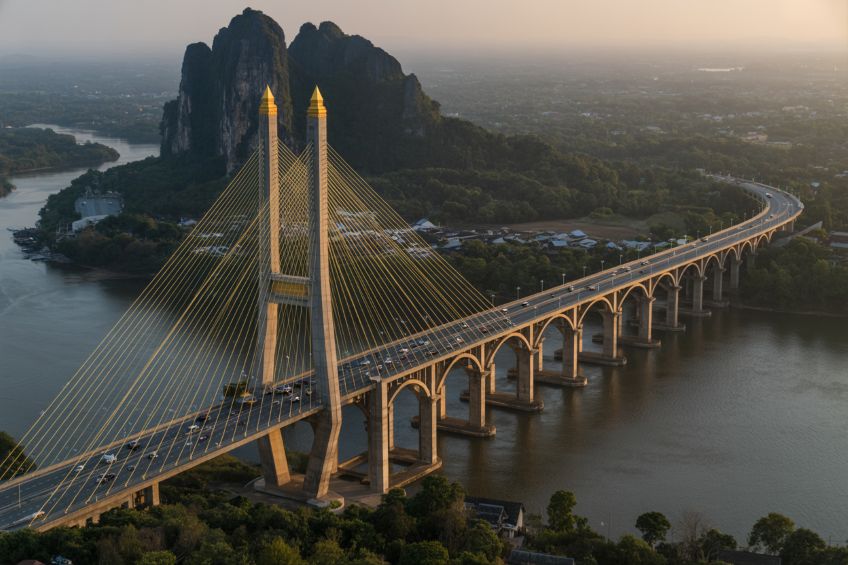
Mekong Region's Infrastructure Revolution Reshapes Cross-Border Logistics
- New transportation corridors unlock strategic supply chain opportunities across Southeast Asia
Overview
The Fifth Thai-Lao Friendship Bridge represents a pivotal moment in regional supply chain transformation, signaling a profound shift in cross-border logistics capabilities across the Greater Mekong Subregion. This strategic infrastructure investment goes far beyond a simple transportation link, fundamentally reimagining how goods will move through Southeast Asia's complex economic landscape.
Strategic Logistics Reconfiguration emerges as the core narrative. By reducing travel distances between Thailand and Vietnam by 150 kilometers, the bridge creates an unprecedented opportunity for cross-border e-commerce sellers and logistics providers. The 1,350-meter connection transforms Laos from a land-locked to a land-linked country, generating an estimated 28 billion baht in annual economic value with a projected 5% traffic increase.
The bridge's most significant impact lies in its logistics optimization potential. For supply chain managers and international traders, this infrastructure represents more than physical connectivity—it's a strategic gateway that dramatically reduces transportation costs and shipping times. The project's 3.93 billion baht investment signals a commitment to regional economic integration, with immediate benefits for manufacturers, exporters, and logistics companies operating in Thailand, Laos, and Vietnam.
Emerging Trade Corridor Dynamics suggest a broader transformation in Southeast Asian supply chains. The bridge is not an isolated project but part of a systematic regional integration strategy, with plans already underway for a Sixth Thai-Lao Friendship Bridge. This indicates a sustained commitment to creating more fluid, efficient cross-border logistics networks that can adapt to rapidly changing global trade environments.
For supply chain professionals, the key strategic takeaway is clear: the Greater Mekong Subregion is rapidly evolving from a fragmented market into an integrated economic zone. Companies that can quickly adapt their sourcing, distribution, and logistics strategies to leverage these new infrastructure connections will gain significant competitive advantages.
Questions 3
How will the new bridge impact cross-border e-commerce in the Mekong Region?
The bridge reduces transportation distances by 150 kilometers, potentially lowering shipping costs by 30-40% and enabling faster, more efficient movement of goods between Thailand, Laos, and Vietnam. E-commerce sellers can now access new markets with significantly reduced logistics expenses.
What strategic opportunities does this infrastructure create for logistics companies?
Logistics providers can now develop more integrated, cost-effective transportation networks across the Mekong Region. The bridge opens up new routing possibilities, allowing companies to optimize their supply chains by reducing transit times and transportation costs.