

Walmart's $190.66B Revenue Surge Signals Omnichannel Retail Shift | High-Income Shopper Targeting Reshapes Marketplace Strategy
- Walmart's 27% e-commerce growth and AI-driven Sparky agent create $35M+ opportunity for premium product sellers; K-shaped economy drives 60% YoY fast-delivery adoption targeting $100K+ households



















Overview
Walmart's Q4 2026 earnings reveal a fundamental restructuring of retail strategy with direct implications for third-party sellers and marketplace operators. The company reported $190.66 billion in total revenue (up 5.6%), with U.S. e-commerce surging 27% year-over-year—marking the 15th consecutive quarter of double-digit digital growth. E-commerce now represents a record 23% of U.S. sales, while store-fulfilled deliveries jumped 50% and Walmart Connect advertising revenue grew 41%. More critically, Walmart's market share gains are increasingly concentrated among households earning over $100,000 annually, representing a seismic shift from the retailer's historical discount-focused positioning.
The K-shaped economy is reshaping retail channel strategy. CEO John Furner explicitly stated that the majority of Walmart's market share gains came from high-income households ($100K+), while lower-income segments ($50K-) continue managing paycheck-to-paycheck spending despite modest wage growth. This divergence mirrors patterns at competitors: Dollar Tree reported 60% of new shoppers from $100K+ households, while Aldi plans 180 new store openings targeting value-conscious affluent consumers. For third-party sellers, this signals a critical opportunity: premium product categories, fashion, and higher-margin goods are now the primary growth drivers at Walmart's marketplace, not budget items. Fashion category sales grew mid-single digits in Q4, with nearly all increases from $100K+ households.
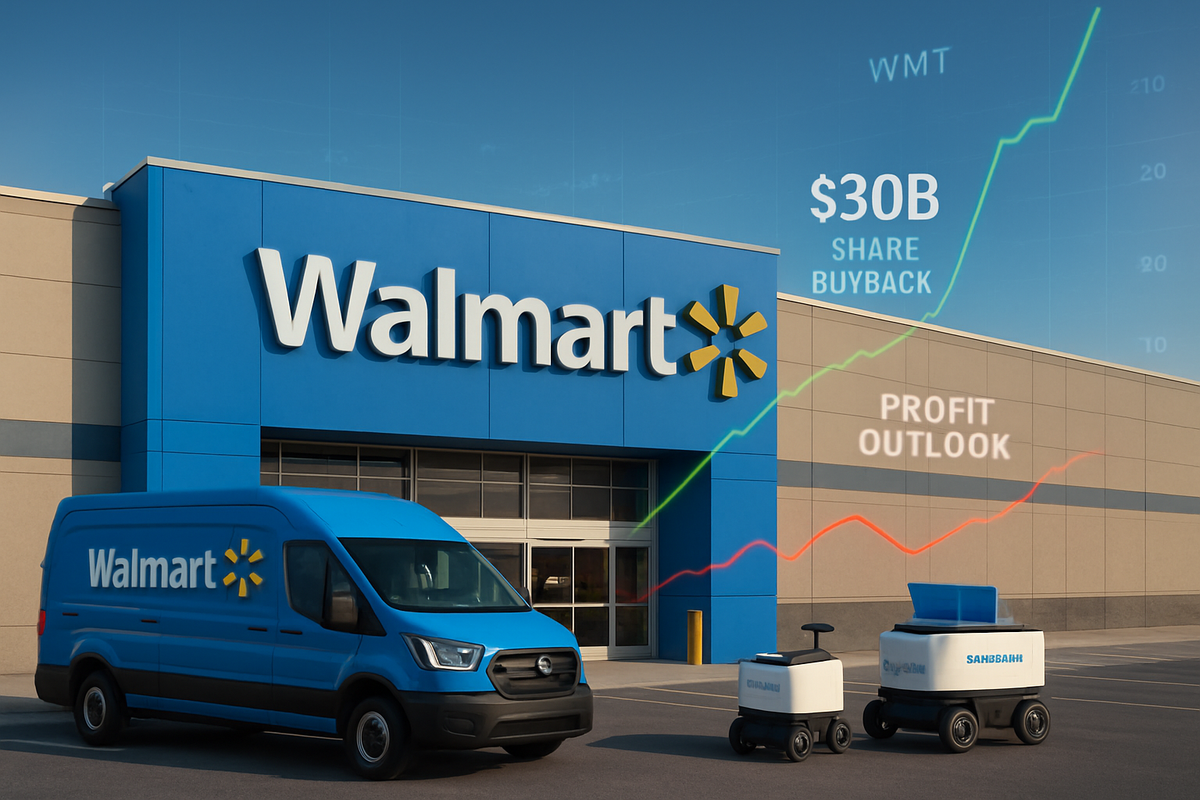
AI-powered personalization is becoming the competitive moat. Walmart's Sparky AI agent, embedded in the company's app, demonstrated exceptional adoption with users spending 35% more than non-users. Fast-delivery service adoption jumped 60% year-over-year with sub-3-hour delivery promises, creating a logistics infrastructure advantage that smaller sellers cannot replicate. The company is reaching peak spending on supply-chain automation and store remodeling ($30B+ capital allocation), indicating that Walmart's technology investments are now yielding measurable returns. For sellers, this means: (1) Walmart Marketplace will increasingly prioritize AI-optimized listings and fast-fulfillment capabilities; (2) premium product positioning will outperform budget strategies; (3) integration with Walmart's delivery network becomes essential for competitive Buy Box placement.
Tariff absorption and inflation moderation create pricing flexibility. CFO John David Rainey stated tariff-driven inflation has reached or is approaching peak levels, with U.S. Q4 inflation just above 1%. A Federal Reserve Bank of New York analysis found consumers and businesses absorbed nearly 90% of tariff costs, meaning retailers have largely absorbed initial price pressures. This creates a 6-12 month window for sellers to optimize pricing strategies before tariff impacts fully normalize. International sales jumped 11.5% to $35.9 billion, signaling strong cross-border demand and indicating that Walmart's international marketplace expansion is accelerating—particularly relevant for sellers targeting Mexico, Canada, and emerging markets where Walmart operates 4,600+ stores globally.
Questions 8
What does Walmart's 4.6% comparable sales growth mean for seller inventory planning?
Walmart reported 4.6% U.S. comparable sales growth driven by 2.6% transaction count increase and 2% average transaction value growth. This indicates strong consumer demand across both volume and value metrics. For sellers, this suggests: (1) Inventory demand is robust, particularly in premium categories targeting $100K+ households; (2) Transaction count growth indicates Walmart is attracting new shoppers (especially high-income), creating opportunities for sellers to capture new customer segments; (3) Average transaction value growth of 2% suggests consumers are trading up to higher-priced items. Sellers should increase inventory allocation to premium products and ensure stock levels support the 60% year-over-year fast-delivery adoption rate, which requires higher inventory turnover.
How does Walmart Connect's 41% advertising revenue growth impact seller marketing strategy?
Walmart Connect advertising revenue grew 41% year-over-year, indicating that sponsored product advertising is becoming a primary profit driver for Walmart and a critical visibility tool for sellers. The platform's integration with Sparky AI means that advertising effectiveness is increasingly tied to AI recommendation algorithms. Sellers should expect: (1) Advertising costs to increase as competition for visibility intensifies; (2) Greater emphasis on keyword optimization and product attribute data; (3) Shift toward performance-based advertising (CPC/CPA) rather than impression-based models. The 35% higher spending by Sparky users suggests that sellers investing in advertising to reach AI-recommended audiences will see disproportionate ROI gains.