




Vaccine Policy Disruption Signals Regulatory Uncertainty in Public Health Governance
- Emerging power dynamics threaten established vaccination protocols and scientific consensus





Overview
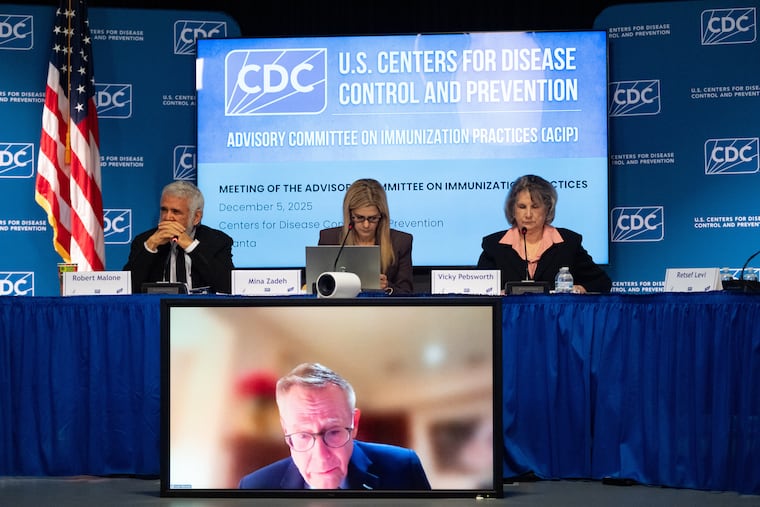
The recent developments surrounding vaccine policy reveal a critical inflection point in public health governance, where institutional credibility is being fundamentally challenged. At the center of this transformation is the CDC's Advisory Committee on Immunization Practices (ACIP), which has undergone significant internal changes under Robert F. Kennedy Jr.'s leadership that are reshaping vaccination recommendations.
Regulatory Destabilization Signals emerge clearly from the committee's recent modifications to hepatitis B vaccination guidelines. By featuring presentations from individuals with anti-vaccine perspectives and modifying established recommendations, the ACIP is demonstrating an unprecedented openness to alternative viewpoints that traditionally would have been marginalized. This represents more than a procedural shift—it signals a potential systemic recalibration of how scientific consensus is constructed and validated.
The controversy surrounding these changes extends beyond procedural debates. Political intervention, as evidenced by President Trump's defense of the new hepatitis B vaccine guidance, suggests that vaccination policies are becoming increasingly politicized. This politicization introduces significant uncertainty into public health decision-making, potentially undermining long-standing epidemiological protocols that have historically relied on scientific consensus rather than political negotiation.
For stakeholders in public health, pharmaceutical development, and regulatory compliance, these developments represent a critical inflection point. The traditional model of top-down scientific authority is being challenged, creating an environment of unprecedented regulatory fluidity. Organizations must now develop more adaptive strategies that can navigate rapidly shifting policy landscapes, where scientific recommendations can be quickly reinterpreted or challenged by political actors.
The emerging paradigm suggests a future where vaccination policies will require more robust justification, transparent communication, and a willingness to engage with diverse perspectives—even those that challenge established scientific narratives. This represents both a significant challenge and an opportunity for more inclusive, resilient public health governance.
Questions 3
How are recent CDC policy changes impacting vaccination recommendations?
The CDC's Advisory Committee is now allowing more diverse perspectives on vaccine policies, including presentations from anti-vaccine advocates, which represents a significant departure from previous strict scientific consensus approaches. This could potentially lead to more nuanced but also more controversial vaccination guidelines.
How might pharmaceutical and healthcare organizations respond to this new regulatory landscape?
Companies will need to invest more in transparent communication, robust scientific justification for their recommendations, and strategies that can quickly adapt to shifting policy landscapes. This may include developing more comprehensive stakeholder engagement approaches and more flexible regulatory compliance frameworks.