


Cultural Power Plays: Trump's Strategic Maneuver at the Kennedy Center Honors
- Revealing the Intersection of Political Influence and Cultural Institutions






Overview
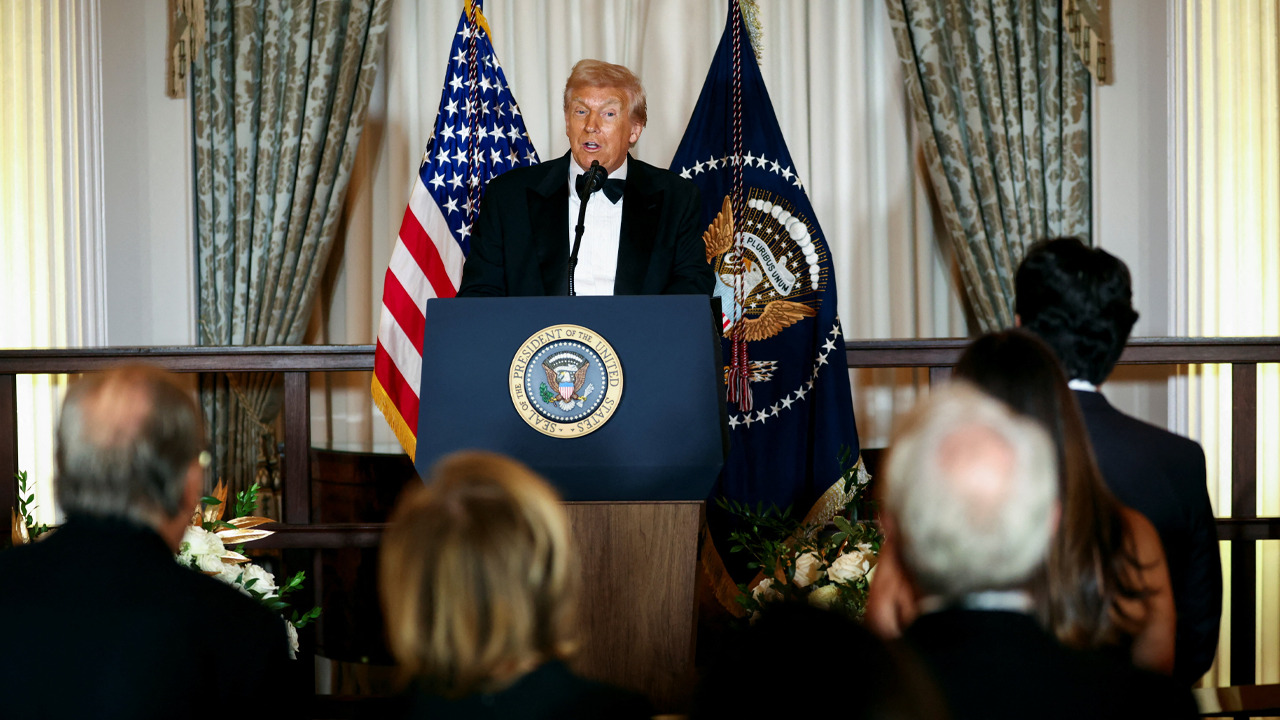
The recent developments surrounding the Kennedy Center Honors illuminate a critical moment of political cultural positioning that extends far beyond a simple arts event. President Trump's decision to host the ceremony after "seizing control" of the cultural venue represents a nuanced strategic intervention in the landscape of national cultural representation.
Political Symbolism and Institutional Control emerge as the core narrative here. By positioning himself at the center of a prestigious cultural event, Trump demonstrates a calculated approach to wielding soft power through cultural institutions. The move goes beyond mere entertainment, signaling a deliberate strategy of cultural appropriation and political messaging. This action reveals how political leadership can leverage cultural platforms as extensions of political narrative and influence.
The significance lies not just in the event itself, but in the broader implications of institutional control. Cultural venues like the Kennedy Center are more than physical spaces—they are symbolic battlegrounds where political and artistic narratives intersect. Trump's maneuver suggests a sophisticated understanding of how cultural institutions can be transformed into platforms for political messaging and power projection.
Moreover, this event highlights the increasingly blurred lines between political leadership and cultural representation. By directly inserting himself into a traditionally neutral cultural space, the president demonstrates a willingness to redefine the boundaries between political power and artistic expression. The move signals a broader trend of political figures seeking to directly shape cultural narratives, rather than maintaining traditional arms-length relationships with cultural institutions.
Ultimately, this development is less about the Kennedy Center Honors itself and more about the evolving dynamics of power, representation, and cultural control in contemporary political landscapes. It serves as a provocative case study of how political leadership can strategically engage with and potentially reshape cultural institutions.
Questions 3
Why are cultural venues like the Kennedy Center important in political contexts?
Cultural venues are more than physical spaces—they are symbolic battlegrounds where political and artistic narratives intersect, offering powerful platforms for shaping public perception and national identity.
What does Trump's involvement with the Kennedy Center Honors signify?
It represents a strategic attempt to exert political influence through cultural institutions, demonstrating how political leaders can use prestigious cultural events as platforms for messaging and power projection.