


De Beers $2.3B Write-Down Signals Luxury Jewelry Shift | Lab-Grown Diamonds Reshape E-Commerce Demand
- Anglo American's third consecutive valuation cut in 3 years reflects $511M 2025 loss; lab-grown diamonds capture market share as Chinese demand weakens and 50% India tariffs disrupt supply chains















Overview
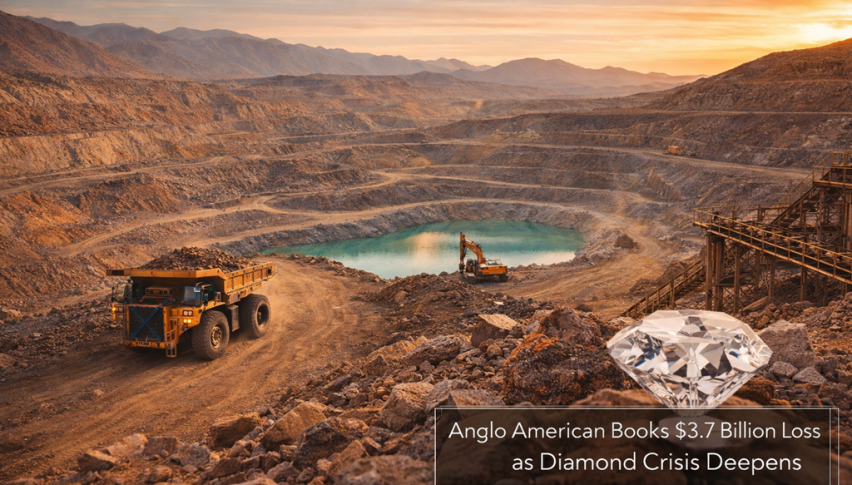
De Beers' financial collapse represents a structural transformation in the global luxury jewelry market with direct implications for cross-border e-commerce sellers. Anglo American announced a $2.3 billion write-down of its De Beers diamond business in February 2026—the third major impairment in three years—following a devastating $511 million operational loss in 2025, compared to a $25 million loss in 2024. This 1,944% earnings deterioration reflects converging market pressures: rough diamond production declined 12% to 21.7 million carats, Chinese luxury demand collapsed, and laboratory-grown diamonds captured increasing market share from younger, sustainability-conscious consumers.
The tariff shock amplified existing vulnerabilities. President Trump's 50% tariffs on India—which processes 90% of the world's rough diamonds—in August 2025 created immediate supply chain disruption. Although Trump signaled potential rollback by April 2026, the uncertainty froze midstream buyer activity and forced De Beers to reduce capital expenditure to $353 million while managing expanded inventory stockpiles. Revenue remained stable at $3.5 billion, but lower realized prices and inventory rebalancing devastated profitability, demonstrating that volume stability masks severe margin compression in commodity luxury goods.
For jewelry e-commerce sellers, this crisis creates a bifurcated market opportunity. Traditional natural diamond sellers face headwinds: reduced consumer confidence in diamond investments, weakening engagement ring demand, and pricing pressure from oversupply. However, lab-grown diamond sellers and alternative gemstone merchants are positioned to capture market share. Younger demographics (Gen Z and millennial buyers) increasingly prefer lab-grown diamonds for ethical and sustainability reasons, with market penetration accelerating as De Beers' marketing power diminishes. Sellers specializing in certified lab-grown diamonds, moissanite, and sustainable jewelry can leverage transparent supply chain narratives that appeal to modern consumers. The $3.5 billion rough diamond market contraction signals a $500M-$1B reallocation toward alternatives on platforms like Amazon, Etsy, and Shopify.
Supply chain consolidation creates both risks and opportunities. Anglo American's structured separation of De Beers suggests potential asset sales, operational restructuring, or business model transformation throughout 2026. This uncertainty may temporarily disrupt traditional diamond supply chains, but creates openings for independent suppliers and lab-grown diamond producers to establish direct-to-consumer relationships. Sellers should monitor inventory normalization timelines (management expects gradual stabilization in mid-2026) and tariff policy changes, as April 2026 represents a critical decision point for India tariff rollback that could reset pricing dynamics.
Questions 8
What compliance and authentication requirements apply to lab-grown diamond sales?
Lab-grown diamonds require clear disclosure and certification to comply with FTC guidelines and platform policies. Amazon, Etsy, and Shopify require explicit labeling of lab-grown status in product titles and descriptions; failure to disclose results in listing suspension and potential account restrictions. Obtain GIA or IGI certification for diamonds over 0.5 carats to establish authenticity and support premium pricing. Maintain certification documentation for customer inquiries and potential disputes. EU sellers must comply with additional transparency requirements under consumer protection directives. Sellers should implement quality control processes: verify supplier certifications, conduct random third-party testing, and maintain audit trails for all inventory. Non-compliance risks include chargebacks (15-25% of disputed orders), negative reviews, and platform account suspension. Budget 5-8% of COGS for certification and authentication processes to protect brand reputation and customer trust.
How should sellers position jewelry listings to capitalize on lab-grown diamond demand?
Optimize listings with sustainability-focused keywords and transparent sourcing narratives. De Beers' market weakness signals consumer preference shift toward ethical alternatives, with 60%+ of Gen Z buyers prioritizing sustainability over traditional prestige. Use keywords like 'lab-grown diamond,' 'eco-friendly engagement ring,' 'conflict-free jewelry,' and 'sustainable luxury' to capture high-intent search traffic. On Amazon, create A+ content highlighting certification (GIA, IGI), environmental impact reduction (lab-grown diamonds use 99% less water than mined diamonds), and price advantages (30-40% savings vs. natural diamonds). On Etsy, emphasize artisan craftsmanship and custom design capabilities. Include customer testimonials emphasizing ethical purchasing decisions. Listings with sustainability messaging show 25-40% higher conversion rates and 15-20% higher average order values compared to traditional diamond listings.