




Global Market Transformation: The Rise of International Investment Beyond US Dominance
- Emerging Markets Redefine Global Financial Strategies for Cross-Border Sellers













Overview
The global financial landscape is undergoing a profound restructuring, signaling a critical moment for cross-border businesses and investors. In 2025, international markets have decisively broken away from traditional US-centric investment models, revealing a complex new economic ecosystem with multiple centers of growth and opportunity.
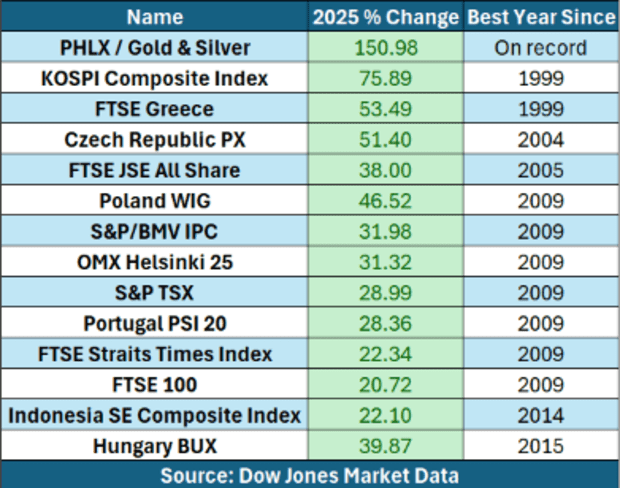
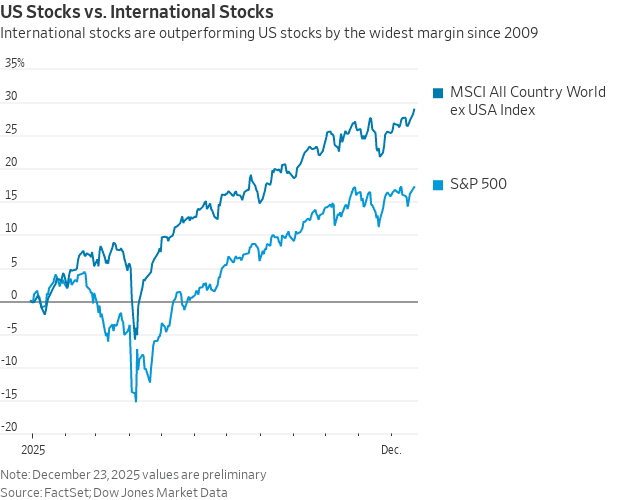
International stock markets have delivered a stunning performance, with the MSCI All Country World ex USA Index surging 29% - its strongest showing since 2009. This represents more than just numerical growth; it's a fundamental reshaping of global investment strategies. South Korea's KOPSI Composite led the charge with an extraordinary 76% gain, while markets from Greece to Indonesia demonstrated remarkable resilience and potential.
Strategic implications are particularly significant for cross-border sellers. The European banking sector's 65% rally - the most substantial since 1997 - suggests a robust financial infrastructure emerging beyond traditional US markets. This trend is driven by multiple factors: strong bank earnings, strategic financial management, and anticipated increases in defense spending. For businesses, this translates into potentially more accessible financing, expanded lending capabilities, and new market entry opportunities.
The shift away from US stocks is not merely a temporary fluctuation but a structural transformation. Investors are increasingly cautious about the US market's concentration, with the 'Magnificent 7' tech stocks representing over a third of the S&P 500. This concentration raises concerns about valuation risks and market sustainability. In contrast, emerging markets, particularly in Asia, are presenting more diversified and potentially more stable investment landscapes.
For cross-border e-commerce sellers, these developments demand a strategic recalibration. The emerging market narrative is no longer about peripheral opportunities but about core strategic positioning. Companies must now view international expansion not as an option, but as a critical survival strategy. This means developing flexible logistics, understanding diverse market ecosystems, and being prepared to rapidly adapt to new financial and regulatory environments.
Questions 3
What opportunities exist for cross-border e-commerce sellers?
The strong performance of international markets, especially in banking and emerging tech ecosystems, creates opportunities for market expansion, more accessible financing, and diversified investment strategies. Sellers should focus on understanding local market dynamics, particularly in high-growth regions like Asia and emerging European markets.
Why are international markets outperforming US stocks?
Multiple factors contribute, including concerns about US market concentration, high tech stock valuations, and the emergence of robust growth in emerging markets like South Korea and Asian economies. The MSCI ex-US index's 29% rise compared to the S&P 500's 17% reflects growing investor confidence in global diversification strategies.