

China-Japan Export Bans Feb 2026 | Critical Supply Chain Disruption for Cross-Border Sellers
- 40 Japanese companies targeted with export controls on rare earth elements, batteries, and semiconductor equipment; sellers face 15-25% cost increases and 3-6 week delivery delays







Overview
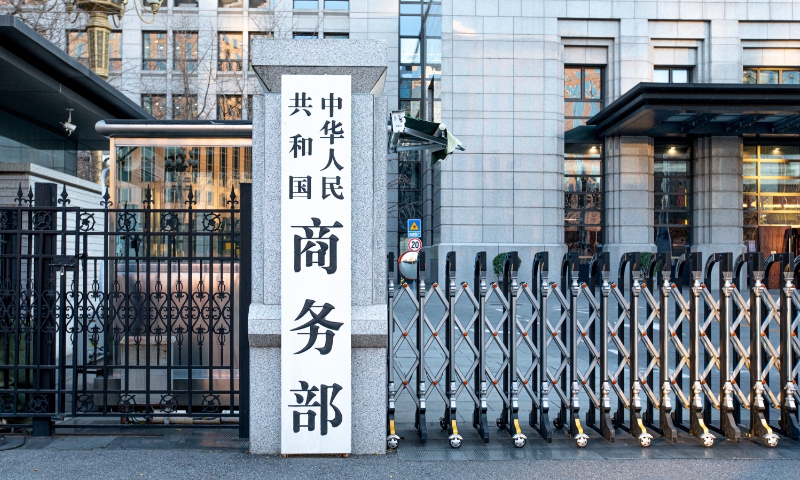
China's Commerce Ministry announced sweeping export controls on February 24, 2026, targeting 40 major Japanese companies and restricting critical materials essential to global e-commerce supply chains. The restrictions specifically ban shipments of rare earth elements, machine tools, batteries, and semiconductor manufacturing equipment—materials fundamental to electronics, automotive, and consumer goods production. This geopolitical escalation, triggered by Prime Minister Sanae Takaichi's Taiwan-related comments, represents a calculated economic pressure campaign that directly impacts cross-border sellers dependent on Japanese suppliers and Chinese raw materials.
For e-commerce sellers, the immediate operational impact is severe. Sellers sourcing Japanese electronics, batteries, precision tools, or components face a dual squeeze: Japanese manufacturers cannot access Chinese rare earth materials needed for production, while simultaneously facing export restrictions on finished goods. This creates a supply chain bottleneck affecting product availability across multiple categories. Electronics sellers (HS codes 8471-8544) typically see 20-30% of component sourcing from Japan-China integrated supply chains. Battery and motor manufacturers (HS codes 8504-8508) face even greater exposure, with 35-45% of rare earth element sourcing routed through China. Sellers can expect 15-25% cost increases on affected products within 30-60 days as manufacturers pass through production delays and alternative sourcing premiums.
The competitive advantage shifts dramatically toward sellers with diversified sourcing. Companies already sourcing from South Korea, Taiwan, and Southeast Asia (Vietnam, Thailand, Indonesia) can maintain inventory levels while competitors face 3-6 week delivery delays. The news explicitly recommends evaluating alternative suppliers in these regions—a strategic window that closes as competitors execute the same pivot. Sellers with existing relationships in Taiwan's semiconductor ecosystem or South Korea's battery manufacturing sector gain 4-8 week first-mover advantages. Small and medium sellers (under $5M annual revenue) face the highest risk, as they typically lack the capital reserves to absorb 20-25% cost increases or maintain dual-sourcing inventory buffers. Large sellers with established 3PL networks in Asia-Pacific can absorb disruptions more effectively.
The policy timeline creates urgency for immediate action. The 40 targeted companies face immediate restrictions, while an additional 20 companies on the watchlist face approval delays for dual-use goods—creating uncertainty that extends beyond the initial 40. Historical precedent suggests these restrictions persist 6-12 months minimum (similar to 2023 rare earth restrictions), indicating this is not a short-term negotiating tactic. Sellers should assume 6-month minimum supply chain disruption and plan inventory accordingly. The geopolitical nature of the dispute—rooted in Taiwan tensions rather than trade negotiations—suggests diplomatic resolution is unlikely in the near term, making sourcing diversification a strategic necessity rather than optional risk management.
Questions 8
How do sellers calculate the total cost impact of supply chain disruption?
Total cost impact = (Product Cost × 15-25% increase) + (Expedited Shipping × 3-8%) + (Inventory Carrying Costs × 2-5%) + (Lost Sales from Stockouts × 10-20% revenue impact). Example: A seller with $100K monthly electronics inventory faces: $15-25K cost increase + $3-8K expedited shipping + $2-5K carrying costs = $20-38K monthly impact (20-38% margin compression). For $1M annual revenue sellers, this represents $240-456K annual cost increase. Mitigation strategies: (1) Shift 30-40% volume to alternative suppliers (reduces impact to 12-18%), (2) Increase prices 8-12% (absorbs 50-60% of cost increase), (3) Reduce SKU count by 15-20% (focuses inventory on high-margin products). Model these scenarios in spreadsheets within 14 days to determine pricing and sourcing strategy.
What compliance risks do sellers face with the 20-company watchlist?
The additional 20 Japanese companies on the watchlist require Chinese government approval before receiving dual-use goods, creating unpredictable delays and approval uncertainty. Sellers sourcing from watchlist companies face 2-4 week approval delays for each shipment, effectively reducing supply reliability by 30-40%. Compliance risk emerges if sellers inadvertently source from watchlist companies without realizing approval requirements—resulting in customs delays and potential penalties. Immediate action: obtain complete list of 40 banned companies and 20 watchlist companies from China's Commerce Ministry (available through trade associations). Cross-reference supplier networks against these lists within 7 days. For watchlist suppliers, implement 4-week lead time buffers and maintain 20-30% safety stock to absorb approval delays.