


/AI%20(artificial%20intelligence)/Ai%20chip%20by%20Quality%20Stock%20Arts%20via%20Shutterstock.jpg)


.jpg)
Microsoft's 28.5% Stock Decline Signals Cloud Computing Shift | E-Commerce Seller Impact
- Microsoft stock drops to 13-year technical support level amid Azure underperformance and AI capex concerns; Azure growth slows to 39% vs Google Cloud's 48%; direct implications for e-commerce sellers relying on Azure infrastructure, AI-powered tools, and cloud-based inventory systems













/Microsoft%20France%20headquarters%20by%20JeanLuclchard%20via%20Shutterstock.jpg)





/Microsoft%20Corporation%20logo%20on%20sign-by%20Jean-Luc%20Ichard%20via%20iStock.jpg)










Overview
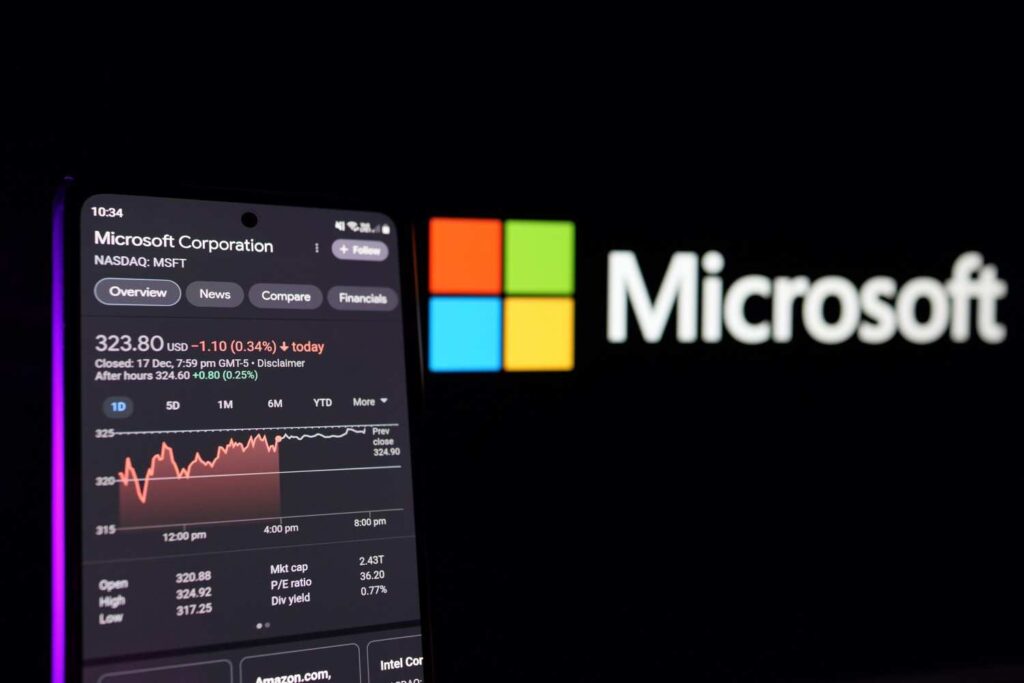
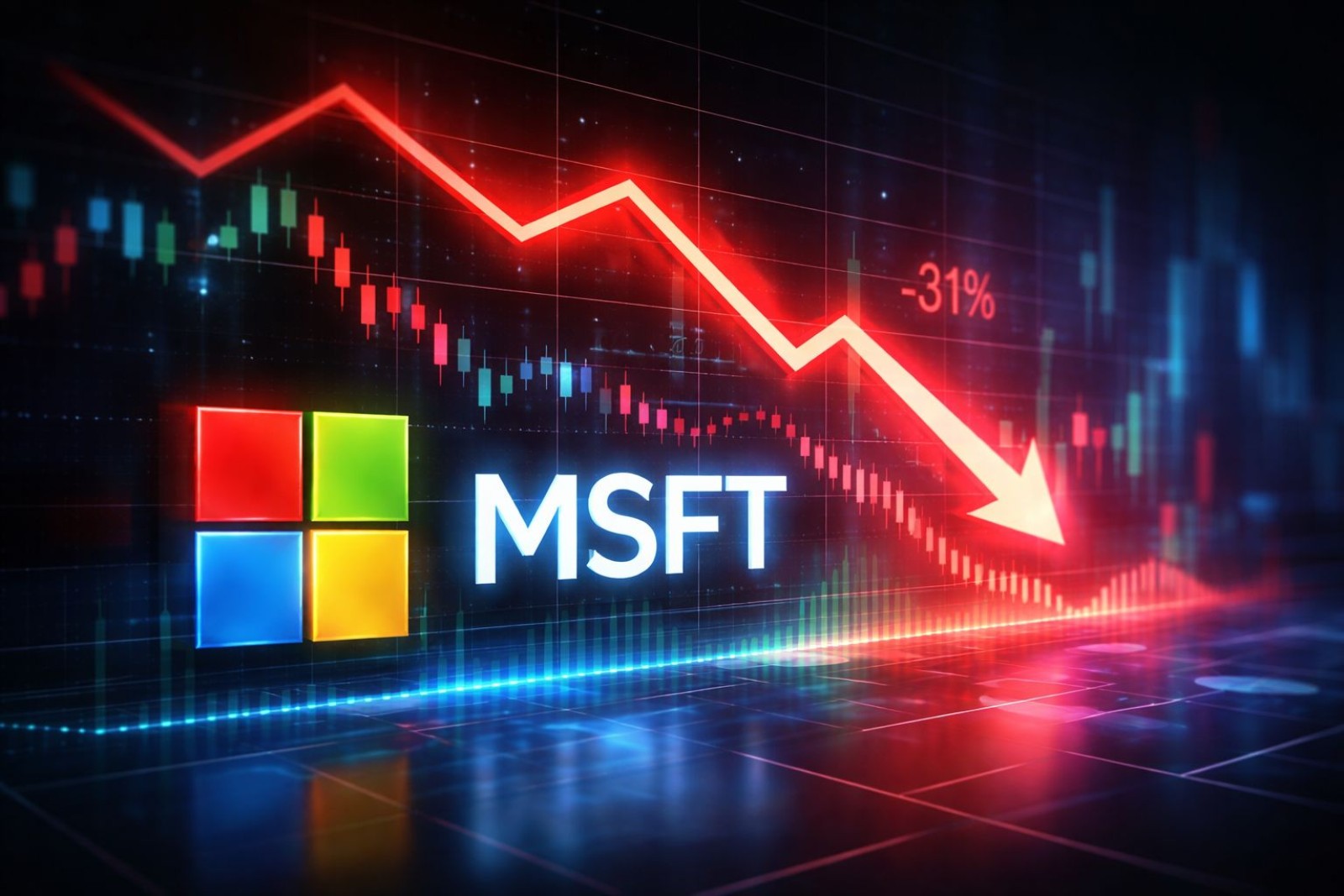
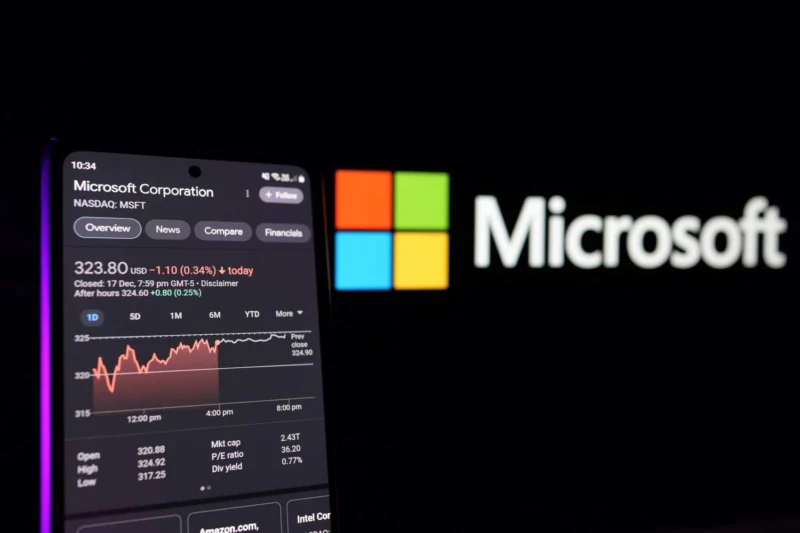
Microsoft's stock has experienced a dramatic 28.5% decline from its October 2025 peak of $542.07, trading at $378.90 as of February 24, 2026—just 3.1% above its critical 200-week moving average of $375.80, a technical level last breached in January 2013. This represents the worst performance among the Magnificent Seven technology stocks in 2026, with a 19.9% drop occurring in the first two months of the year alone. The selloff reflects investor concerns about Azure cloud growth deceleration (39% in Q4 2025 vs. Google Cloud's 48%), massive capital expenditures on AI infrastructure, and Microsoft's strategic decision to allocate computing capacity to internal projects rather than reselling through Azure services.
For e-commerce sellers, this market turbulence carries significant operational implications. Microsoft's financial pressure directly impacts Azure cloud services—a critical infrastructure backbone for 40,000+ cross-border sellers using Azure for inventory management, business intelligence, and fulfillment automation. Goldman Sachs analyst Gabriela Borges noted that 45% of Microsoft's $625 billion commercial remaining performance obligations depend on OpenAI partnerships, creating concentration risk that could affect product roadmap priorities and feature investment in Azure services. The company's decision to prioritize internal AI projects over Azure capacity resale suggests potential pricing pressure or service prioritization changes for external customers in coming quarters.
However, Goldman Sachs maintained a buy rating with a $600 price target, identifying positive catalysts: Microsoft's Maia 200 custom AI inference accelerator priced 30% cheaper than competing solutions, and Project Silica breakthrough in data storage using femtosecond lasers to encode data in borosilicate glass. These innovations address long-term gross margin improvement and infrastructure cost reduction—developments that could eventually benefit Azure customers through lower compute costs and improved storage economics. The SaaS sector selloff (triggered by Anthropic's plugin releases) has compressed Microsoft's valuation to 21.4x forward earnings, below Alphabet's 26.5x for the first time in a decade, creating potential recovery opportunity if market sentiment shifts.
Seller-specific risk factors: Azure price increases are possible if Microsoft needs to improve margins amid capex pressures; service prioritization may favor internal AI projects over external customer support; potential delays in new feature releases as engineering resources shift to AI infrastructure. Opportunities: Historical precedent suggests recovery rallies when Microsoft approaches this 200-week moving average (14.9% gain in January 2023, 15.2% in November 2022), which could restore investor confidence in cloud services and trigger renewed Azure investment cycles. Sellers should monitor Azure pricing announcements (typically quarterly) and consider diversifying cloud infrastructure across Google Cloud (growing 48% annually) and AWS to reduce single-vendor dependency.
Questions 8
How does Microsoft's OpenAI concentration risk affect seller operations?
Microsoft's 45% commercial obligation concentration in OpenAI partnerships represents significant concentration risk for investors and operational risk for sellers. If OpenAI partnership terms change or performance underperforms, Microsoft's financial flexibility could be constrained, affecting Azure investment and pricing. For sellers, this means potential service disruptions or pricing increases if Microsoft needs to reduce OpenAI spending. Diversify AI workloads across multiple providers (Google Cloud's Vertex AI, AWS SageMaker) to reduce dependency on Microsoft's OpenAI strategy. Monitor quarterly earnings reports for updates on OpenAI partnership performance and financial impact.
What are the positive catalysts that could reverse Microsoft's stock decline?
Goldman Sachs identified two major positive catalysts: (1) Maia 200 custom AI inference accelerator priced 30% cheaper than competing solutions, improving Azure's price-to-performance ratio for AI compute services; (2) Project Silica breakthrough in data storage using femtosecond lasers to encode data in borosilicate glass, reducing long-term infrastructure costs. These innovations address gross margin improvement and could eventually benefit Azure customers through lower compute costs. Additionally, Microsoft's valuation compression (21.4x forward earnings vs. Alphabet's 26.5x) creates recovery opportunity if market sentiment shifts. For sellers, these catalysts suggest Azure's long-term cost trajectory may improve, potentially offsetting near-term price increases. However, these benefits are 12-24 months away, so sellers should plan for near-term cost pressures while positioning for long-term savings.