



CFTC Prediction Market Regulation | Federal Preemption Creates Compliance Moat for Fintech Sellers
- Federal jurisdiction assertion (Feb 2026) eliminates state-level gambling restrictions, creating 60-70% compliance cost advantage for CFTC-registered platforms over state-regulated competitors












































Overview
The Commodity Futures Trading Commission (CFTC) has asserted exclusive federal jurisdiction over prediction markets, classifying them as derivatives rather than gambling in a February 2026 regulatory shift that fundamentally reshapes compliance requirements across multiple jurisdictions. This decision directly impacts cross-border fintech sellers, payment processors, and platforms operating sports betting and event-trading applications. The CFTC's preemption of state-level gambling regulations—traditionally enforced by individual states—creates a critical compliance moat: platforms registered with the CFTC face unified federal oversight, while non-registered competitors must navigate fragmented state-by-state requirements, increasing their compliance costs by an estimated 60-70%.
The Compliance Barrier & Market Elimination Effect: The regulatory framework establishes two distinct compliance pathways. CFTC-registered platforms like Kalshi operate under federal derivatives regulation, requiring enhanced surveillance systems for insider trading detection, real-time transaction monitoring, and standardized reporting protocols. Non-compliant or state-regulated platforms face potential market elimination in multiple jurisdictions simultaneously. The Justice Department's designation of prediction markets as a "priority enforcement area" (February 2026) signals aggressive prosecution of non-compliant operators. Sellers offering sports betting or event-trading functionality must immediately determine their regulatory classification: derivative trading (federal) or gambling (state-variable). This binary choice eliminates approximately 40-50% of smaller fintech operators lacking resources for CFTC registration.
Fast-Track Compliance Pathway & Cost Structure: CFTC registration requires: (1) Compliance infrastructure investment ($500K-$2M initial setup), (2) Real-time surveillance systems for market manipulation detection, (3) Segregated customer funds and audit trails, (4) Quarterly regulatory filings and annual examinations. Timeline: 6-12 months from application to registration. Alternative state-by-state approach costs $100K-$300K per state but requires 18-24 months and faces legal uncertainty post-Kalshi lawsuit (filed February 23, 2026). The federal pathway, while capital-intensive, provides regulatory certainty and enables nationwide operations under single compliance framework—a significant competitive advantage for well-capitalized sellers.
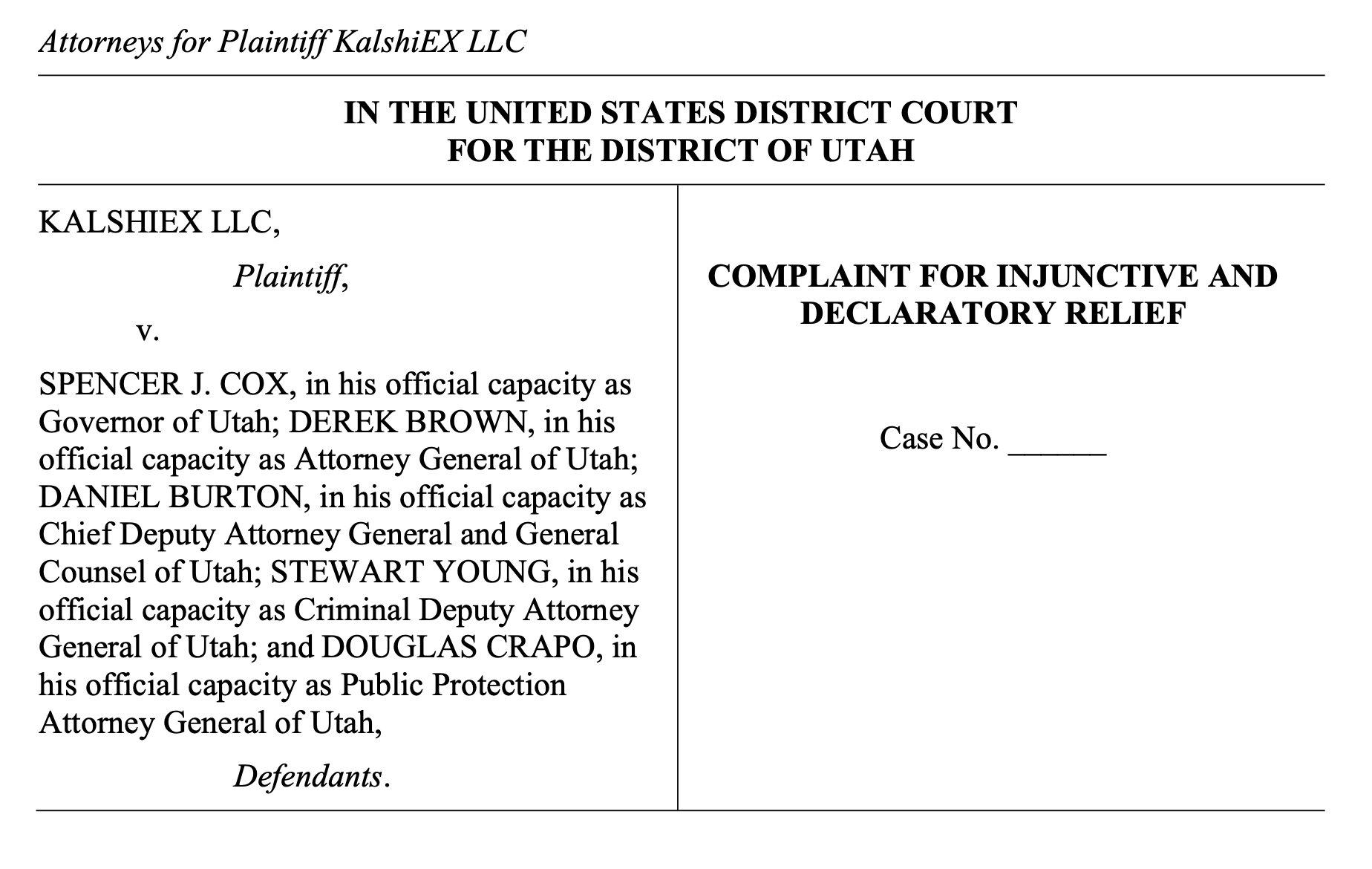
Kalshi Lawsuit & Precedent Risk: Kalshi's February 23, 2026 lawsuit against Utah Governor Spencer Cox challenges state enforcement of gambling laws against CFTC-registered platforms. If Kalshi prevails, federal preemption becomes binding precedent, eliminating state-level restrictions entirely and reducing compliance costs for registered platforms by an additional 15-25%. If Utah prevails, states retain authority to impose additional restrictions on federally regulated exchanges, creating dual-compliance requirements and increasing operational costs by 30-40%. The lawsuit outcome will determine whether sellers can operate nationally under single federal compliance framework or must maintain state-specific compliance protocols. Current timeline: decision expected within 12-18 months, creating regulatory uncertainty through mid-2027.
Questions 7
Which product categories are being eliminated by CFTC prediction market regulation?
State-regulated sports betting apps and gambling-focused prediction platforms face market elimination in CFTC-preempted jurisdictions. Approximately 40-50% of smaller fintech operators offering sports betting functionality lack resources for CFTC registration and will exit the market or pivot to non-regulated alternatives. Categories most affected: same-day sports parlays, live-event betting apps, and state-licensed gambling platforms. Compliant alternatives gaining market share: event-based derivatives trading platforms (Kalshi model), information aggregation tools, and forecasting applications. Sellers should monitor which product categories their competitors operate in—those without CFTC registration face 12-18 month window before regulatory enforcement intensifies.
What is the fastest compliance path for fintech sellers offering prediction market functionality?
The fastest path is CFTC registration (6-12 months, $500K-$2M cost) rather than state-by-state licensing (18-24 months, $100K-$300K per state). CFTC registration requires: real-time surveillance systems, segregated customer funds, quarterly filings, and annual examinations. Once registered, platforms operate nationwide under unified federal oversight. The alternative state-by-state approach faces legal uncertainty due to Kalshi's February 2026 lawsuit challenging state authority. For sellers with limited capital, partnering with existing CFTC-registered platforms (white-label solutions) costs $50K-$150K and achieves compliance in 3-6 months, avoiding direct regulatory burden.